
Antique Tiered Waiter
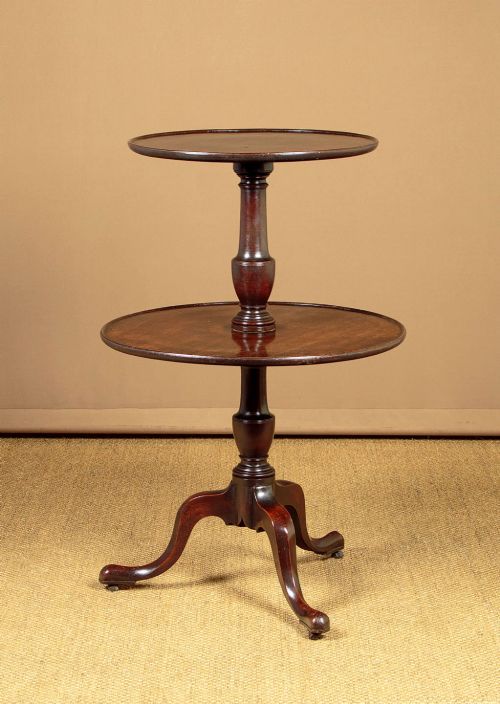
An antique tiered waiter solves the servant shortage at the dining table with revolving circular tiers and sturdy tripod bases.
Antique Tiered Waiter
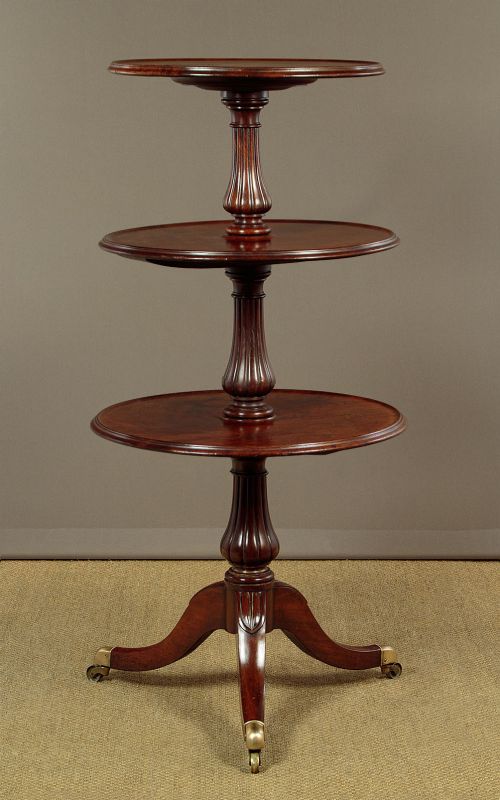
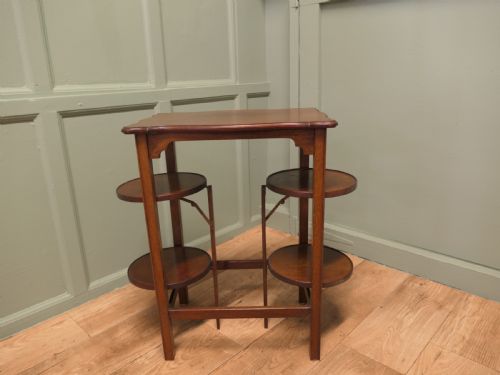
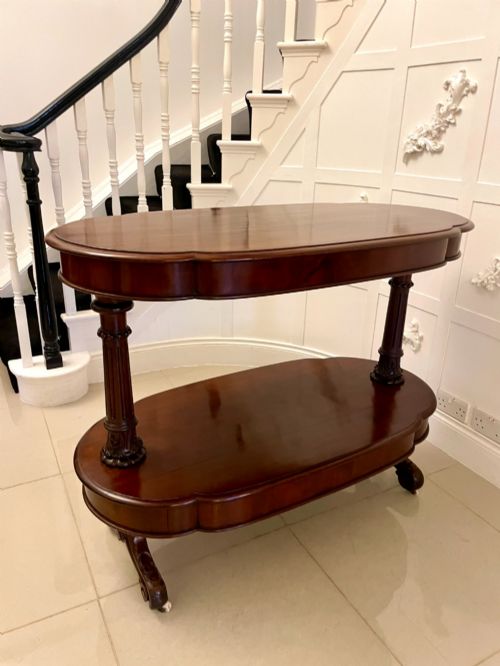
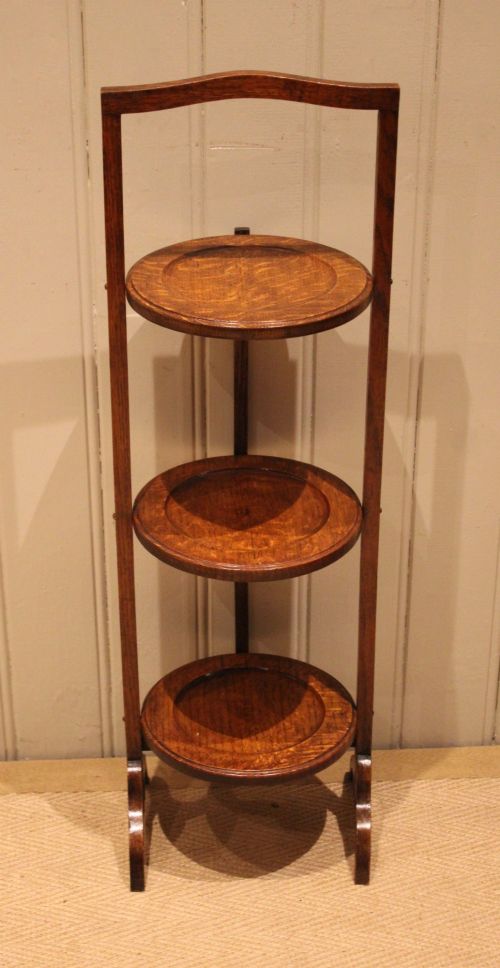
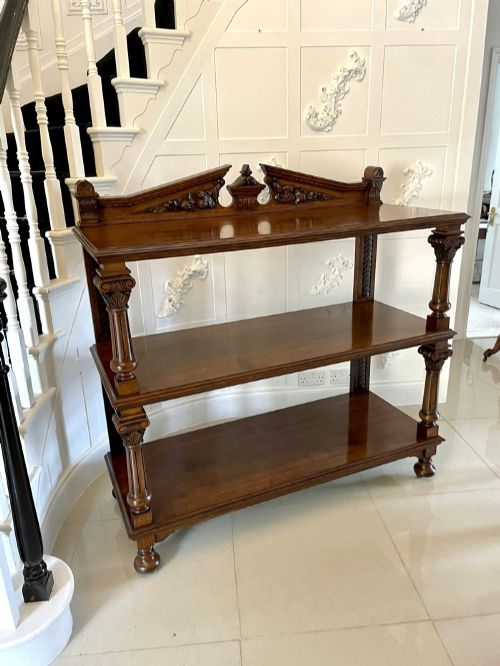
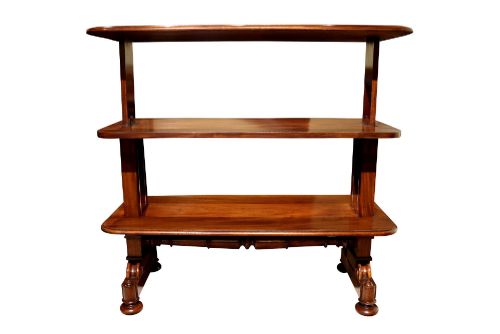
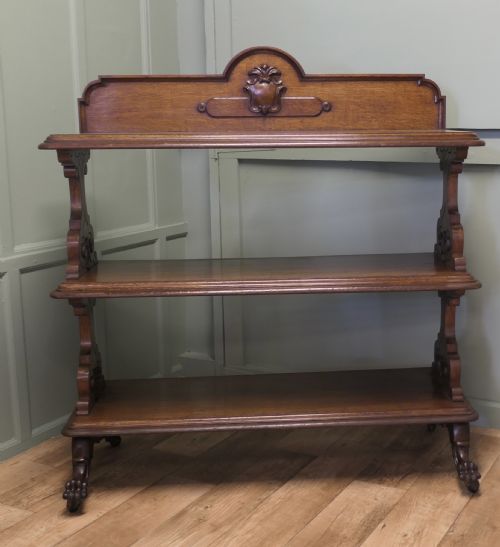
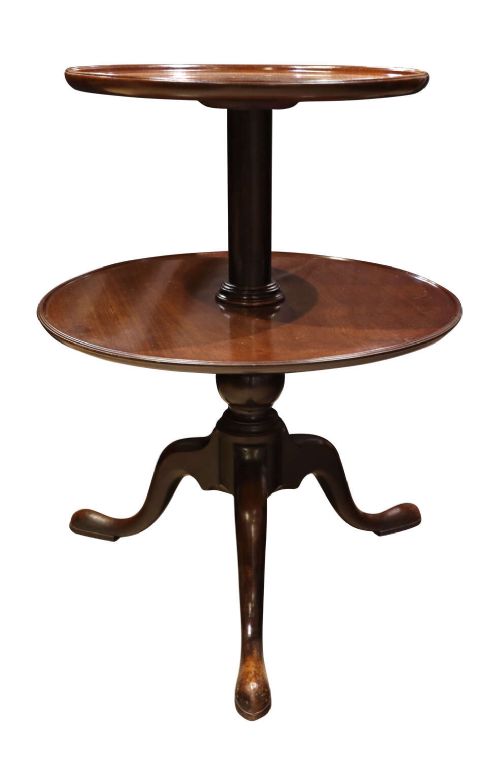
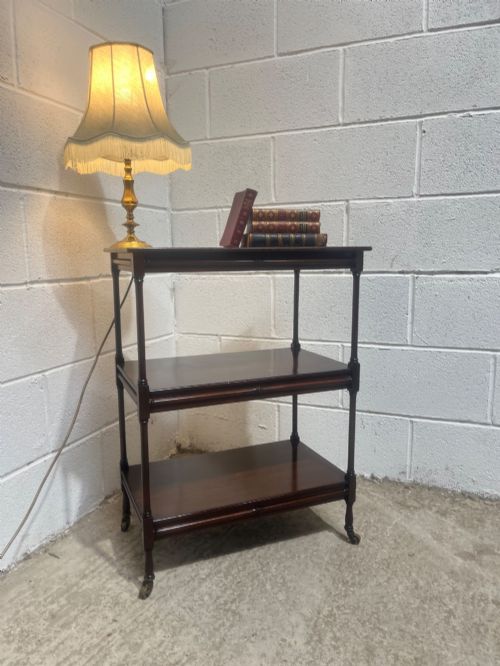
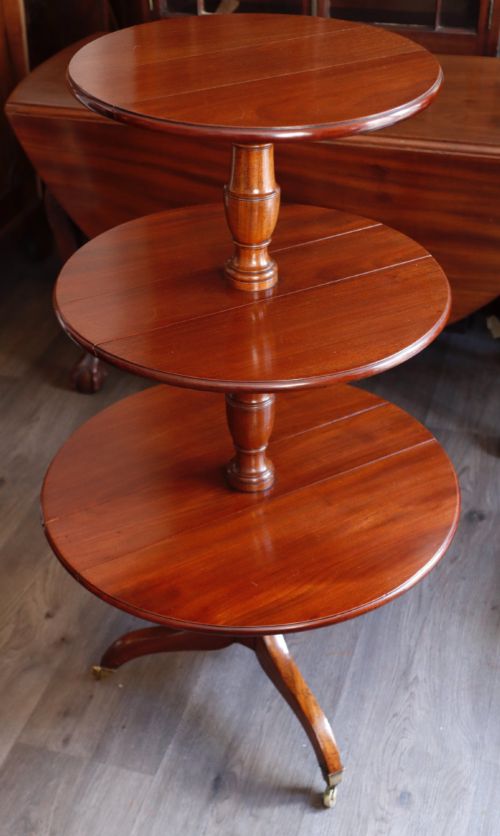
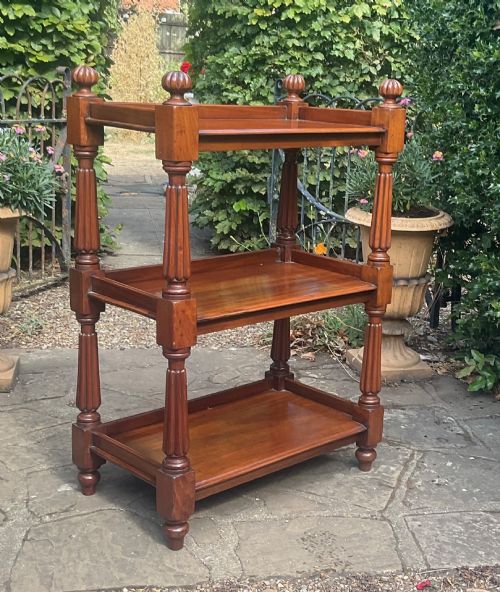
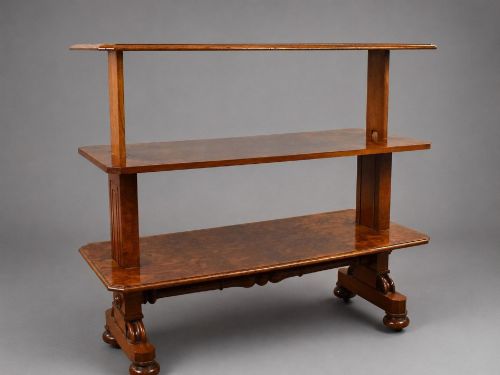
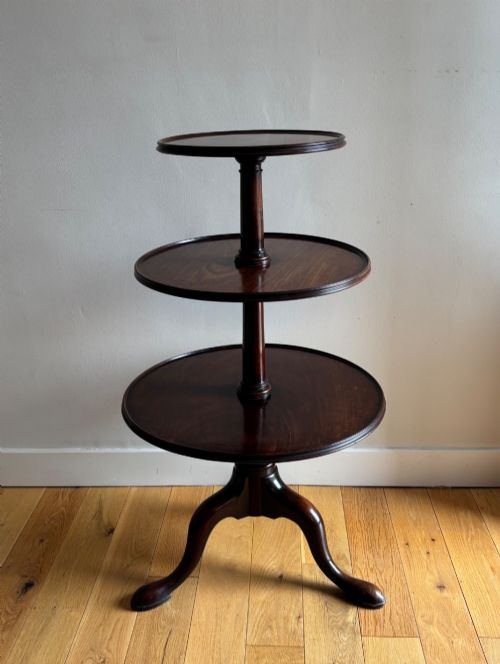
An antique tiered waiter takes the form of a multi-level serving stand designed to hold dishes, glasses, or afternoon tea without cluttering the main dining table. These serving pieces range from compact two-tier tripod tables to substantial three-tier and six-tier buffets.
Materials and construction
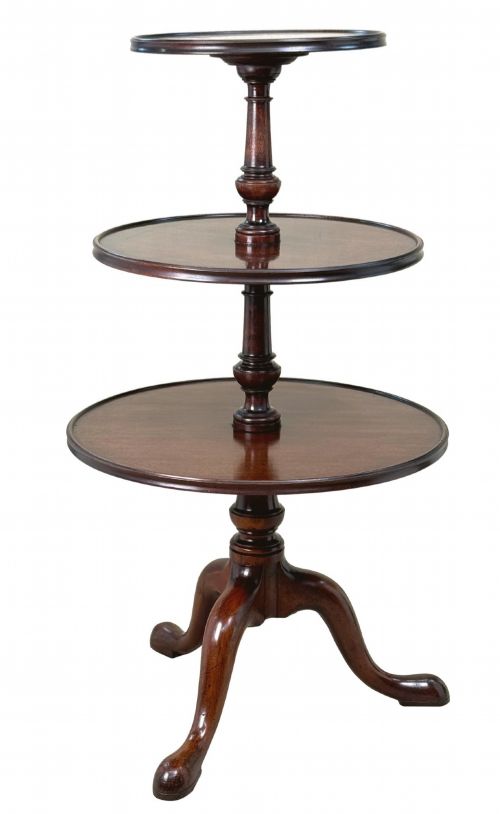
Cabinetmakers built these serving stands predominantly from solid mahogany, oak, and walnut, often selecting figured grains for the graduated circular trays. Many examples incorporate turned central pedestals supported by tripod legs, occasionally fitted with original brass castors for mobility.
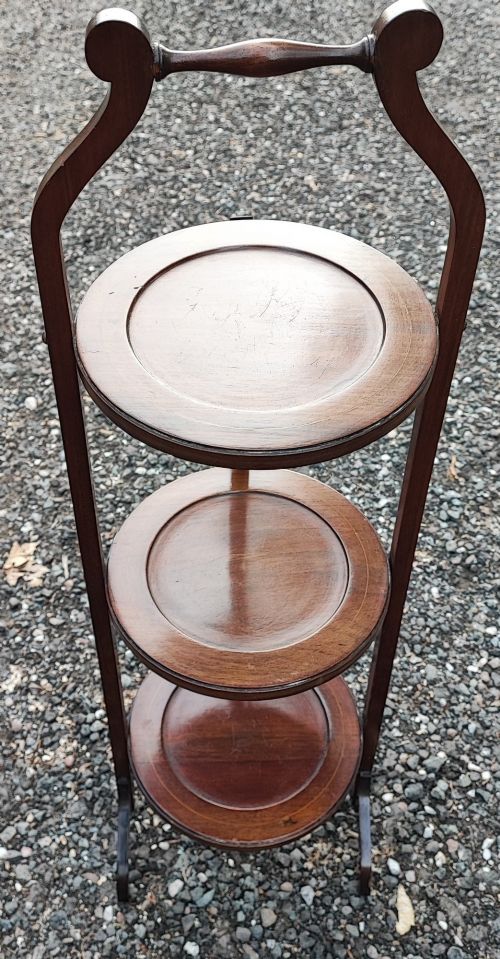
Specialised variations feature telescopic mechanisms, rising mechanisms, or folding frameworks that allow the tiers to adjust or collapse when not in use. Joinery techniques rely heavily on robust central shafts and secure pegging to support heavy stacked wooden trays.
Listings feature mahogany, oak, walnut, amboyna, satinwood, and ebonised wood across Georgian, Regency, Victorian, and Edwardian periods.
Distinctions in craftsmanship
Quality rests upon the selection of timber and the stability of the central revolving mechanism, where superior examples turn smoothly without wobble across multiple tiers. Finely turned columns, crisp carving details, and well-fitted brass hardware separate workshop pieces from standard utility furniture.
Proportion and wood figure dictate the elegance of the silhouette, particularly on tripod bases where the sweep of the legs must balance the graduated diameters of the shelves above.
The Antique Tiered Waiter Glossary
- Dumb waiter
- A freestanding tiered piece of dining room furniture designed to hold food and utensils without the presence of servants.
- Etagere
- A set of open shelves for displaying small objects or serving items, arranged in multiple tiers.
- Tripod base
- A three-legged support structure commonly used beneath pedestals to provide stability on uneven dining room floors.
- Telescopic
- Descriptive of a central column that adjusts in height through mechanical sliding components.
Antique Tiered Waiter: Frequently Asked Questions
What is an antique tiered waiter used for?
These pieces served as auxiliary serving tables during formal meals, holding extra plates, bottles, and dishes within reach of diners. Today, they function effectively as lamp tables, plant stands, or side tables in sitting rooms.
Their stacked circular trays provide substantial display space while occupying a modest footprint on the floor.
How do I identify a Georgian tiered waiter?
Georgian examples typically feature rich mahogany timber, circular graduated trays with raised moulded rims, and tripod bases with pad or spade feet. The joinery employs traditional pegged tenons and hand-turned central pillars.
Maker attributions to workshops like Gillows sometimes appear through refined proportions and characteristic brass fittings.
Do the tiers rotate on these stands?
Many traditional examples incorporate a revolving mechanism that allows diners to spin the trays independently to reach dishes without standing up. Fixed-tier varieties also exist, particularly among cake stands and etageres.
Checking the pivot point under each shelf reveals whether the design permits rotation.
Where should I place a tiered waiter at home?
These stands suit corners or empty wall spaces in dining rooms, living rooms, and hallways where multiple display surfaces are useful. Their circular shape softens linear room layouts.
Ensure the tripod legs have sufficient clearance from heavy foot traffic to maintain stability.