




Antique Tiered Serving Cart
An antique tiered serving cart brings mobile elegance to hospitality, moving drinks and tea with classic grace.
Antique Tiered Serving Cart
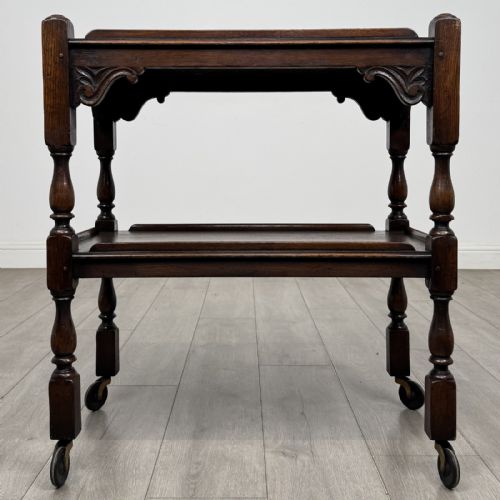
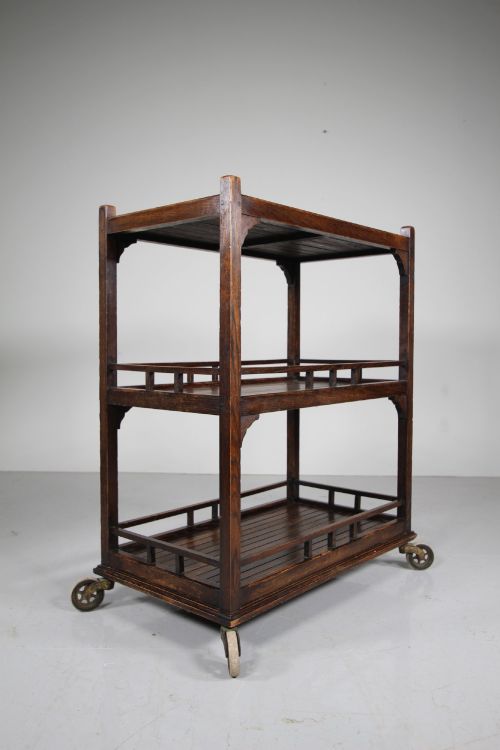
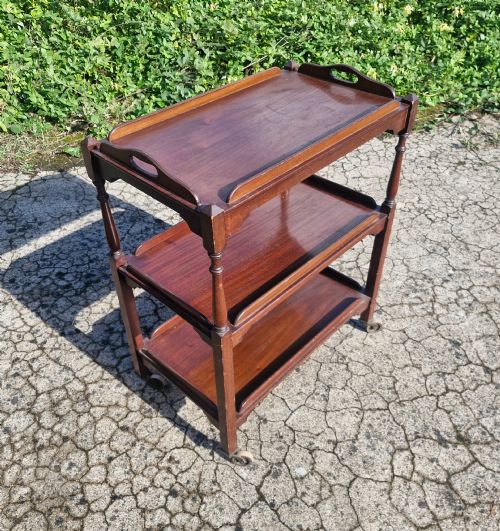
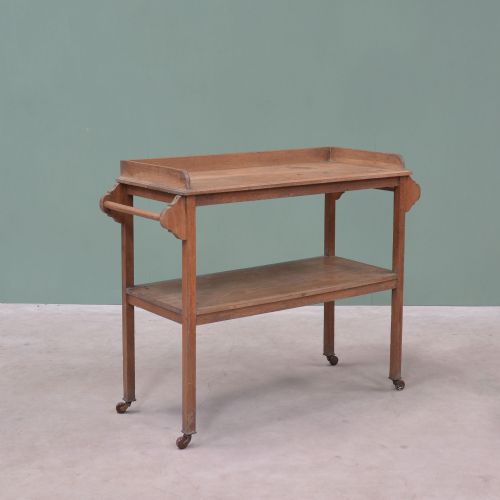
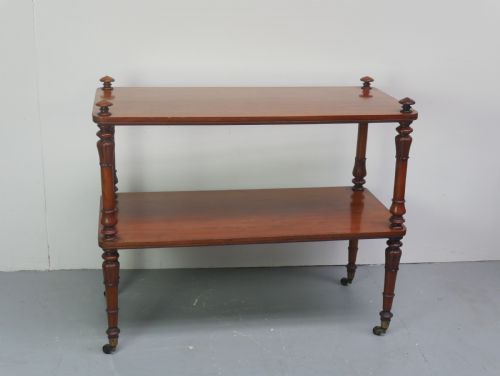
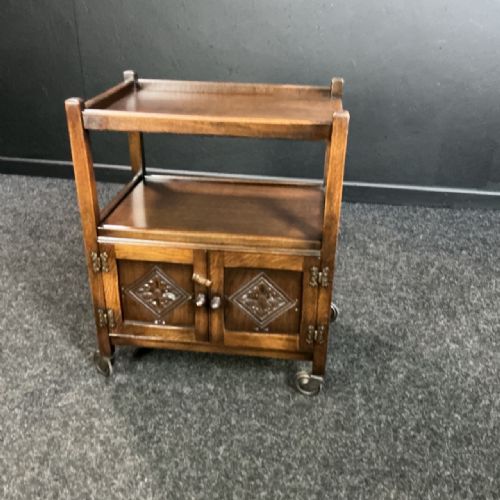
An antique tiered serving cart functions as a movable table for drinks, afternoon tea, or buffet service, usually fitted with wheels for easy transport across rooms. The examples found here span multiple periods, including the Victorian era, the Edwardian period, and the Art Deco movement.
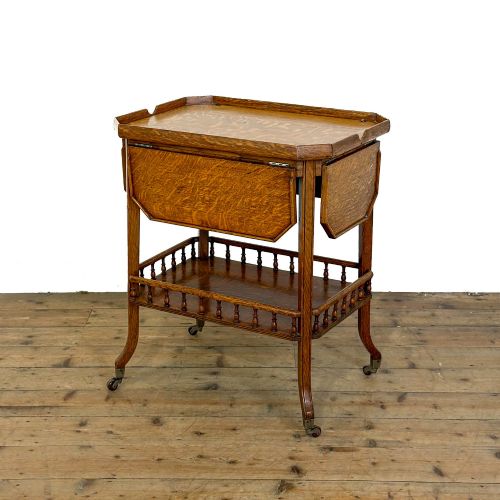
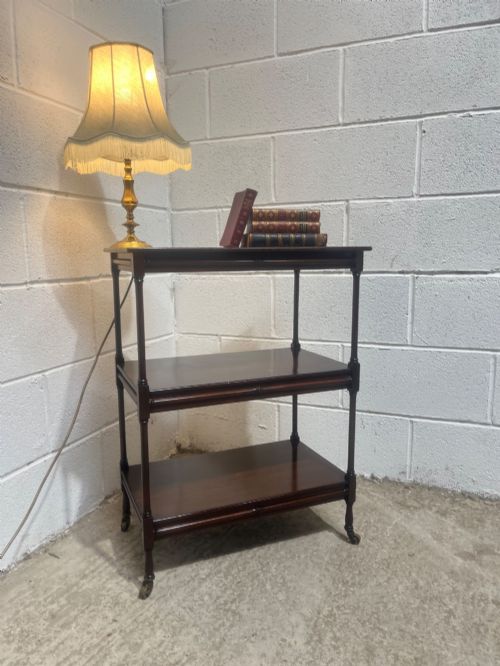
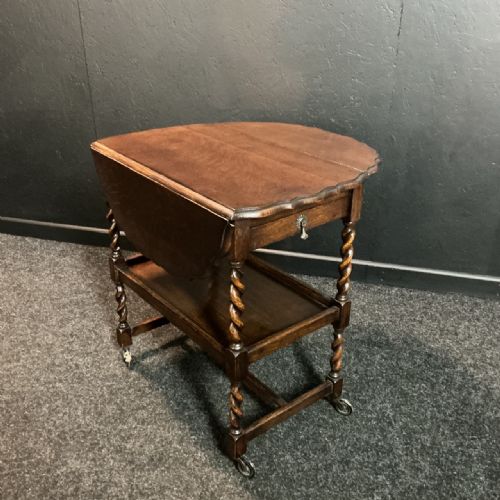
Most pieces on this page appear as tea trolleys, bar carts, or tiered etageres with two or three distinct levels. Formats range from folding tables and dropleaf designs to revolving circular bar carts and sturdy oak buffets.
Materials and construction
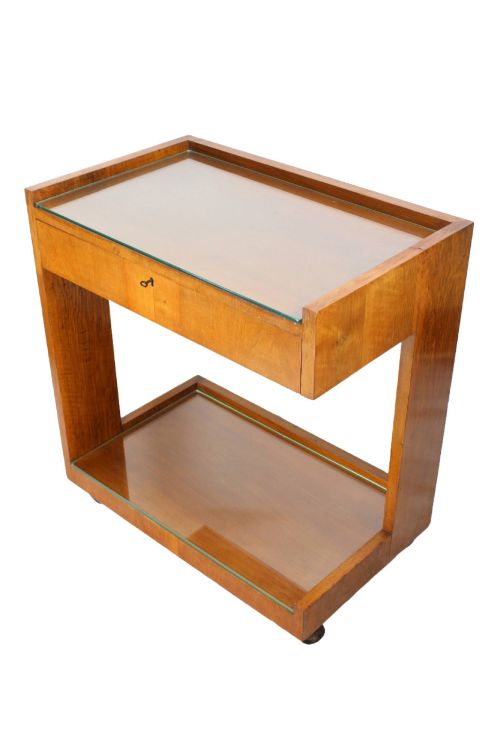
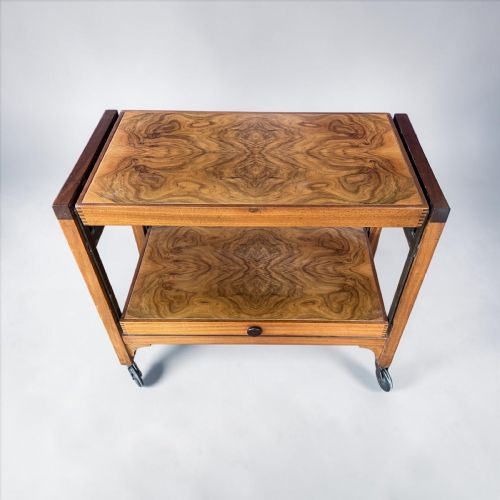
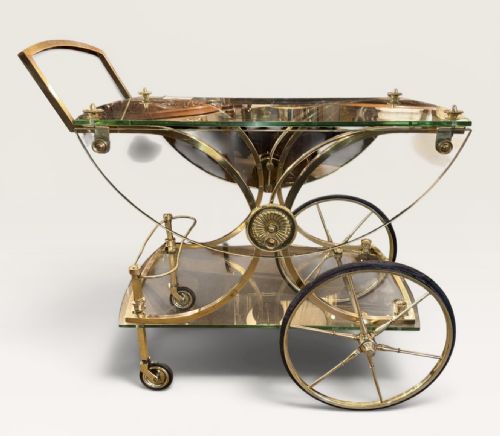
Cabinetmakers utilised timber such as oak, mahogany, walnut, and exotic hardwoods, often shaping them with carved details like barley twist supports or inlaid surfaces. Metal elements such as brass, cast iron, and chrome appear alongside glass and mirror panels to create multi-level service platforms.
Joinery techniques varied by period, shifting from traditional 19th-century mahogany construction to the streamlined curves and metal framing characteristic of Art Deco and mid-century designs.
Antique Tiered Serving Cart Retail Price Guide 2026
Typical asking prices for tiered serving cart among the pieces listed under this phrase on Sellingantiques today, from the lower quarter to the upper quarter. They describe what is for sale here now, not the wider market.
Materials across these listings include oak, mahogany, walnut, brass, glass, chrome, and cast iron.
Assessing quality and design
Quality rests in the selection of figured timber veneers, the precision of turnings such as barley twists, and the integration of functional elements like lift-off trays or folding leaves. Superior pieces combine sturdy structural joinery with smooth mobility on their original wheels.
Design sophistication distinguishes standard utility items from high-style examples, particularly where modernist chrome framing or intricate Chinese and Indian carving elevates the piece beyond basic domestic service.
The Antique Tiered Serving Cart Glossary
- Etagere
- A set of open shelves or tiers used for displaying or serving items. These structures provide multiple levels for bottles or tea services.
- Barley twist
- A wooden furniture leg or support carved in a spiral twist. This decorative turning appears frequently on Edwardian oak tea trolleys.
- Dropleaf
- A table top with hinged flaps that fold down to save space. Many serving carts utilise this mechanism to expand surface area when needed.
- Dumb waiter
- A tiered serving piece from the nineteenth century used to hold dishes or drinks. These heavy wooden pieces preceded the lighter twentieth-century tea trolley.
- Metamorphic
- Furniture designed to transform from one form into another, such as a serving trolley converting into a card table. This clever engineering adds versatility to the piece.
Antique Tiered Serving Cart: Frequently Asked Questions
What is an antique tiered serving cart used for?
These mobile tables served originally for afternoon tea, formal drinks, or moving dishes between rooms without relying entirely on domestic staff.
Today, collectors utilise them as portable home bars, side tables, or display shelving for glassware and bottles in living spaces.
How do I date an antique tea trolley?
Dating relies on identifying the prevailing style and materials, such as heavy Victorian mahogany or Edwardian oak with barley twist supports.
Art Deco examples from the 1930s typically feature circular walnut designs, chrome framing, and mirror glass surfaces that reflect modernist tastes.
Are these trolleys sturdy enough for daily use?
Most pieces were built from solid hardwoods like oak and mahogany, making them structurally robust for holding heavy bottles and ceramic teapots.
Care should be taken with older wheel mechanisms and hinged dropleaf joints to ensure they support weight safely during movement.
What is the difference between a tea trolley and a bar cart?
Tea trolleys generally date from the Edwardian and early twentieth-century periods, constructed primarily in wood with dropleaf tops or glass inserts for serving tea.
Bar carts more frequently align with 1930s Art Deco or mid-century designs, incorporating circular walnut frames, brass galleries, and mirrored surfaces specifically for drinks.