



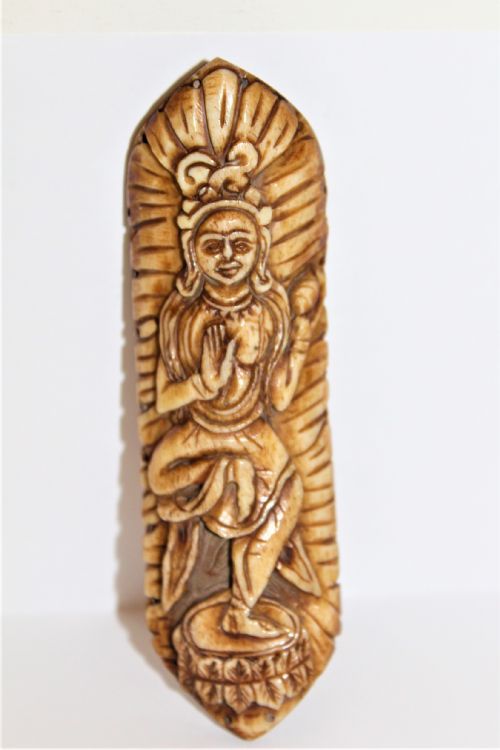

Antique Tibetan Art
Antique Tibetan art brings ritual bronzes, thangka paintings and carved wooden masks into a room, carrying centuries of Himalayan Buddhist devotion.
Antique Tibetan Art
When you search for antique tibetan art, you encounter sacred sculptures, monastic paintings and ritual objects created across the nineteenth, eighteenth and seventeenth centuries. The selections here centre on cast bronze deities, painted thangkas on cotton and carved wooden ritual pieces.
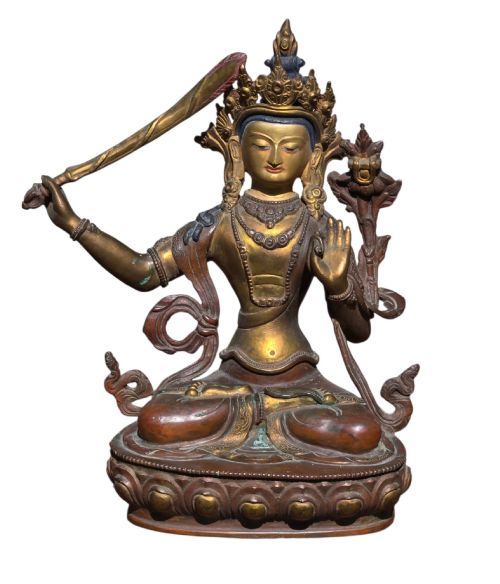
The most common pieces on this page are metal sculptures of figures such as Manjushri, Tara and the seated Buddha, alongside framed thangkas and carved wooden masks. These works originate from monastic and domestic traditions across Tibet and the wider Himalayan region.
Objects span from large statuary down to smaller personal items like carved bone pendants and manuscript covers. Each piece reflects the iconography and spiritual practices of Tibetan Buddhism.
How they were made
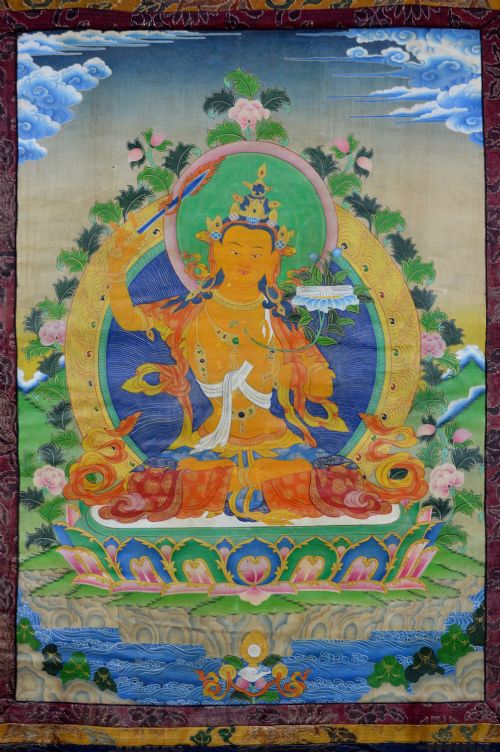
Paintings employ mineral pigments on cotton grounds, forming detailed thangkas that depict deities and sacred narratives. Woodcarving utilises local timbers like mulberry and other regional woods, shaped into masks, manuscript covers and architectural elements before receiving polychrome paint.
Organic materials such as bone are carved into intricate plaques and pendants, acquiring a dark patina through handling and age.
Antique Tibetan Art Retail Price Guide 2026
Typical asking prices for tibetan art among the pieces listed under this phrase on Sellingantiques today, from the lower quarter to the upper quarter. They describe what is for sale here now, not the wider market.
Listings span from the seventeenth century through to the early twentieth century, incorporating materials such as bronze, mulberry wood, bone and mineral pigments on cotton.
What varies in quality
The standard of a bronze sculpture rests on the crispness of the casting and the preservation of any original gilding or cold-painted pigments on the face. Finer pieces display confident modelling in the drapery and hands, whereas simpler works show softer details.
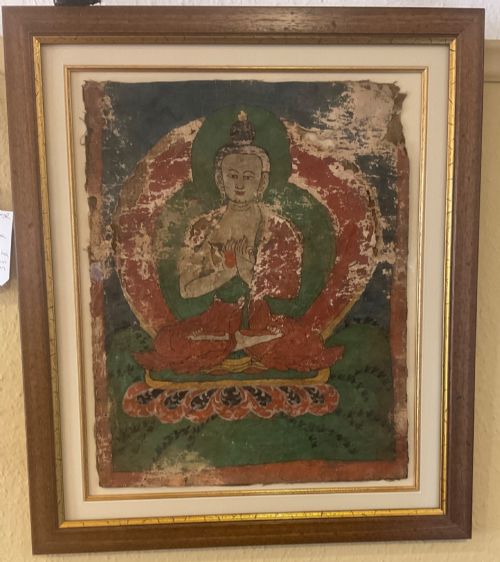
In paintings and thangkas, quality depends on the delicacy of the mineral pigment brushwork and the complexity of the iconography within the cotton ground. Well-preserved textiles retain vibrant colour harmonies and precise linework in the depiction of deities.
Carved wooden masks and ritual objects vary according to the depth of the carving and the character of the surface wear. Pieces that retain their original polychrome paint alongside honest handling marks hold greater visual presence.
The Antique Tibetan Art Glossary
- Thangka
- A Tibetan Buddhist painting on cotton, usually framed or mounted on textiles, depicting a deity, mandala or sacred scene. These scrolls were utilised for meditation and instruction within monasteries.
- Manjushri
- A bodhisattva in Mahayana Buddhism personifying supreme wisdom. Sculptures and paintings frequently depict him holding a flaming sword and a sacred text.
- Sino-Tibetan
- A style describing works created under the cultural or artistic influence of both Chinese imperial workshops and Tibetan Buddhist traditions. These pieces often combine gilt-bronze casting techniques with distinct Himalayan iconography.
- Bodhisattva
- An enlightened being who chooses to remain in the cycle of rebirth to assist others. They appear frequently in sculptures and paintings adorned with princely ornaments.
- Polychrome paint
- Decoration executed in multiple colours upon wood, metal or plaster surfaces. In Tibetan art, pigments were applied to statues, masks and architectural elements.
Antique Tibetan Art: Frequently Asked Questions
What is a thangka painting?
A thangka is a traditional Tibetan painting executed with mineral pigments on a cotton support, designed to be hung in monasteries or private altars for meditation.
These works depict buddhas, bodhisattvas and mandalas, following strict iconographic rules laid down in Buddhist texts.
How are bronze sculptures finished?
Many Tibetan bronze sculptures are produced through the lost-wax casting method and subsequently fire-gilded to create a bright metallic surface.
Artists often applied cold-painted mineral pigments directly onto the face of the deity to define the eyes, lips and hair.
Where do these wooden masks originate?
Carved wooden masks come from Himalayan ritual and theatrical traditions, where performers wore them during sacred dances and monastic festivals.
They are fashioned from local timbers and frequently finished with layers of polychrome paint that show the wear of past use.
How do I care for antique cotton thangkas?
Thangkas on cotton require protection from direct sunlight and high humidity to prevent the mineral pigments from fading or flaking.
Keeping them framed behind protective glazing helps shield the delicate textile ground from atmospheric dust and physical disturbance.