



Antique Three Chair Settee
An antique three chair settee provides extended seating scaled for a salon, linking multiple chair backs into a single timber frame.
Antique Three Chair Settee
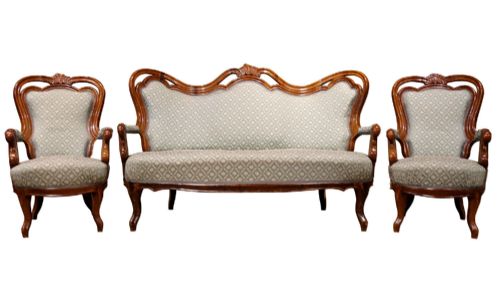
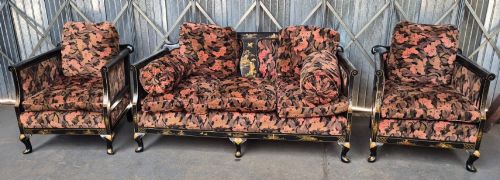
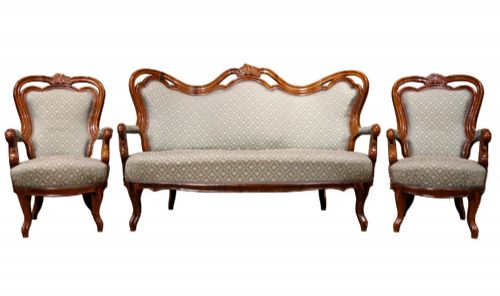
An antique three chair settee connects multiple individual chair backs within one unified wooden framework, creating an extended seat for a salon or drawing room. You will encounter these pieces across Victorian, Edwardian, and Art Deco periods, often appearing alongside matching armchairs as part of a larger suite.
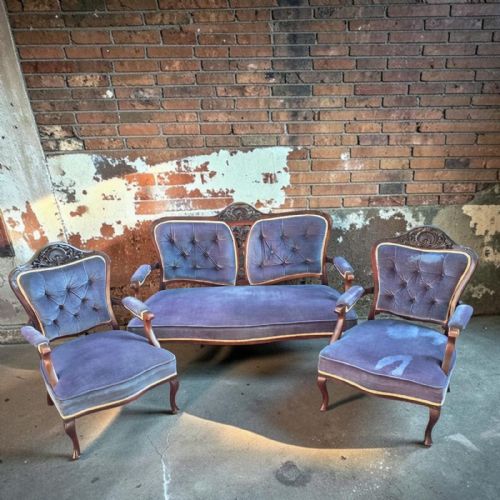
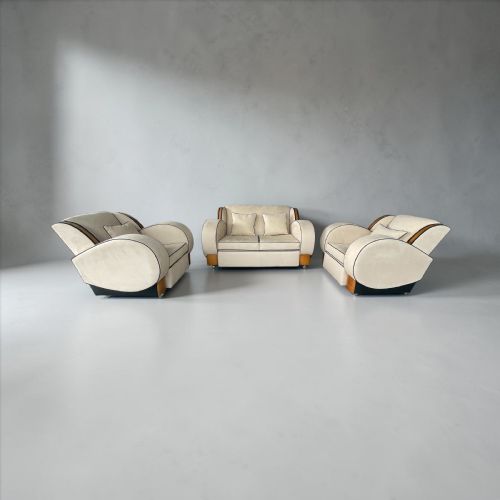
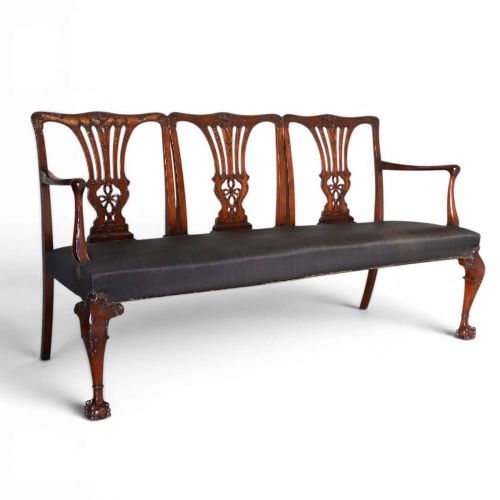
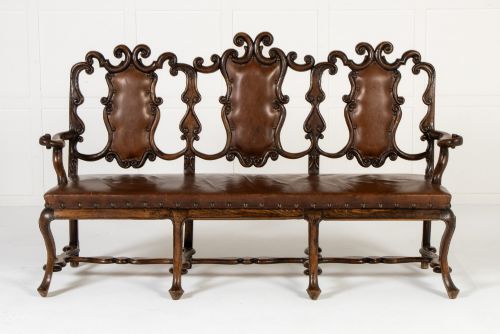
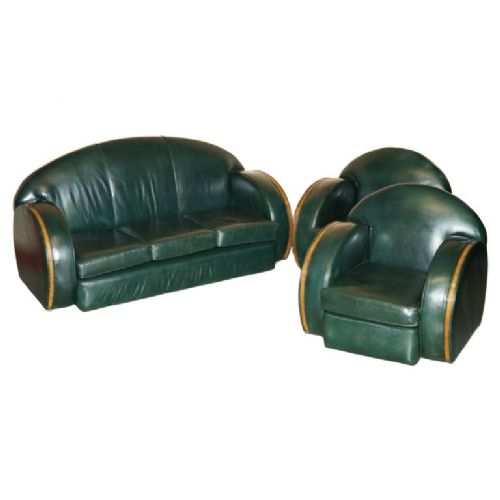
The form ranges from formal 19th Century triple chair back designs in mahogany or walnut to upholstered Edwardian boudoir suites and streamlined Art Deco walnut or leather lounge arrangements. Makers drew on historic revival styles, producing pieces shaped with carved woodwork or inlaid details.
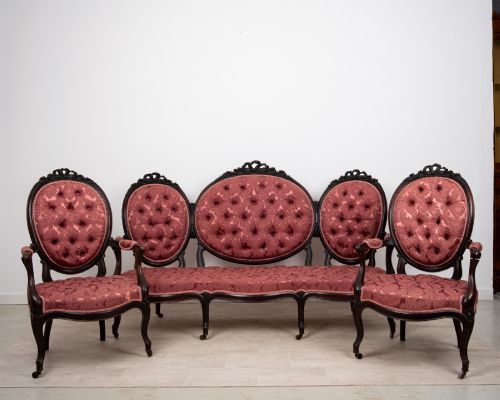
Many examples function as part of coordinated seating suites rather than standalone items, matching twin armchairs in wood selection and decorative carving. The structural layout mimics three conjoined chairs sharing continuous seat rails and front legs.
Distinctions in quality
Quality rests in the crispness of the timber carving and the architectural proportion of the conjoined chair backs. Superior examples display refined hand-carved details and tightly jointed frames that remain rigid across the extended span.
The choice of primary wood and the integrity of the surviving upholstery materials determine the standing of the piece. Suites retaining original leather or period textile coverings demonstrate a higher degree of preservation than those requiring complete reconstruction.
Listings feature woods including mahogany, walnut, maple, and padauk, alongside textiles and leather.
Howard and Sons
The Antique Three Chair Settee Glossary
- Chair back settee
- A long seat whose back is constructed to resemble a row of individual chair backs joined together in a single frame. This design draws inspiration from standard dining or salon chair patterns.
- Salon suite
- A coordinated group of seating furniture designed for formal reception rooms, usually comprising a settee and matching armchairs. These matched sets share identical timber types and decorative motifs.
- Chippendale style
- A furniture design style characterised by intricate carved woodwork, often featuring interlaced ribbon backs or cabriole legs. It takes inspiration from the 18th Century cabinetmaker Thomas Chippendale.
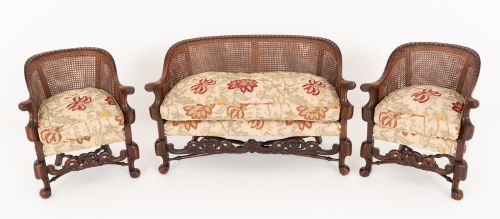
- Bergere suite
- A seating group featuring upholstered frames with enclosed cane or padded side panels. These pieces typically offer deep, comfortable proportions suited to domestic lounge spaces.
- Deep buttoned upholstery
- A technique where fabric or leather is pulled tight against internal padding and secured with spaced indentations. This method creates a distinctive diamond pattern across the backrest.
Antique Three Chair Settee: Frequently Asked Questions
How were these settees used originally?
These settees served as formal seating in Victorian salons, Edwardian drawing rooms, and later Art Deco reception spaces. They provided functional seating for multiple guests while maintaining the decorative uniformity of a matched interior.
Positioned against walls or arranged in conversation groups with matching armchairs, they formed the central seating focus of a room. Their construction allowed hosts to accommodate visitors without crowding smaller standalone chairs into the space.
Are these settees part of larger matching sets?
Many listings appear as part of three-piece salon or lounge suites that include a settee alongside a pair of armchairs. These suites were manufactured as a single unified commission to ensure consistent timber grain and upholstery.
Single settees also occur independently, particularly in earlier 19th Century cabinet back designs. Checking the woodwork and stylistic motifs helps determine whether a settee belonged to a larger suite.
How do I care for the leather upholstery?
Leather upholstery requires regular dusting with a dry cloth and occasional treatment with a suitable conditioner to prevent drying out. Keeping the leather away from direct sunlight and heat sources preserves its suppleness.
Avoid using harsh chemical cleaners or excessive water when maintaining vintage leather surfaces. Professional conservation methods should be consulted for antique pieces showing surface cracking.
What distinguishes Edwardian examples from Victorian pieces?
Victorian settees tend to feature heavier mahogany frames, elaborate carved details, and deep buttoned upholstery. Their overall aesthetic leans toward formal and substantial proportions.
Edwardian pieces often introduce lighter satinwood or mahogany with delicate inlaid decoration, reflecting a shift toward airier drawing room furniture. The construction becomes slightly more restrained compared to the heavier Victorian output.