

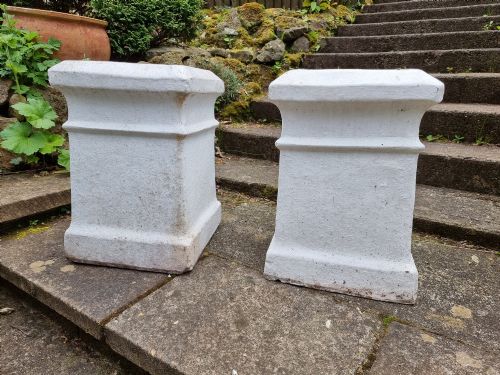


Antique Terracotta Plinths
These antique terracotta plinths and pedestals lift garden urns, busts and figures into the light, giving structural height and neoclassical presence to a terrace or room.
Antique Terracotta Plinths
When you search for antique terracotta plinths, you find architectural columns, display columns and garden pedestals spanning the Georgian, Victorian and 19th-century periods. These supports take the form of classical revival shafts, garden plinths and repurposed chimney pots designed to elevate statuary.
The pieces on this page lean heavily towards 19th-century Victorian examples and classical designs, alongside occasional Art Deco pottery figures and stands. Buyers encounter everything from grand garden pedestals to indoor display columns fashioned from fired clay.
Makers and manufacturers represented in these listings range from regional producers like the Dunfermline Clay Company to individual modellers such as Guido Cacciapuoti and Bohumil Rezl. Each object brings a distinct architectural weight, whether intended for an English garden or an interior salon.
How they were made
Makers shaped these supports primarily from terracotta, stoneware and glazed ceramic, sometimes combining fired clay with painted timber, wood or lead bases. Certain surfaces carry a faux marble finish or historic paint layers applied over the porous clay body.
Firing techniques varied according to scale, with larger garden pedestals and chimney pot conversions requiring robust stoneware bodies to withstand outdoor elements. Sculptural elements and busts often relied on finer terracotta or plaster, sometimes mounted on dedicated wooden or ceramic bases.
Antique Terracotta Plinths Retail Price Guide 2026
Typical asking prices for terracotta plinths among the pieces listed under this phrase on Sellingantiques today, from the lower quarter to the upper quarter. They describe what is for sale here now, not the wider market.
At least one sturdy Victorian chimney pot found a second life as an eccentric garden sundial.
What varies in quality
Quality in these pieces rests upon the crispness of the modelling, the depth of the fired clay and the integrity of any surface finishes like faux marble or early paint. A strong piece displays balanced proportions and deliberate architectural detail rather than hasty mass production.
The distinction between a utilitarian chimney pot conversion and a purpose-built neoclassical display column dictates the character of the object. Weight, density of the terracotta, and the survival of original surfaces or associated garden urns define the upper tier of the range.
Dunfermline Clay Company·Guido Cacciapuoti·Bohumil Rezl
The Antique Terracotta Plinths Glossary
- Terracotta
- A porous, brownish-red fired clay used extensively for garden ornaments, plinths and architectural figures. It weathers distinctively when exposed to the elements.
- Neoclassical
- A style drawing inspiration from the classical art and architecture of ancient Greece and Rome. It dominates the decorative vocabulary of many 19th-century pedestals.
- Salt Glazed
- A ceramic finish created by throwing common salt into the kiln during high-temperature firing, producing a characteristic textured glaze.
- Plinth
- A heavy rectangular or square block serving as the base for a statue, vase or column. It provides both physical stability and visual grounding.
- Pedestal
- An upright architectural support or pillar that elevates an urn, bust or sculpture. These forms range from simple classical columns to tapered display stands.
Antique Terracotta Plinths: Frequently Asked Questions
Where should I place an antique terracotta plinth?
These pieces suit both formal gardens and interior spaces, depending on their original function and material finish. Garden pedestals and salt-glazed urns belong outdoors on terraces or lawns.
Indoor display columns and terracotta busts require sheltered spots away from severe frost. Pairing a plinth with a compatible urn or sculpture creates a complete architectural focal point.
How do I care for antique terracotta outdoors?
Terracotta is porous and absorbs moisture, making winter frost a primary concern for garden pieces. Ensure your plinth stands on gravel or feet rather than directly on wet soil to prevent rising damp.
Avoid pressure washing historic clay surfaces, opting instead for gentle brushing with water. Bringing delicate or glazed pieces indoors during freezing weather preserves the material.
How can I tell a Victorian plinth from a Georgian one?
Georgian pieces often display restrained neoclassical lines with precise, sharp mouldings influenced by architectural excavation of the period. Their proportions tend to follow strict classical rules.
Victorian examples frequently introduce heavier ornamentation, industrial innovations like salt glazing, or robust utility such as repurposed chimney pots. Examining the clay consistency and surface finish helps clarify the period.