


Antique Telescopic Lamp
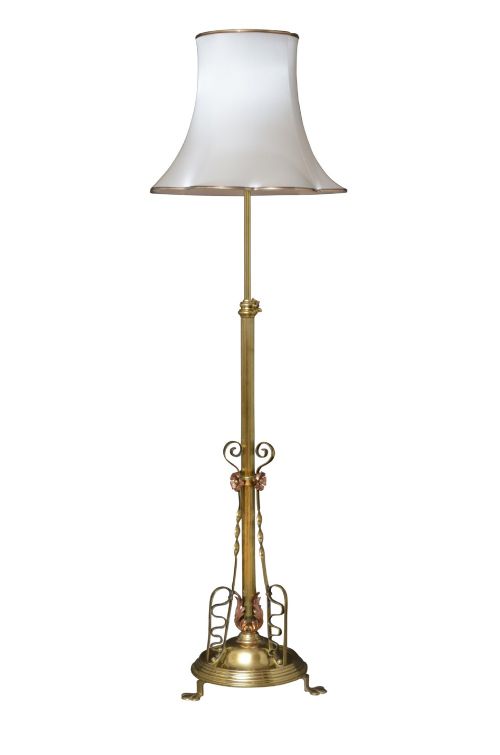
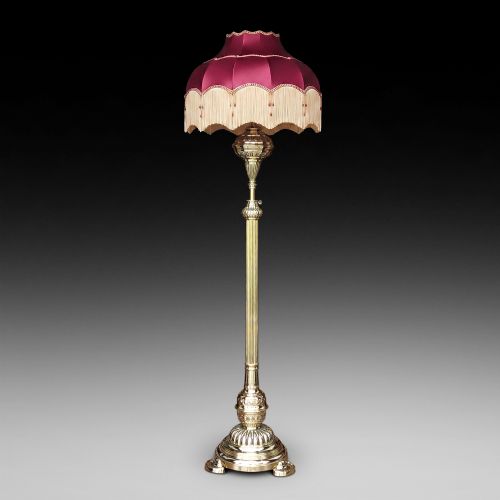
These antique telescopic lamp pieces bring adjustable height and period illumination to a room, offering brass, copper, and wrought iron floor stands.
Antique Telescopic Lamp
When you search for an antique telescopic lamp, you are examining height-adjustable floor and standard lamps originating mostly from the Victorian and Edwardian eras, alongside pieces from around nineteen hundred. These objects often began life as oil lamps fitted with burners before later conversion to electricity.
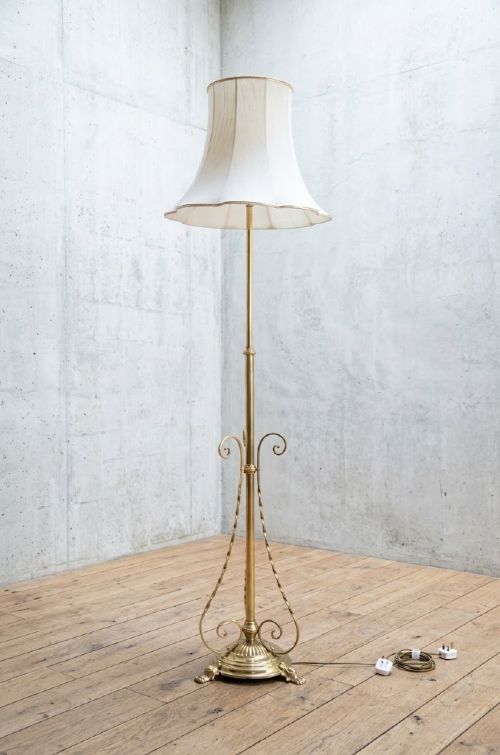
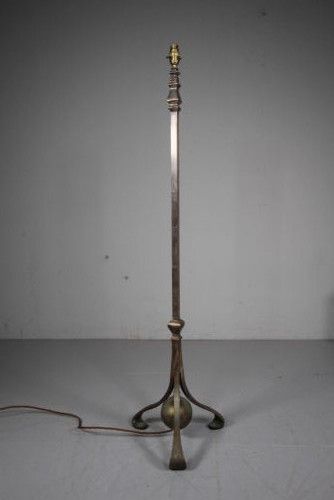
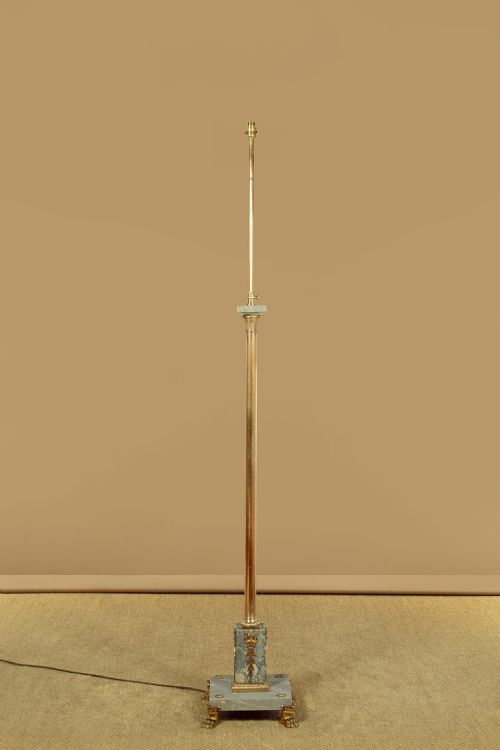
You will most frequently meet standard lamps constructed from polished brass, occasionally paired with copper, marble, onyx, or wrought iron. The forms range from simple utilitarian stems to classical Corinthian columns designed to extend upwards to cast light across a space.
Materials and construction
Makers utilised solid brass, copper, and wrought iron, shaping metal tubes that slide smoothly inside one another to permit height adjustment. Heavy weighted bases of cast iron, brass, or marble provided stability for the tall extending shafts.
Many examples combined brass with contrasting materials such as silver plate, French onyx, or ceramic, while fittings accommodated fabric shades or opaline glass reservoirs.
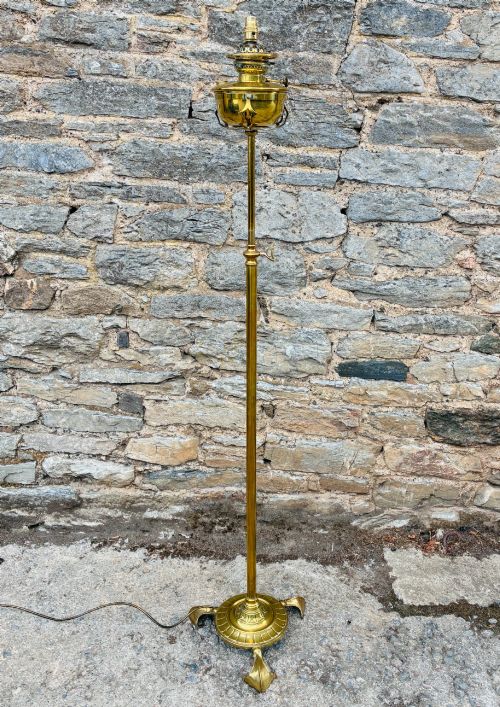
Several heavy brass models retain their original reservoir collars, carrying the silent history of midnight reading by paraffin light.
Judging standard and execution
Quality rests in the precision of the sliding mechanism and the weight of the metal used in the shaft and base. A well-made telescopic lamp holds its height securely without slipping and balances the heavy top section safely over a solid foot.
Decoration distinguishes standard examples from finer commissions, seen in crisp casting work on Corinthian capitals, chased brass collars, or the inclusion of decorative marble and ormolu mounts.
Hinks of B'ham·Messenger
The Antique Telescopic Lamp Glossary
- Telescopic lamp
- A floor-standing lighting fixture featuring an inner sliding shaft that extends upwards to alter the total height.
- Standard lamp
- A tall freestanding lamp designed to stand directly on the floor rather than upon a piece of furniture.
- Corinthian column
- A classical architectural column style featuring ornate carved acanthus leaves at the top, frequently utilised on Victorian and Edwardian brass standards.
- Rise and fall
- An alternative descriptor for a height-adjustable lamp mechanism that moves up and down.
- Opaline glass
- A milky, translucent glass used for lamp shades and oil reservoirs to soften and diffuse light.
Antique Telescopic Lamp: Frequently Asked Questions
How do you adjust the height?
The inner metal shaft slides upward from the main outer column and locks into place with a thumbscrew or friction collar.
Users simply loosen the key or screw, raise the lamp to the desired elevation, and tighten the mechanism again.
Were these originally oil lamps?
Many examples were manufactured during the Victorian and Edwardian periods to burn paraffin oil in a top reservoir.
These pieces were subsequently adapted with internal wiring to hold electric lamp holders and modern bulbs.
How do you date a standard lamp?
Dating relies on stylistic clues such as the classical proportions of Corinthian columns, wrought iron work, or Art Nouveau whiplash motifs.
Makers' stamps on the brass burner or weighted iron base also provide evidence of the decade of production.
Where should you place a floor lamp?
These tall stands suit corners of reception rooms or beside heavy seating where adjustable illumination is useful.
The extended height allows light to cast downward over reading chairs or across an entire interior space.