


Antique Taxidermy Cloche
An antique taxidermy cloche preserves natural history specimens beneath blown glass, bringing Victorian and Edwardian interiors into focus.
Antique Taxidermy Cloche
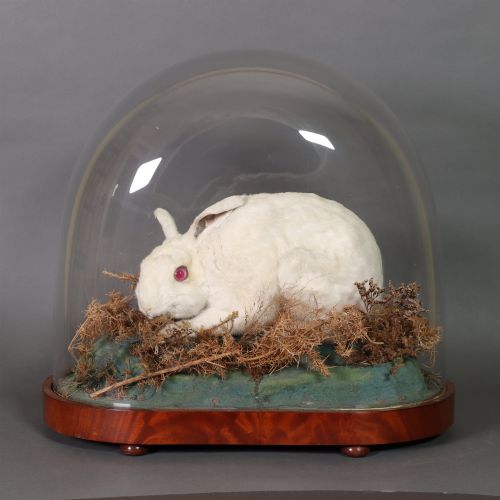
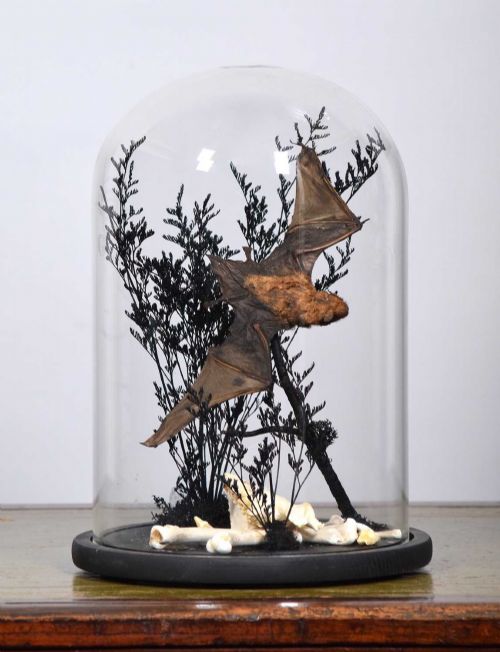
An antique taxidermy cloche combines a blown glass cover with a wooden base to protect mounted birds, bats, and mammals. These pieces originate from the Victorian and Edwardian periods, spanning the latter half of the nineteenth century into the early twentieth century.
The selections on this page appear as circular, oval, and flat-sided domes paired with wooden bases in ebonised wood, oak, beech, and pine. Makers mounted specimens above velvet, felt, fabric, or marquetry surfaces to create self-contained natural history compositions.
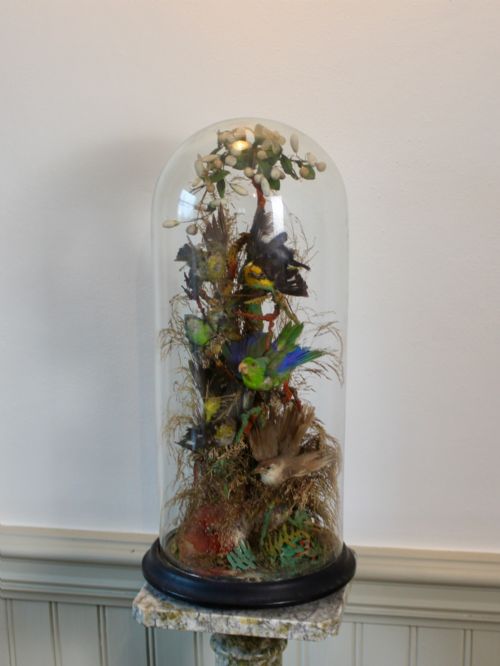
The most common formats range from small display domes housing single specimens to tall and wide showcases holding complex compositions of birds. English workshops produced the majority of these enclosures for collectors and domestic display.
Materials and Construction
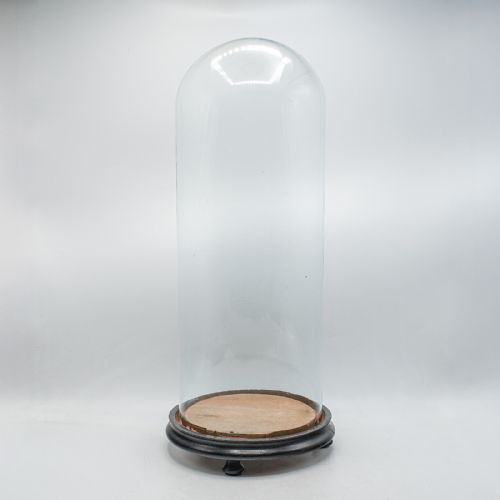
Makers utilised free-blown glass to create the clear domes, which display minor bubbles and surface irregularities characteristic of period manufacturing techniques. These delicate covers sit upon turned or moulded wooden bases, often finished in black ebonised treatments or left as polished oak, beech, and pine.
Internal arrangements rely on organic materials including feathers, fabric, velvet, and felt to form the ground upon which taxidermy specimens rest. Preparators secured birds and small mammals using wire frames and concealed fixings within the enclosed display space.
Listings feature Victorian and Edwardian pieces utilising glass, ebonised wood, oak, beech, pine, velvet, felt, and feathers.
Evaluating the Pieces
Quality depends upon the clarity and integrity of the blown glass dome, where uniformity and the absence of heavy distortion distinguish better examples. The joinery and timber selection of the base also dictate value, with heavier ebonised or polished hardwood plinths showing superior craftsmanship.
The taxidermy mounting itself separates standard work from master craftsmanship, particularly in the preservation of plumage, feather colour, and natural posture. Compositions featuring multiple specimens arranged by established taxidermists hold greater distinction than simple single-species mounts.
James Gardner of London·Henry Ward London·A Pollard
The Antique Taxidermy Cloche Glossary
- Cloche
- A bell-shaped glass cover used to protect delicate items or food, adapted in the nineteenth century for biological specimens. These glass covers rest upon dedicated wooden bases.
- Ebonised
- Wood treated with a dark stain or finish to imitate ebony. This dark surface finish appears frequently on Victorian display bases.
- Diorama
- A three-dimensional scene containing taxidermy specimens arranged in a naturalistic setting. These compositions sit beneath glass domes for protection.
- Specimen
- An individual animal or plant preserved for scientific study or display. Taxidermy examples include birds, bats, and small mammals.
- Plinth
- The solid base block supporting a glass dome and its internal display. These wooden mounts often feature turned mouldings.
Antique Taxidermy Cloche: Frequently Asked Questions
How do I clean the glass dome?
Lift the glass cover carefully from its wooden base using both hands on a flat, stable surface. Clean the exterior and interior with a mild glass cleaner and a soft microfiber cloth before replacing it.
Avoid using harsh chemical sprays near the antique wooden base or the taxidermy specimen inside. Moisture must not enter the sealed interior during cleaning.
Where should I place a taxidermy dome?
Position the dome away from direct sunlight to prevent the fading of feathers, fabric backgrounds, and wooden bases. Stable indoor temperatures help preserve the organic materials within the enclosure.
Select a sturdy table, mantelpiece, or cabinet where the display remains secure from knocks and heavy vibrations. Adequate room lighting highlights the details of the specimens without generating heat.
How do I date an antique dome?
Examine the characteristics of the glass, such as thickness, bubbles, and slight tinting, which indicate nineteenth-century production methods. The timber of the base and the style of the taxidermy mounting offer further chronological clues. Nail construction, wood turning styles, and historical labels pasted to the underside of the base help narrow down the decade of manufacture.