





Antique Tambour Cupboard
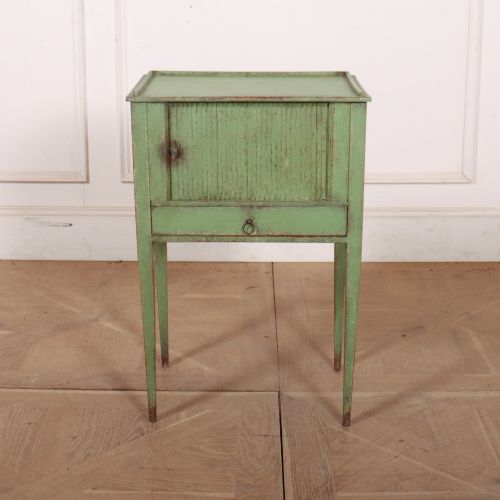
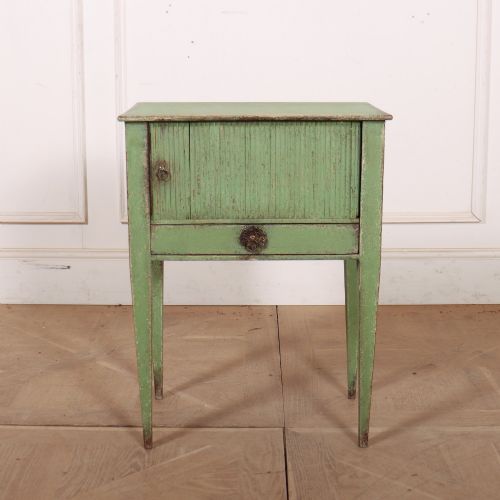
An antique tambour cupboard brings sliding slatted wooden doors to compact storage, combining mechanical ingenuity with classical cabinet-making.
Antique Tambour Cupboard
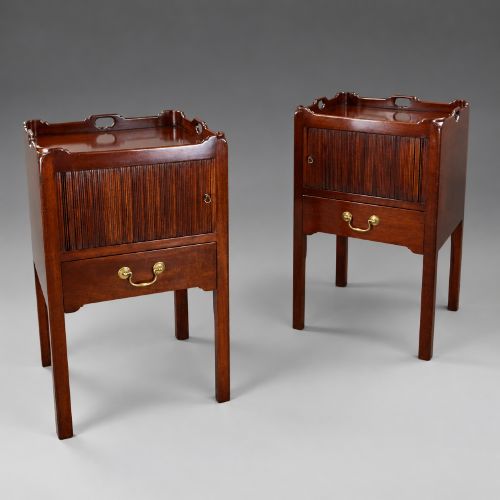
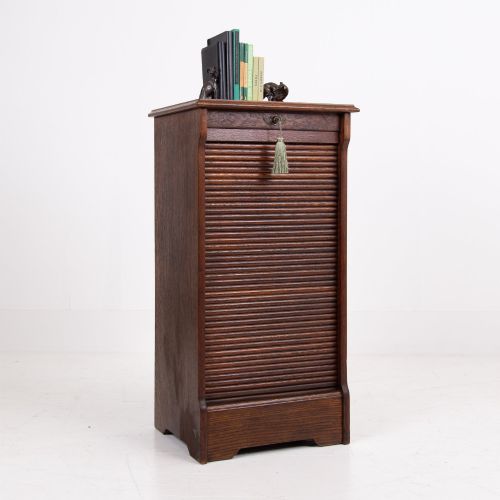
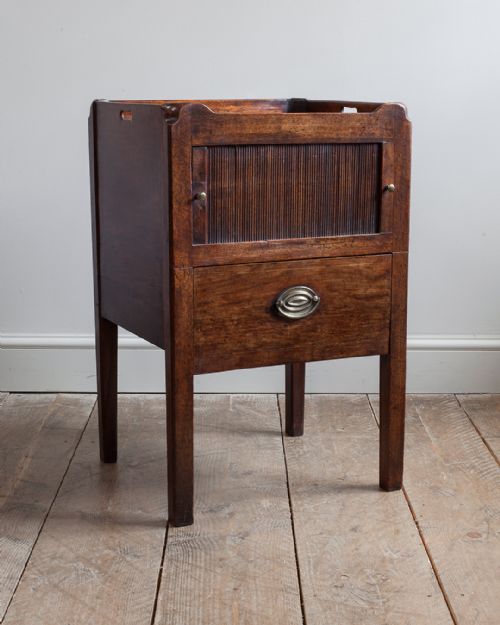
Forms span from freestanding bedside tables and corner cupboards to larger filing cabinets and writing desks. Mahogany predominates among the surviving pieces, accompanied by walnut, oak, and satinwood examples built across English, French, and Dutch provincial workshops.
How they were made
Cabinet-makers constructed tambour doors by gluing narrow vertical strips of timber onto a strong canvas or linen backing, allowing the sliding shutter to curve smoothly along recessed tracks. This intricate method required precise joinery so the individual slats remained aligned through decades of opening and closing.
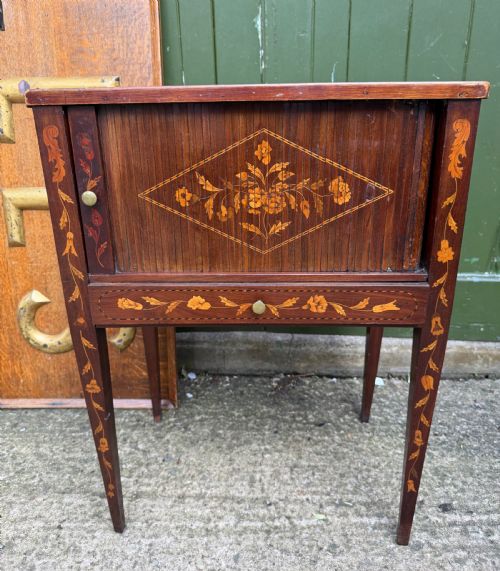
Primary carcases utilise solid timbers like mahogany, oak, and walnut, frequently enhanced with contrasting stringing in boxwood or detailed floral marquetry. Brass fittings and occasional marble tops complete the construction of the finer bedside and commode variants.
Antique Tambour Cupboard Retail Price Guide 2026
Typical asking prices for tambour cupboard among the pieces listed under this phrase on Sellingantiques today, from the lower quarter to the upper quarter. They describe what is for sale here now, not the wider market.
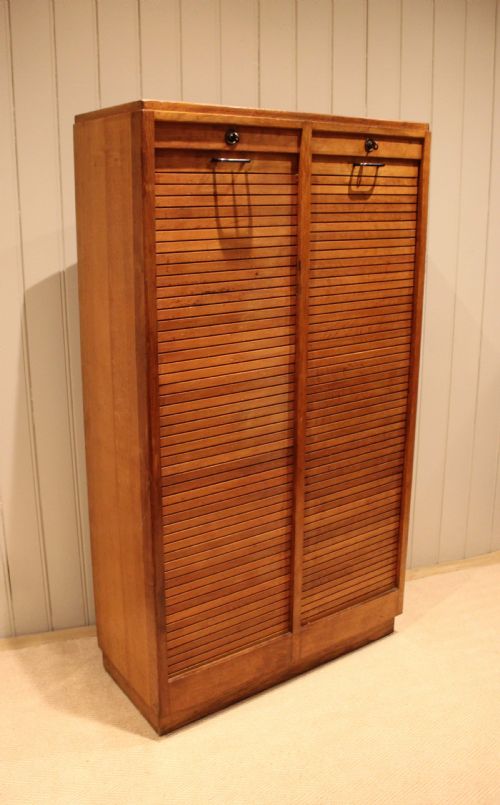
A nineteenth-century proofing cupboard quietly hides industrial heritage behind its well-travelled sliding slats.
What varies in quality
The smoothness of the sliding mechanism dictates the baseline of execution, separating cabinets where the wooden slats glide effortlessly from those that bind or stick within their tracks. Superior examples maintain exact tension in the canvas backing and precision in the grooved runners.
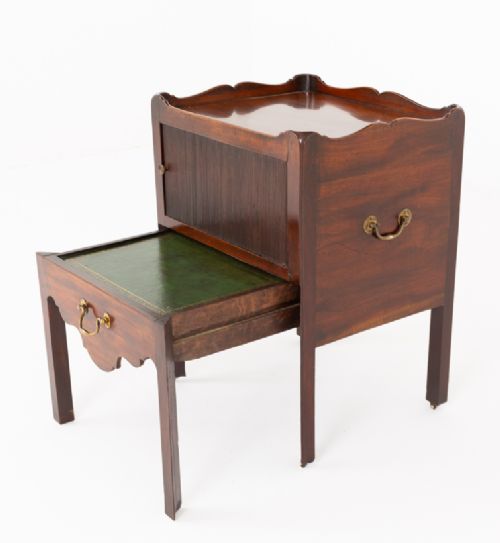
Selection of timber grain and the crispness of secondary details such as serpentine fronts, tray tops, and marquetry inlay separate standard utility pieces from high-status Georgian and continental commissions. The integrity of the original backing canvas determines whether a tambour shutter survives intact.
The Antique Tambour Cupboard Glossary
- Tambour
- A flexible door formed of narrow wooden slats glued to canvas, allowing it to slide around a curved track. This clever mechanism hides contents without requiring clearance for swinging doors.
- Commode
- A decorative low cabinet or chest of drawers, often fitted with a tambour shutter or tray top in Georgian designs. The term covers various bedside and night storage forms.
- Marquetry
- Inlaid patterns of contrasting wood veneers assembled to create floral or geometric pictures across the surface. Artisans use woods like satinwood and boxwood for varied tones.
- Serpentine front
- A furniture front curving outward in the centre and inward at the sides, demanding high skill from the carpenter. It appears frequently on fine eighteenth-century commodes.
- Tray top
- A raised rim around the upper surface of a small table or cabinet designed to prevent items from rolling off. This feature is common on bedside nightstands.
Antique Tambour Cupboard: Frequently Asked Questions
How do tambour doors work?
Tambour doors operate through a series of narrow wooden slats attached side-by-side to a flexible fabric backing. This assembly slides along a concealed curved groove routed directly into the cabinet frame.
This ingenious mechanism allows the door to curve around corners and slide completely out of sight. It provides full access to the interior compartment without needing clearance for swinging doors.
What rooms suit a tambour cupboard?
These compact cupboards fit well beside a bed as a nightstand or bedside table, offering concealed storage for small personal items. Their modest footprint also suits hallways and tighter corners.
Larger versions function effectively as office filing cabinets or specialist writing cupboards. Their enclosed slatted fronts keep paperwork and clutter neatly out of sight in a study.
How do I identify a Georgian piece?
Georgian cabinets typically display solid mahogany construction, precise dovetail joints in the drawer linings, and classic proportions. Stylistic markers include serpentine fronts, tray tops, and subtle boxwood stringing.
Many examples date from the eighteenth century or reflect George III design aesthetics. Examining the secondary timbers inside the carcase helps confirm the period of manufacture.
Are tambour doors difficult to maintain?
Routine maintenance involves keeping the running tracks clean and free from dust or debris to ensure smooth sliding. Occasional light waxing preserves the timber without gumming up the mechanism.
Avoid placing these cupboards in rooms with excessive humidity or rapid temperature changes, as wood expands and contracts. Keeping the environment stable protects the delicate canvas backing of the shutter.