

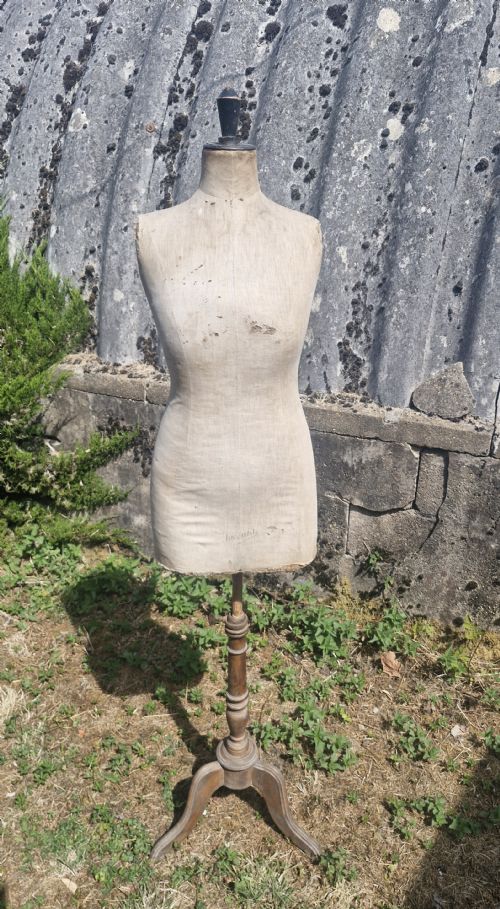


Antique Tailoring Dummy
An antique tailoring dummy brings sculptural presence and workspace history into a room, offering a sturdy silhouette shaped by decades of fitting.
Antique Tailoring Dummy
An antique tailoring dummy serves as a three-dimensional form for garment construction and display, appearing across styles such as Victorian, Edwardian, and Art Deco. These pieces range from full child and adult mannequins to bust forms and standalone dressmaker stands.
The selections span the nineteenth century through the early twentieth century, including French vintage and Paris shop examples. Buyers frequently encounter forms marked by makers like Stockman of Paris alongside unmarked workshop models.
How these forms were constructed
Construction relies on traditional materials including papier-mache, canvas, linen, and fabric stretched over robust internal structures. Wooden bases and metal supports provide stability, while terracotta and composition materials shape specific heads and torsos.
Makers shaped these utilitarian objects for daily studio and shop use, employing durable textiles and leather finishes designed to withstand regular pinning and handling.
Antique Tailoring Dummy Retail Price Guide 2026
Typical asking prices for tailoring dummy among the pieces listed under this phrase on Sellingantiques today, from the lower quarter to the upper quarter. They describe what is for sale here now, not the wider market.
Listings feature pieces spanning the nineteenth century through the nineteen-thirties, incorporating wooden stands and fabric-covered papier-mache torsos.
What separates the standard
Quality rests in the integrity of the core materials and the articulation of the form, distinguishing standard utilitarian workshop pieces from finely finished Paris shop displays. Superior examples retain original fabrics, legible manufacturer stamps, and well-turned wooden pedestals.
The fidelity of the human silhouette and the preservation of original canvas or linen coverings dictate the visual weight of the piece. Lesser examples show crude replacements or degraded internal stuffing that compromises the original profile.
Stockman of Paris·Pierre Iman
The Antique Tailoring Dummy Glossary
- Mannequin
- A full or partial human figure used for displaying garments or fitting clothes. These objects vary from simple headless torsos to complete child and adult figures.
- Papier-mache
- A composite material made of paper pulp or reinforced paper sheets mixed with glue, moulded to form lightweight yet durable mannequin torsos.
- Stockman
- A notable French maker of dress forms and shop mannequins. Their pieces frequently feature stamped markings and sophisticated anatomical shaping.
- Bust
- A sculptural form representing a person's head, neck, and shoulders. In tailoring, these sit on stands to focus attention on necklines and upper garment construction.
Antique Tailoring Dummy: Frequently Asked Questions
What is an antique tailoring dummy?
An antique tailoring dummy is a structured form used historically for fitting and displaying garments. These objects reflect the fashion shapes and manufacturing techniques of the nineteenth and early twentieth centuries.
They combine utilitarian workshop design with sculptural qualities, making them popular decorative and practical objects in modern interiors.
How do I date an antique mannequin?
Dating relies on identifying materials, base styles, and maker stamps associated with periods like the Victorian era or Art Deco. Examining the construction methods of the internal core provides further chronological clues.
Changes in silhouette and textile choices also help differentiate nineteenth-century pieces from early twentieth-century French examples.
What materials were used?
Construction involved wood, metal, canvas, linen, leather, and papier-mache. Some pieces incorporate composition or terracotta details for heads and accents.
These durable substances allowed the forms to withstand heavy daily use in tailoring shops and dressmakers' studios.
Where were these pieces made?
Many examples originate from French workshops and Parisian makers supplying high-end fashion houses and shops. Others represent broader European and domestic tailoring traditions.
Parisian pieces often carry specific workshop stamps on their canvas covers or wooden bases.