


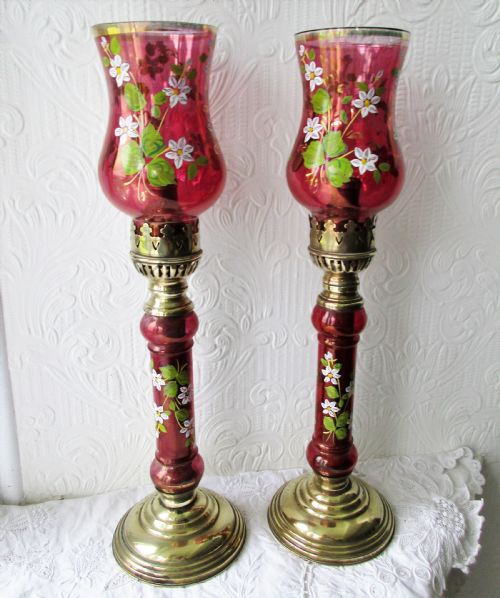


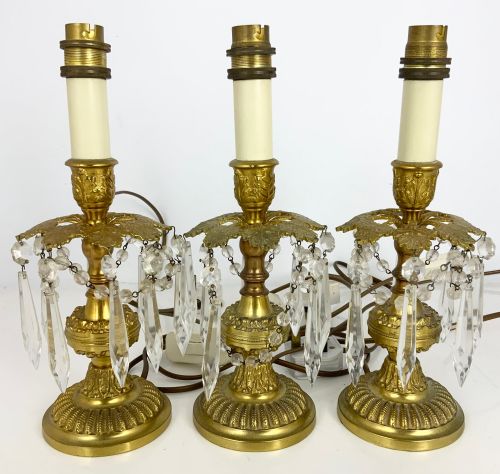
Antique Table Lusters
Antique table lustres are brilliant glass and crystal candle-holders hung with prisms that catch and scatter light across a room.
Antique Table Lusters
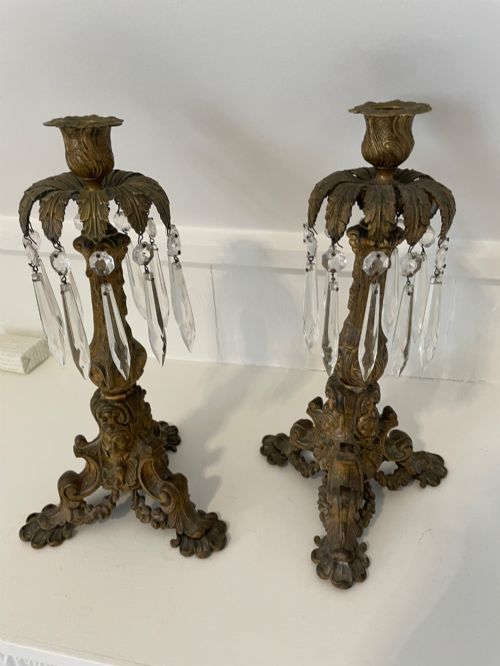
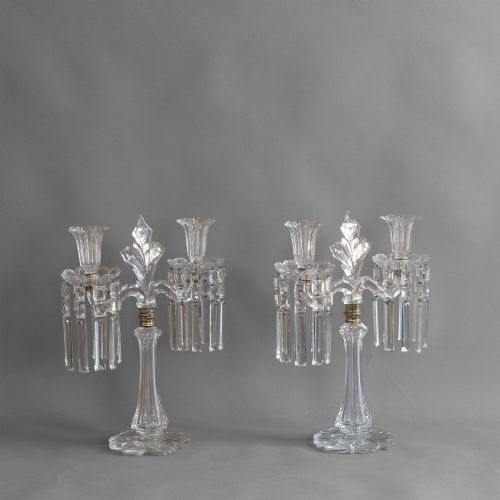
Antique table lustres stand as decorative centrepieces on tables, consoles and mantels, designed to hold candles while glittering with suspended glass drops. When seeking antique table lustres, collectors encounter pairs and single items spanning several centuries of craftsmanship.
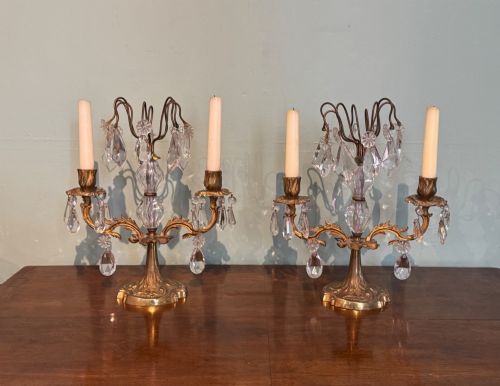
The pieces on this page cross multiple periods, from the ornate styles of the eighteenth and nineteenth centuries through to later twentieth-century interpretations. Common forms take shape as candlesticks and candelabras fitted with removable crystal prisms.
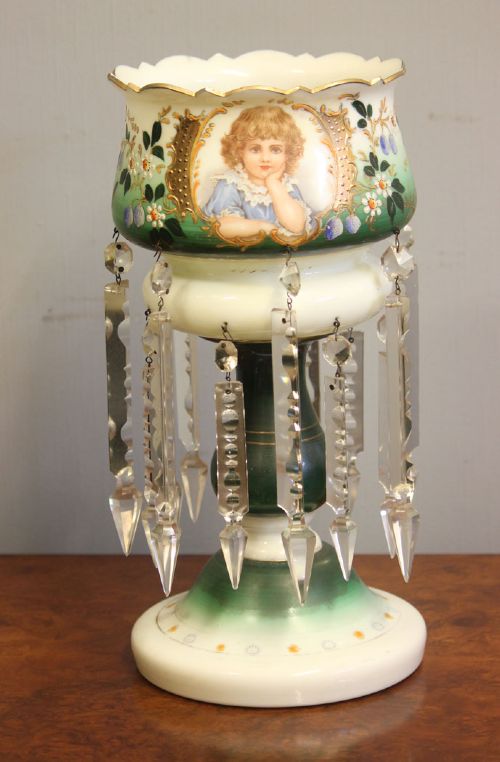
Makers utilised various materials including cut glass, crystal, opaline glass, and coloured glass paired with metal bases. These items served both a functional lighting purpose and a decorative role in grand interiors.
How they were made
Glassmakers blew and cut the bodies and hanging prisms by hand, creating multifaceted surfaces designed to refract candlelight. Lead crystal and coloured glass provided the primary medium for the bodies and drops.
Metal components utilise brass, gilt bronze, gilt brass, and ormolu to support the glass upper sections. Metalworkers cast and chased these bases to anchor the heavier glass shafts and candle sockets securely.
Prisms hang from the upper rims by means of wire loops or metal pins, allowing movement and maximum reflection. Artisans combined these glass and metal elements through threaded rods or precise mechanical joins.
Antique Table Lusters Retail Price Guide 2026
Typical asking prices for table lusters among the pieces listed under this phrase on Sellingantiques today, from the lower quarter to the upper quarter. They describe what is for sale here now, not the wider market.
What varies in quality
The depth and precision of the glass cutting dictate the brilliance of the refraction. Sharp, hand-cut facets on heavy crystal reflect light far more intensely than moulded or pressed glass alternatives.
The quality of the metal mounts, whether gilt bronze, ormolu, or brass, influences the overall refinement of the piece. Crisp chasing and substantial metal weight distinguish finer examples from simpler production.
Completeness and matching components matter greatly, particularly regarding the suspended drops. Original drops matching in size, shape, and glass tint elevate the integrity of the piece.
The Antique Table Lusters Glossary
- Lustre
- A decorative table light fitted with glass pendants or prisms. These pieces catch and multiply the flame of a candle.
- Prism
- A cut glass or crystal pendant suspended from the rim of a lustre. Prisms disperse candlelight into spectral colours.
- Opaline glass
- An opaque, milky glass popular in nineteenth-century decorative objects. It often appears in soft pastel shades on table lustres.
- Ormolu
- Gilded bronze used for decorative mounts and bases. This technique creates a rich, matte gold surface finish.
- Candelabra
- A branched candlestick holding multiple candles. Many antique table lustres incorporate branched arms for extra illumination.
Antique Table Lusters: Frequently Asked Questions
What are antique table lusters?
Antique table lustres are decorative candle-holders embellished with hanging glass prisms. They were designed to enhance indoor illumination by reflecting candlelight through cut crystal.
These pieces typically sit on dining tables, sideboards, or mantelpieces. Their primary function shifted toward decorative display as artificial lighting improved.
How do I clean antique table lusters?
Cleaning requires gentle hand washing of the glass components in lukewarm water with mild soap. Prisms should be removed individually to ensure thorough cleaning without damaging the hanging wires.
Metal bases need careful dusting with a soft brush rather than harsh metal polishes. This preserves any original gilding or patination on the bronze and brass surfaces.
Are all glass drops original?
Replacement drops occur frequently because glass prisms broke easily during use or cleaning over the centuries. Close inspection of the glass tint, wear marks, and attachment loops helps determine originality.
Matching cuts and uniform ageing across the prisms suggest a cohesive set. Minor variations in older replacement glass remain common in pieces of this age.
How were table lustres used?
Table lustres provided ambient illumination in formal rooms before the advent of electricity. Placed near mirrors or polished wood surfaces, they maximised the flicker of candles.
During daylight hours, they functioned as ornamental objects that caught natural light through their faceted drops. Wealthy households displayed them prominently to showcase fine craftsmanship.