




Antique Table Centrepiece Server
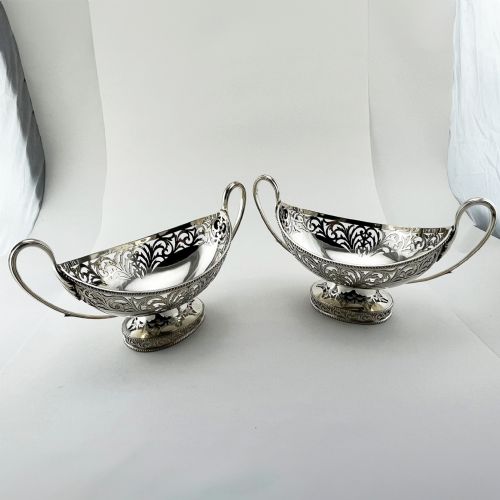
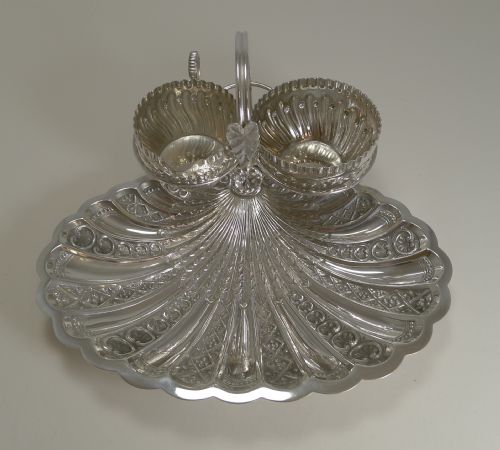
These antique table centrepiece server pieces are grand dining table focal points that organise food service in style.
Antique Table Centrepiece Server
An antique table centrepiece server sits at the middle of the dining table to hold dishes, condiments or fruit within easy reach of guests. They range from revolving trays and lazy Susans to heavy silver-plated tureens, punch bowls and tazzas.
You will most commonly meet mahogany revolving lazy Susans alongside silver-plated serving dishes and tureens dating from the Georgian, Regency, Victorian and Edwardian eras. These forms reflect formal dining traditions where food was presented with ceremony.
Makers produced pieces in metal, wood and porcelain, often combining silver plate with glass or ceramic inserts. Each object served a specific role in Victorian and Edwardian hospitality, from asparagus serving dishes to specialised cheese covers.
How they were made
Silversmiths and manufacturers utilised silver plate, electroplated nickel silver and solid brass to shape durable serving vessels and pedestals. Makers such as Mappin and Webb, Roberts and Belk, and Daniel and Arter employed careful metalworking techniques to build strong frames and decorative handles.
Cabinetmakers constructed revolving lazy Susans and serving tiers in rich timbers like mahogany, ensuring smooth rotation mechanisms beneath the wood. Porcelain works like Coalport shaped fine ceramic supper sets, while glassmakers blew liners to fit silver-plated dish frames.
What varies in quality
The weight and thickness of the silver plate dictate the durability and finish of metal serving pieces. Thicker plating resists wear from polishing and daily use far better than thin applications over base metals.
The smoothness of the internal turning mechanism in a mahogany lazy Susan marks the standard of its joinery. Superior examples spin effortlessly without wobble, while lesser pieces suffer from stiffness or uneven alignment in the timber tiers.
Thomas Bradbury·Daniel and Arter·William Bennett·Birchall and Hayne·Mappin and Webb·Roberts and Belk
The Antique Table Centrepiece Server Glossary
- Lazy Susan
- A revolving tray placed on a table to assist in moving food easily between diners. These are frequently found in mahogany across Georgian and Edwardian periods.
- Tureen
- A deep, covered bowl used for serving soups, stews or punch. Silver-plated examples often feature sturdy side handles and matching ladles.
- Tazza
- An ornate pedestal plate or shallow bowl used for displaying fruit or small dishes on the dining table. They elevate food to create height in a centrepiece display.
- Electroplated nickel silver
- A base metal alloy coated with a layer of pure silver through an electrical process. This technique became widely utilised by makers during the nineteenth century.
- Supper set
- A fitted collection of individual dishes arranged around a central pivot or tray for easy entertaining. Porcelain and wooden variations allowed hosts to serve multiple courses efficiently.
Antique Table Centrepiece Server: Frequently Asked Questions
What is an antique lazy Susan?
A revolving wooden or metal tray designed to sit in the middle of a dining table. It allows diners to share condiments and side dishes without passing heavy serving platters across the table.
Most surviving examples date from the Georgian and Edwardian periods, constructed in rich timber like mahogany with central pivot mechanisms.
How do I clean silver-plated servers?
Silver plate requires gentle cleaning with a dedicated silver polish and a soft cloth to avoid wearing away the thin metal coating. Regular, light polishing preserves the bright finish without damaging engraved details or maker marks.
Avoid harsh abrasive cleaners or soaking wooden components in water, especially on pieces that combine silver plate with mahogany or glass.
What was a spoon warmer used for?
A spoon warmer is a small decorative vessel filled with hot water to keep serving spoons warm during formal Victorian meals. They often took whimsical or novelty shapes, such as shoes or shells, to amuse guests at the table.
Servants would place ladles inside these silver-plated containers before transferring them to gravy boats and tureens.
Are these centrepieces suitable for daily use?
Many of these pieces function well for modern dining, particularly sturdy silver-plated trays, glass cheese dishes and revolving wooden servers. Care must be taken with delicate porcelain supper sets or older electroplate to preserve their historical condition.
Using them thoughtfully brings traditional craftsmanship back into active service during family meals and dinner parties.