





Antique Sunburst Clock
An antique sunburst clock brings striking radial symmetry and period warmth to a room, driven by brass movements and classical styling.
Antique Sunburst Clock
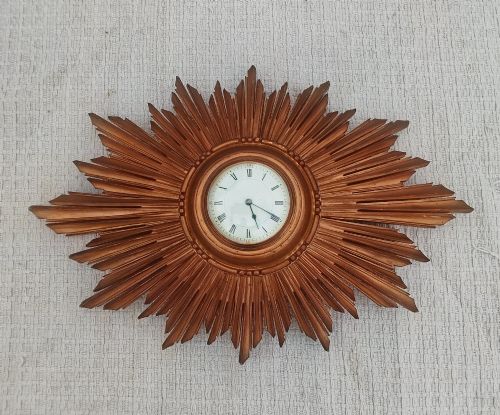
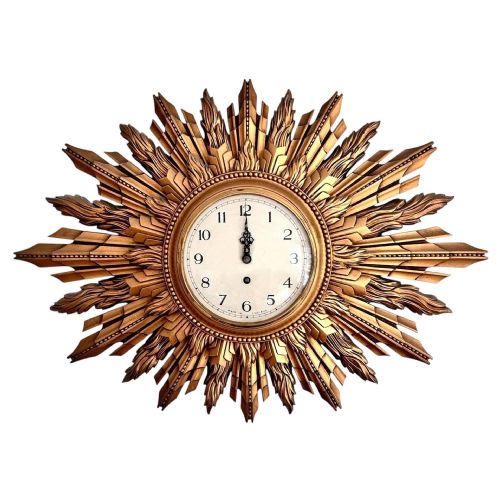
When you search for an antique sunburst clock, you are looking at timepieces defined by their radiating dial surrounds and classical or decorative cases. The examples you meet on this page span the eighteenth century through to the Art Deco period, taking forms such as wall clocks, mantel clocks, and lyre clocks.
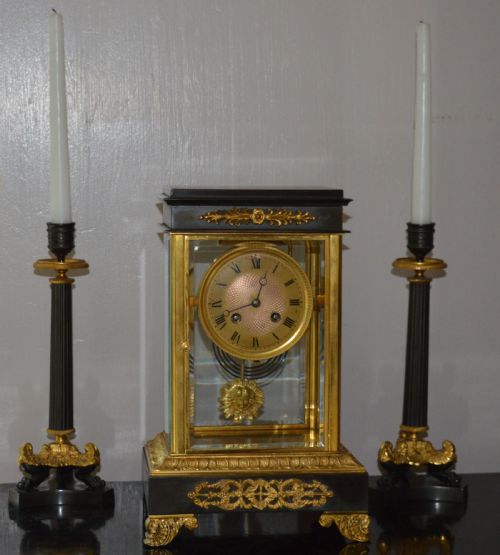
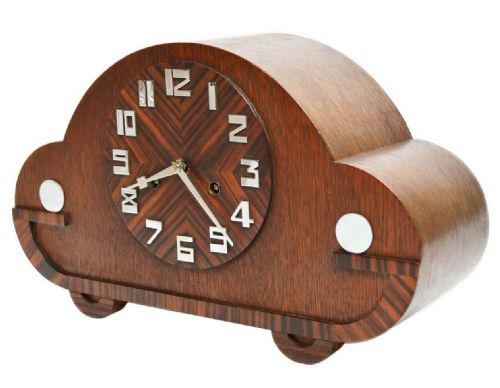
The styles range from French Neo-Classical and Louis XVI designs to bold geometric Art Deco creations. Materials vary widely from carved giltwood and brass to pink marble, ormolu, and glass.
These clocks serve as focal points in a interior, combining mechanical horology with sculptural metalwork and woodwork. The variety reflects shifts in taste from elaborate nineteenth-century revivals to clean twentieth-century lines.
How they were made
Makers constructed these clocks using a combination of cabinetmaking, metal casting, and precision horology. Giltwood cases required skilled carving and gilding, while brass and ormolu mounts were cast and chased by hand.
Marble elements, including pink marble bases and columns, were cut and polished to support heavier movements. Enamel dials were fired with mineral pigments to create durable white chapter rings with delicate numerals.
Antique Sunburst Clock Retail Price Guide 2026
Typical asking prices for sunburst clock among the pieces listed under this phrase on Sellingantiques today, from the lower quarter to the upper quarter. They describe what is for sale here now, not the wider market.
Listings for these clocks feature materials such as pink marble, glass, brass, ormolu, and giltwood across multiple centuries.
What varies in quality
The distinction between ordinary and exceptional pieces lies in the crispness of the casting and the depth of the gilding. Hand-chiseled ormolu mounts show sharper detail and warmer lustre than mass-produced metalwork.
Movement quality dictates long-term performance, with high-grade mechanisms featuring fine escapements and robust striking trains. Superior timber selection, such as figured maple or carved oak, elevates the cabinetwork of the period.
Smiths·Winterhalder and Hofmeier·Maple and Co
The Antique Sunburst Clock Glossary
- Ormolu
- Gilt bronze created by applying a mercury-gilding process to cast bronze. This technique produces a rich golden finish found on classical clock mounts.
- Lyre clock
- A mantel clock shaped like the ancient Greek instrument, featuring outer frame pillars and a central pendulum visible through glass or open space. These date predominantly from the nineteenth century.
- Giltwood
- Timber that has been coated with a thin layer of gold leaf or gold paint. It provides the brilliant radiant finish seen on starburst frames.
- Four glass clock
- A clock encased in glass panels on all four sides, allowing the movement to be viewed from multiple angles. They often include matching side ornaments.
- Morbier clock
- A traditional type of weight-driven clock originating from the French region of Morez. They feature large enamel dials and distinctive brass bezels.
Antique Sunburst Clock: Frequently Asked Questions
What is a sunburst clock?
A sunburst clock is a timepiece featuring a circular central dial surrounded by radiating beams, rays, or carved wooden ornaments.
They appear in various styles including giltwood wall pieces and geometric Art Deco designs.
How do I identify an Art Deco clock?
Art Deco clocks dating around 1930 display geometric shapes, streamlined forms, and minimal ornamentation.
They contrast sharply with the earlier ornate French Neo-Classical and Louis XVI styles.
Where were lyre clocks placed?
Lyre clocks were designed to sit on mantelpieces, consoles, or tabletops where their symmetrical frame could be admired.
The pink marble and ormolu versions served as grand decorative objects in nineteenth-century salons.