

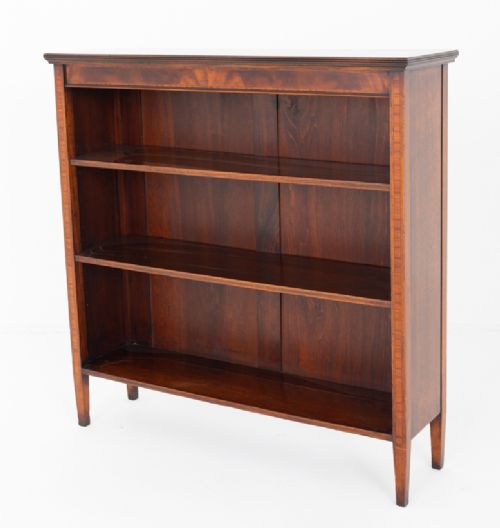
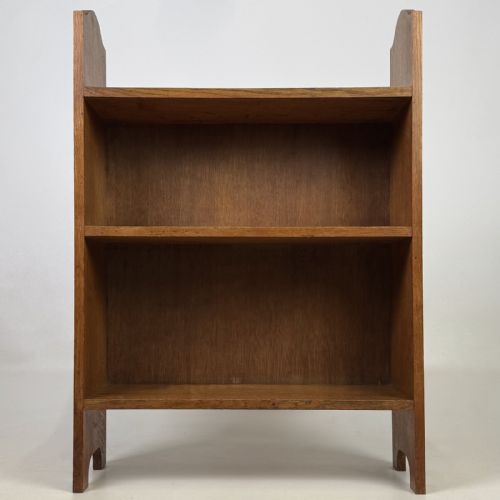



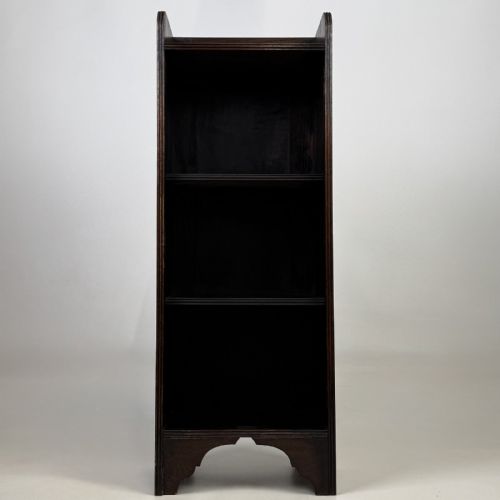

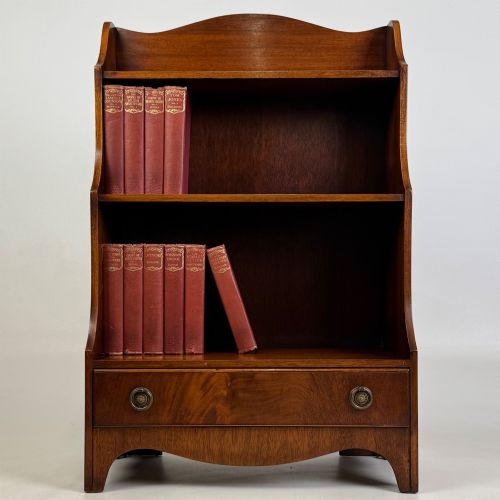
Antique Style Open Bookshelf
An antique style open bookshelf brings character and accessible storage to a room, offering exposed timber tiers for everyday volumes.
Antique Style Open Bookshelf
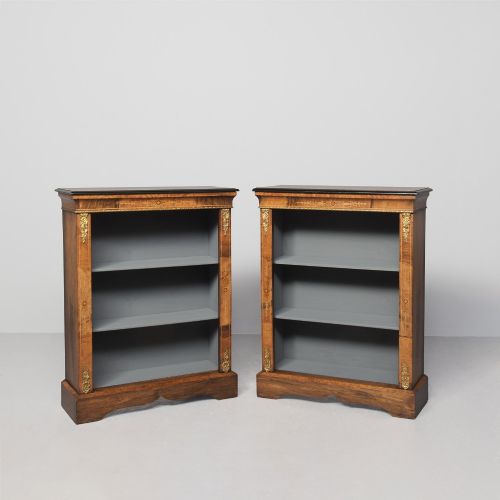
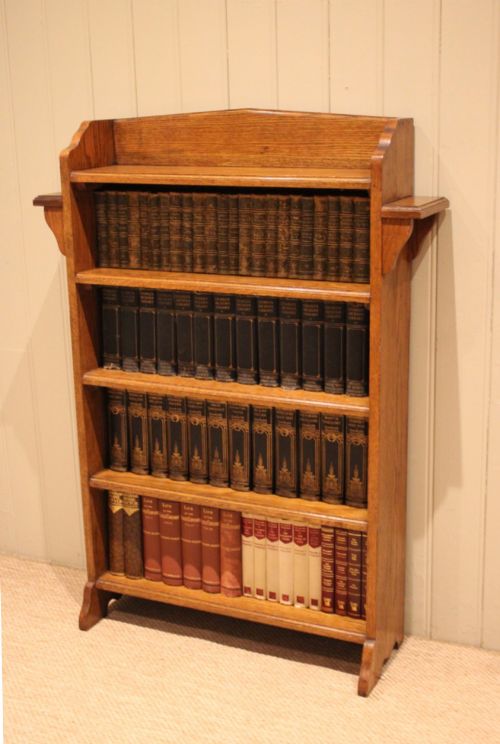
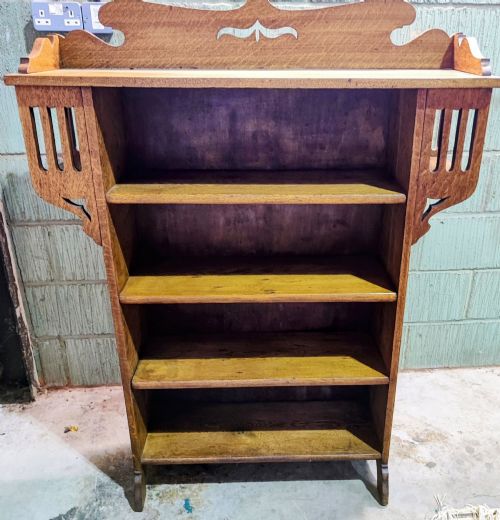
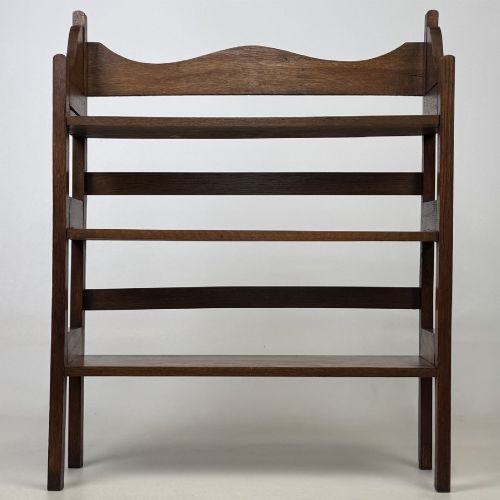
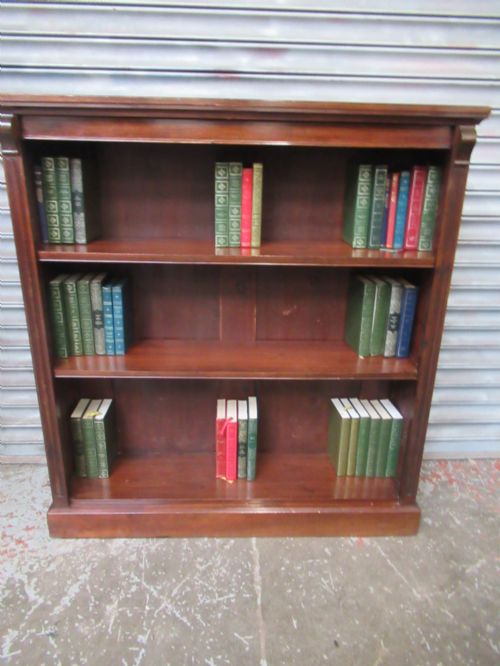
An antique style open bookshelf presents books and display pieces without doors, relying on simple tiers or waterfall graduations. These items emerge from periods spanning the Victorian era through to the early twentieth century, including Edwardian and Arts and Crafts examples.
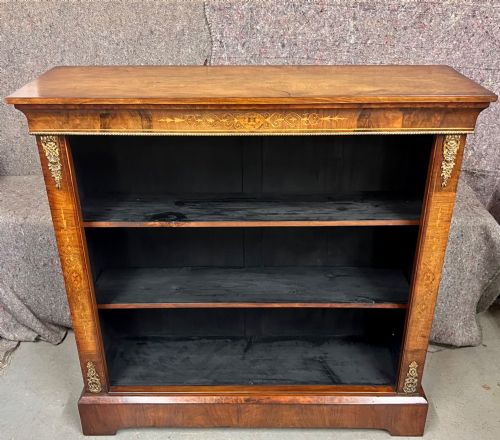
The pieces on this page include mahogany, oak, and walnut bookcases, alongside occasional satinwood and burr walnut variations. Makers and designers sometimes attributed to these pieces include Gillows, Waring and Gillows, and Heal's.
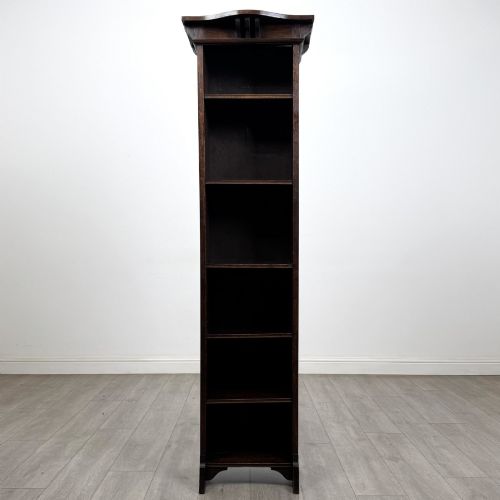
Buyers meet formats ranging from small Edwardian oak shelf units to large Victorian golden oak designs and Regency style breakfront bookcases. Side tables and whatnots also appear alongside standard bookcase and shelving configurations.
Assessing quality in open bookcases
Quality rests upon the selection of timber, such as figured mahogany or burr walnut, and the precision of inlaid details. Superior examples exhibit balanced proportions, refined mouldings, and original brass castors.
Attributions to notable makers or workshops elevate an item, while sturdy construction ensures the uprights and adjustable shelves bear the weight of heavy volumes securely over decades.
Antique Style Open Bookshelf Retail Price Guide 2026
Typical asking prices for style open bookshelf among the pieces listed under this phrase on Sellingantiques today, from the lower quarter to the upper quarter. They describe what is for sale here now, not the wider market.
Listings feature oak, mahogany, walnut, satinwood, and burr walnut across Victorian, Edwardian, and Arts and Crafts periods.
Gillows·Waring and Gillows·George Edmund Street
The Antique Style Open Bookshelf Glossary
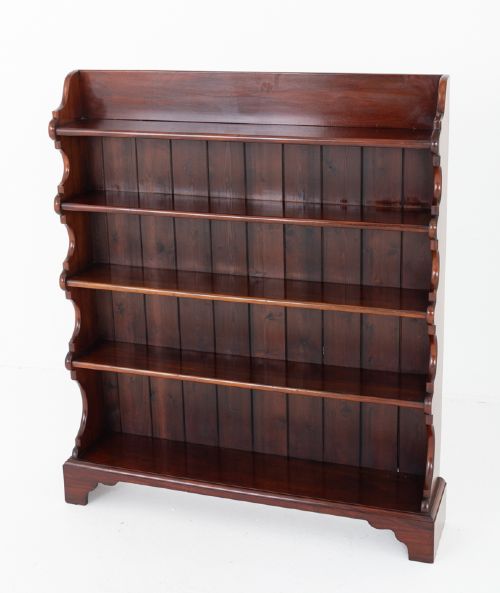
- Waterfall bookcase
- A tiered bookcase where each lower shelf steps out wider than the one above it. This design creates a cascading profile popular in the nineteenth and early twentieth centuries.
- Breakfront
- A piece of furniture whose central section projects forward from the flanking sections. This configuration adds architectural depth to larger bookcases.
- Whatnot
- A piece of open shelving standing on legs, designed for displaying ornaments and small books. They appear frequently in nineteenth-century interiors.
- Inlay
- A technique where contrasting woods or materials are set into the surface of a piece to form decorative patterns. Satinwood and lighter veneers often provide contrast against darker mahogany.
- Ormolu
- Gilded bronze mounts applied as decorative ornamentation on furniture. They bring metallic highlights to neoclassical and revival pieces.
Antique Style Open Bookshelf: Frequently Asked Questions
How do I style an open bookshelf?
Arrange books vertically and horizontally to create visual rhythm, interspersed with ceramics or framed photographs. Leave small pools of empty space to keep the composition balanced.
Ensure heavier volumes sit on the lower tiers to maintain stability, particularly on slender Edwardian or waterfall designs.
What periods do these bookcases cover?
The selection spans the nineteenth century through the Edwardian era and into the 1930s. You will encounter Victorian, Arts and Crafts, and Regency revival styles.
Each period brings distinct timber choices and decorative motifs, ranging from plain golden oak to inlaid mahogany.
Are the shelves adjustable?
Many mahogany and oak bookcases feature adjustable shelving systems supported by wooden tracks or metal brackets. This allows you to accommodate volumes of varying heights.
Fixed shelves also appear, particularly on older or simpler vernacular pieces.
Where should I place a walnut bookshelf?
Position walnut and burr walnut bookcases away from direct sunlight and heat sources to protect the polished timber and delicate veneers. Interior walls in living rooms or studies suit them best.
Ensure the floor is level, and use wall fixings if the bookcase is tall or narrow.