





Antique Style Garden Sculpture
An antique style garden sculpture brings classical form and weathered character to outdoor spaces through stone, bronze and cast metal figures.
Antique Style Garden Sculpture
When you search for antique style garden sculpture, you encounter a diverse range of ornamental objects designed to bring classical and traditional forms into domestic and public grounds. The pieces collected under this heading span multiple decades and centuries, incorporating periods such as the Victorian era, Edwardian period, and various points across the nineteenth and twentieth centuries.
Makers drew upon diverse styles such as Neoclassical, Classical Revival, English Country, Naturalist Decorative Art, folk art, and traditional architectural design. These works utilise traditional motifs derived from classical antiquity and country house aesthetics.
Assessing quality in garden sculpture
The choice of medium dictates the ageing process and overall durability. Sculptures formed from solid marble or high-grade bronze display enduring material integrity, while stone and concrete compositions develop varied patinas and weathering dependent on their aggregate quality.
Antique Style Garden Sculpture Retail Price Guide 2026
Typical asking prices for style garden sculpture among the pieces listed under this phrase on Sellingantiques today, from the lower quarter to the upper quarter. They describe what is for sale here now, not the wider market.
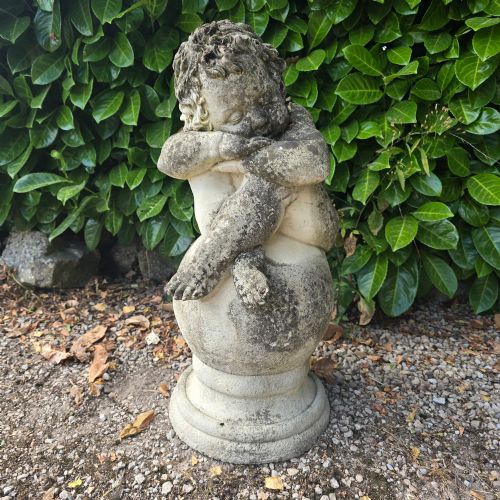
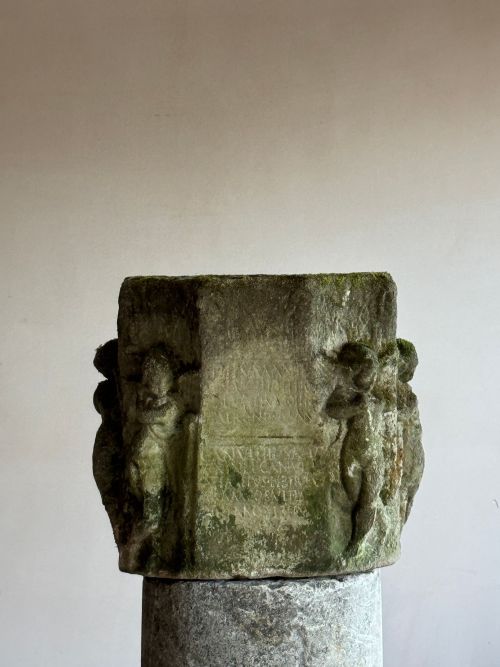
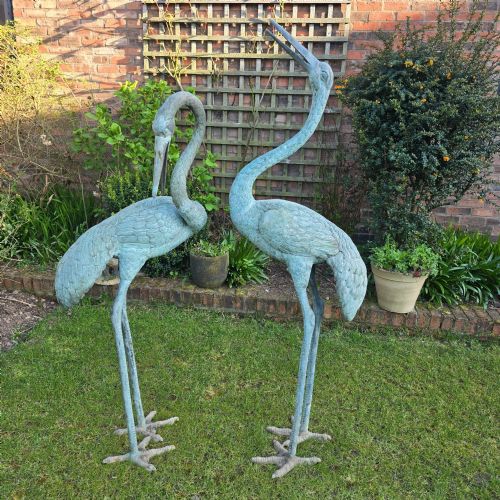
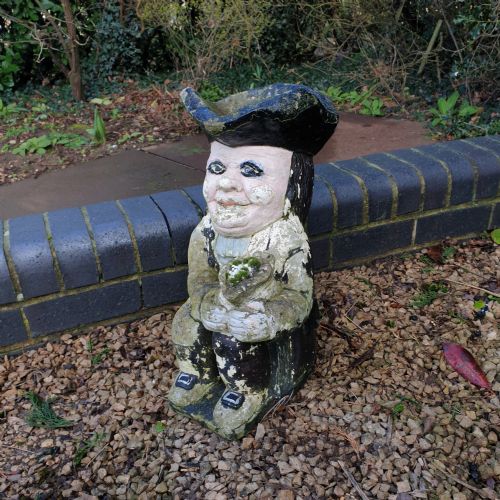
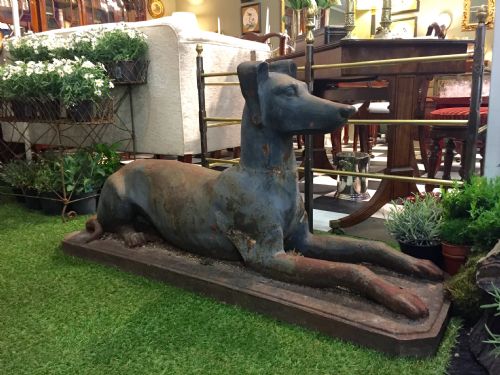
A vintage garden Toby and a sleeping cherub sit quietly among the stone lions and metal cranes.
The Antique Style Garden Sculpture Glossary
- Reconstituted stone
- A manufactured material made from crushed stone or aggregates mixed with a binder to create durable garden ornaments. It replicates the appearance of natural stone at a different weight and scale.
- Neoclassical
- A style reviving the decorative and structural principles of ancient Greek and Roman art. It emphasises symmetry, proportion, and classical mythological subjects.
- Finial
- A decorative architectural element placed at the apex or termination of a gatepost, pedestal, or architectural feature. Pairs often serve as formal entry markers.
- Plinth
- A heavy base or pedestal supporting a statue, bust, or urn. It elevates the sculpture and integrates the piece with its surrounding landscape.
- Fountain spout
- A functional water outlet integrated into a sculptural element, often cast in bronze or metal in the shape of an animal or mythological head.
Antique Style Garden Sculpture: Frequently Asked Questions
How do I care for a stone garden sculpture?
Stone and concrete pieces require minimal maintenance beyond gentle washing to remove organic growth. Protecting vulnerable items from severe freezing conditions prevents cracking.
Allowing natural patination to develop enhances the historic appearance of reconstituted and cast stone surfaces over time.
Are bronze sculptures suitable for outdoor display?
Bronze withstands outdoor conditions effectively, developing a stable protective patina as it reacts to the elements. This natural weathering process secures the metal against deeper corrosion.
Positioning bronze works on stable stone plinths prevents direct ground moisture accumulation.
What is the difference between cast stone and marble?
Cast stone is formed by binding crushed aggregates within a mould to produce architectural ornaments and statues. It offers a heavy, durable alternative to natural quarried stone.
Marble is a metamorphic rock carved by hand, prized for its smooth grain and luminous finish in classical figures and busts.
How do I identify a Victorian garden ornament?
Victorian pieces often reflect historical revivals, incorporating classical motifs, naturalistic animal forms, or heavy iron casting techniques. Examining the material composition and stylistic markers helps indicate the period.
Manufacturing records and foundry marks occasionally appear on metal works from this era.