

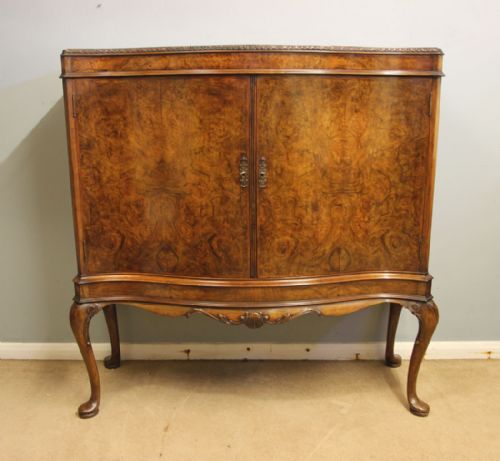


Antique Style Cocktail Cabinet
An antique style cocktail cabinet brings home decades of entertaining history through figured woods and fitted interiors.
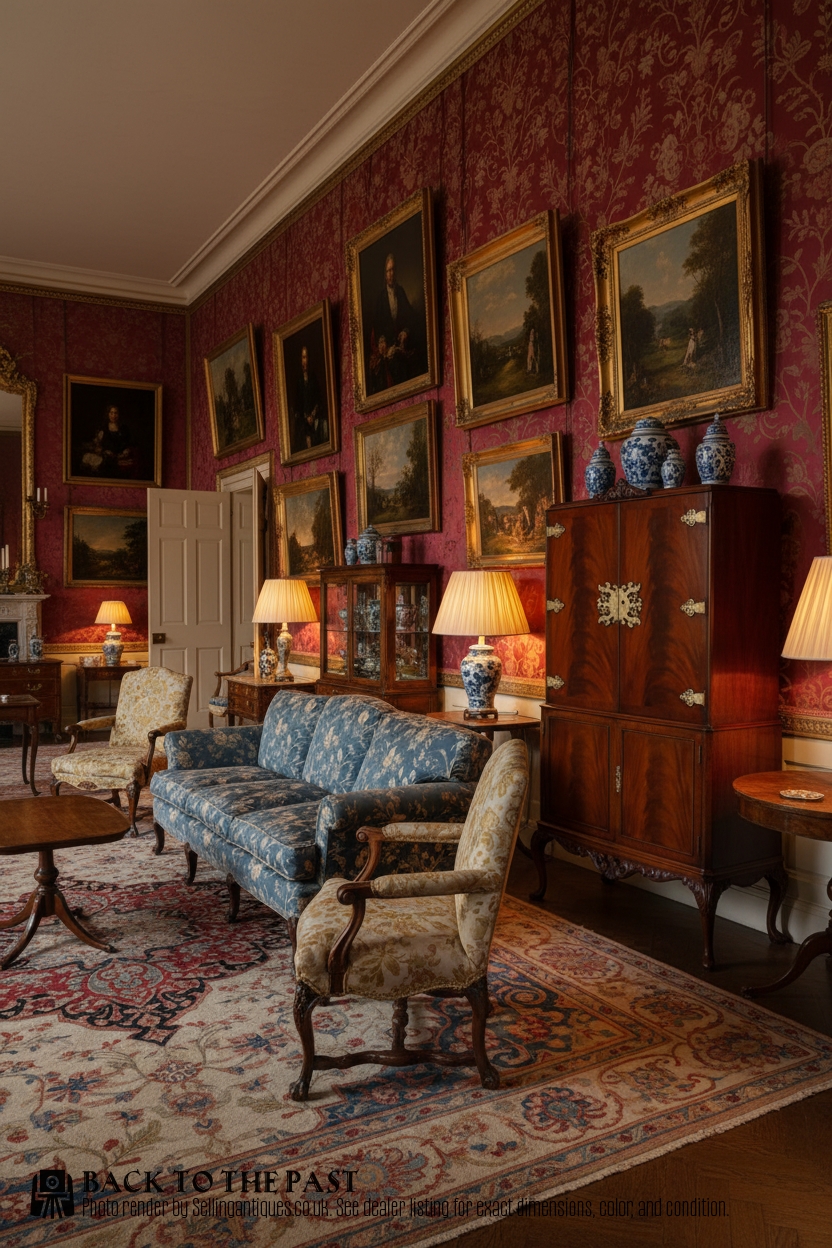
Antique Style Cocktail Cabinet
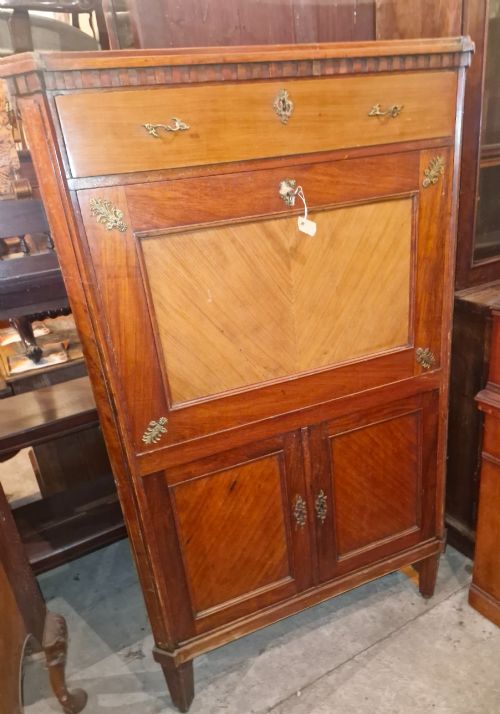
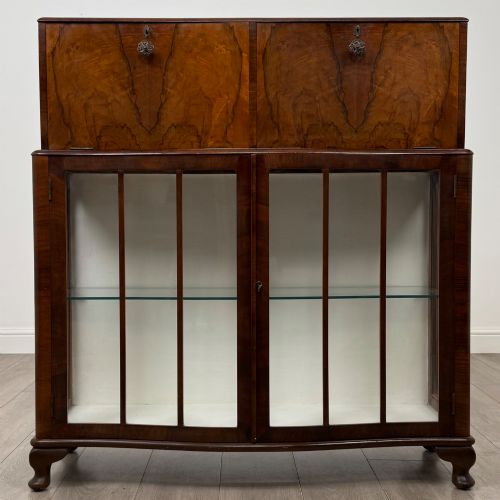
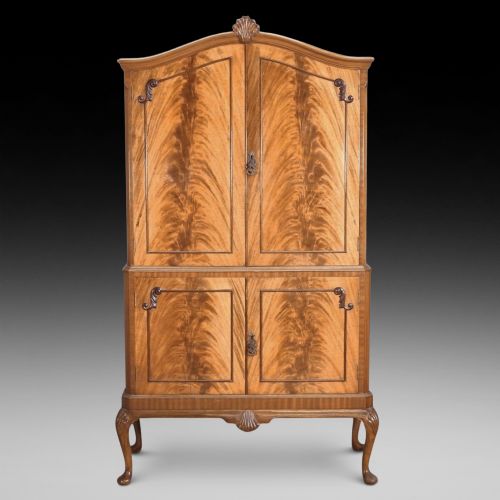
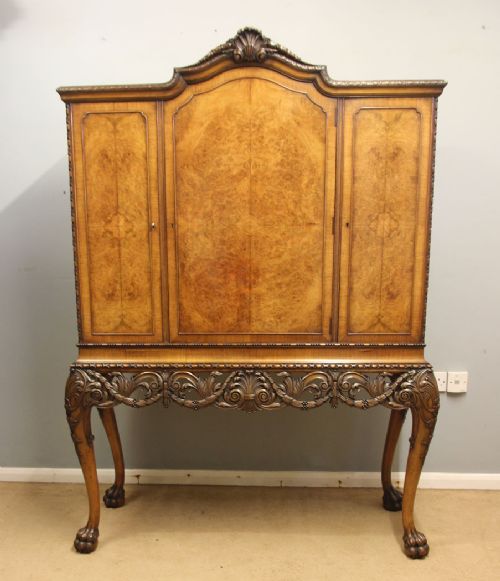
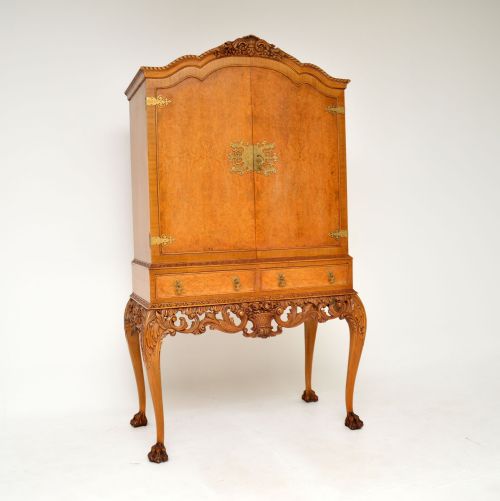
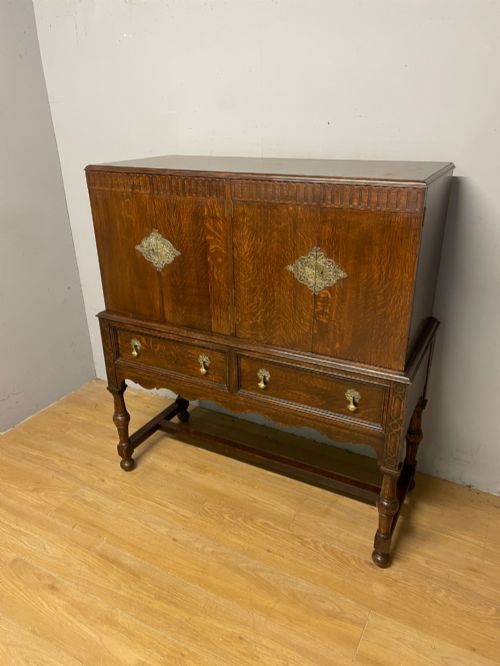
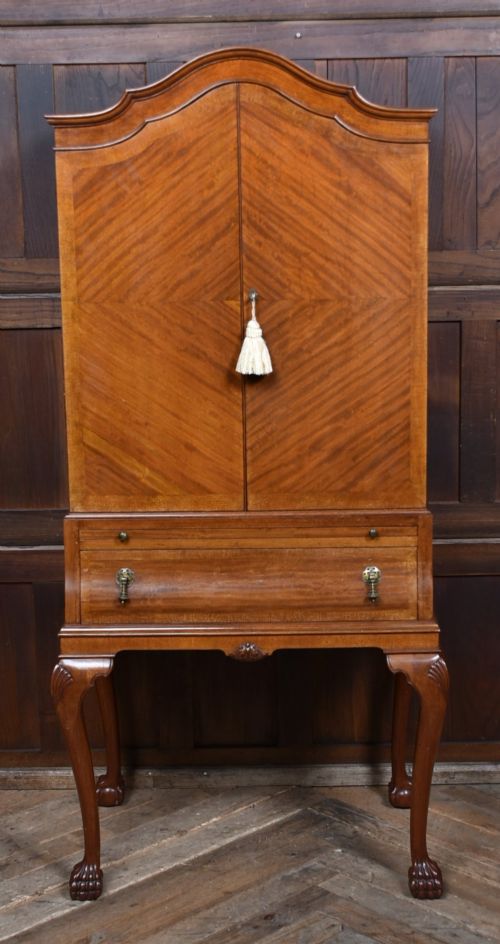
An antique style cocktail cabinet is a dedicated piece of furniture designed for holding bottles, glasses and bar accessories, appearing primarily in forms dating from the early twentieth century back to the Victorian era. When searching this phrase, buyers encounter varied silhouettes ranging from streamlined Art Deco models to revival styles drawing on Queen Anne, Georgian and Jacobean designs. The most common versions met on this page utilise rich walnut timbers, often patterned with burr veneers and fitted with internal mirrors or pull-out serving slides.
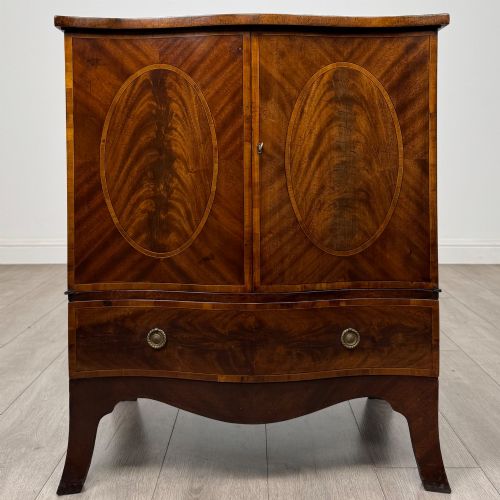
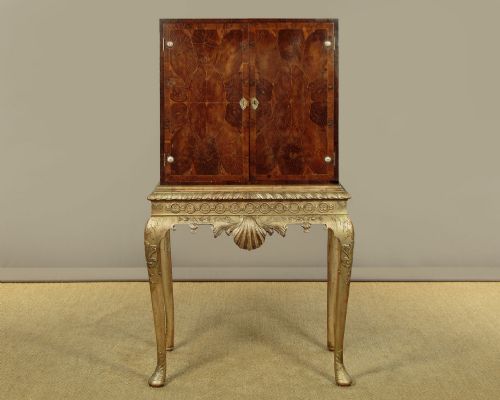
These pieces function as focal points in reception rooms, combining display surfaces with secure storage for glassware and spirits behind panelled or glazed doors. Examples span cabinets on stands, double bow front units, and serpentine sideboards adapted specifically for drinks storage. Makers drew on historical vocabularies like Chinoiserie lacquering and French Empire lines, resulting in a diverse group of storage furniture built for domestic hospitality.
How they were made
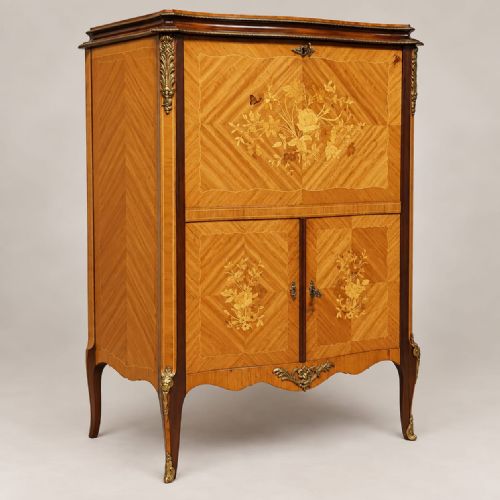
Makers constructed these cabinets using sturdy foundational woods like mahogany, oak and walnut, overlaid with decorative veneers such as burr walnut and kingwood to create striking grain patterns on the exterior surfaces. Brass hardware appears frequently for hinges, handles and locks, while internal compartments often incorporate glass shelving, mirrored backs and specialised racks for bottles. Techniques also included red lacquering and intricate marquetry inlay, reflecting diverse revival styles from Chinoiserie to Georgian motifs.
The construction relied on traditional cabinet-making joints to support heavy internal fittings and mirrored sections designed to catch the light. Cabinets on stands combined raised frames with detailed carving or giltwood embellishment, anchoring the substantial weight of the timber storage compartments above.
Some mid-century units arrived with a surprise: metamorphic tables that unfold instantly to transform a quiet cabinet into an impromptu bar.
What varies in quality
The quality of these cabinets rests on the selection and matching of wood veneers, particularly the symmetry and depth of burr walnut figures across multiple doors and panels. Higher grade pieces exhibit meticulous marquetry inlay, substantial brass mountings, and well-fitted internal mirrors that remain securely silvered. Construction standards show in the smooth action of pull-out serving slides and the precise alignment of heavy doors.
Makers of distinction applied refined finishes that highlight the natural grain without masking the timber beneath. The interior fit-out, from bespoke glass holders to integrated lighting wiring in later twentieth-century iterations, separates standard production furniture from superior workshop output.
Epstein·Harry and Lou Epstein·Hille
The Antique Style Cocktail Cabinet Glossary
- Burr walnut
- A figured wood veneer harvested from the wart-like growths on walnut trees, prized for its swirling, organic patterns. It dominates the surfaces of many twentieth-century drinks furniture.
- Chinoiserie
- A decorative style employing hand-painted motifs of Asian landscapes and figures, often rendered in red lacquer. This finish gives certain cabinets a dramatic visual presence.
- Serpentine
- A curved shape featuring a convex centre flanked by concave ends, creating a gentle undulating line along the front of a sideboard or cabinet. It demands advanced woodworking skill.
- Demi-lune
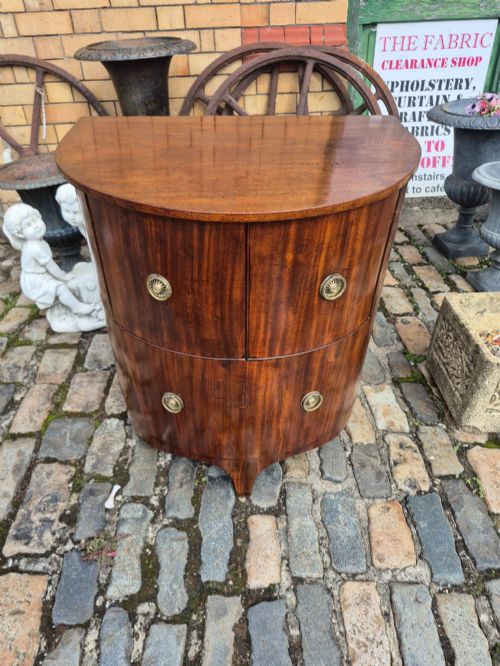
- A half-moon shape used for the footprint of compact cabinets designed to sit flush against a wall. This profile maximises floor space while retaining internal storage capacity.
- Marquetry
- The art of applying pieces of veneer to a structure to form decorative patterns and pictures. Craftsmen used contrasting woods to render elaborate floral or geometric designs.
Antique Style Cocktail Cabinet: Frequently Asked Questions
What is inside an antique cocktail cabinet?
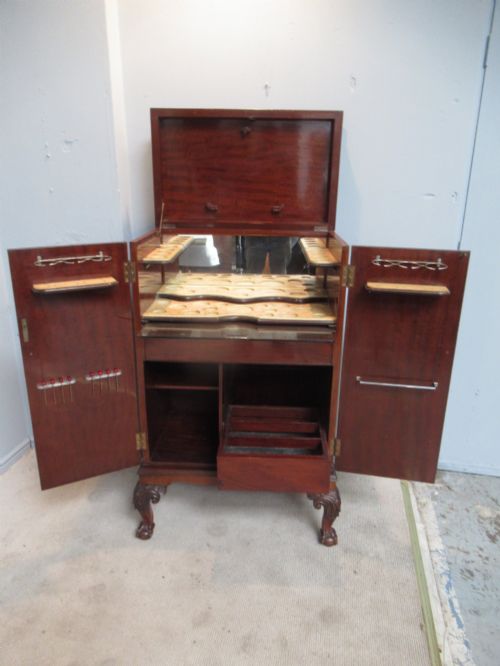
These cabinets typically contain mirrored back panels, glass shelves for glassware, and specialised racks or spaces for storing bottles and mixing tools. Many also feature a pull-out slide lined with glass or pull-down flaps used as a surface for pouring drinks.
Interior layouts vary by period, with some Art Deco and revival models incorporating fitted compartments specifically designed for cocktail shakers and crystal decanters.
How do I date a cocktail cabinet?
Dating relies on combining the stylistic clues of the exterior, such as Art Deco geometric lines or Queen Anne revival cabriole legs, with the construction methods visible inside. Woods like burr walnut and mahogany appear across different decades, so hardware styles and interior fittings help narrow down the production era.
Pieces originating from the 1920s and 1930s often show distinct modern revival trends, whereas Victorian and Edwardian examples lean toward traditional bookcase or sideboard proportions.
Where should I place a cabinet at home?
These pieces suit dining rooms, living spaces or home bars where their decorative doors and fitted interiors can serve both a practical and visual function. Cabinets on stands require floor space that allows doors to open fully without obstruction from surrounding furniture.
Positioning them away from direct sunlight protects vulnerable wood veneers and lacquered finishes from fading over time.
Are these cabinets purely decorative?
While highly decorative due to burr walnut veneers, lacquered Chinoiserie panels and marquetry inlay, they remain fully functional storage units for glassware and bottles. The inclusion of drop-down leaves and mirrored serving areas means they continue to serve their original purpose during social gatherings.
Owners often utilise the internal shelving to display vintage glassware collections when the doors are left open.