


Antique Style Cherub Statues
Antique style cherub statues bring classical grace and playful divinity into a room through sculptural forms rooted in past centuries.
Antique Style Cherub Statues
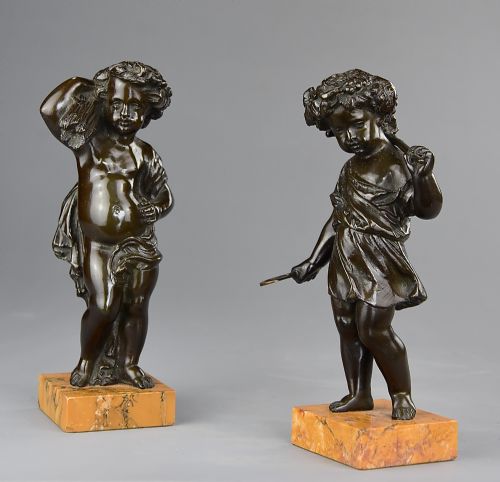
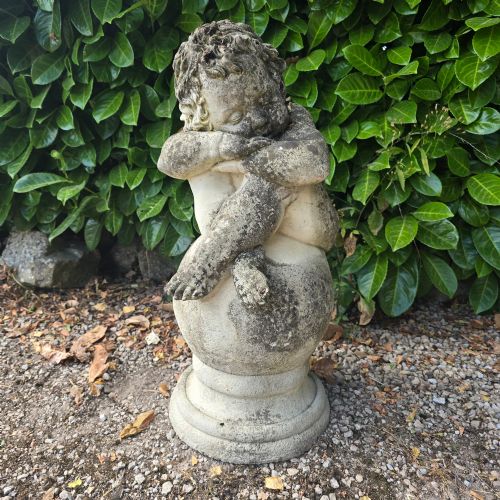
Antique style cherub statues encompass a varied group of figures, from bronze allegorical putti and garden statues to porcelain table lamps and mantel clock ornaments. Buyers seeking antique style cherub statues will encounter works primarily dating from the nineteenth century, including pieces reflecting French Rococo Revival, Italian Baroque, and Neoclassical tastes.
The selection ranges from grand tour bronzes and carved wooden gilt figures to weathered stone sculptures and delicate porcelain figurines. Many of these pieces borrow heavily from classical antiquity and the manner of notable sculptors such as Claude Michael Clodion.
How they were made
The creation of these figures relies heavily on traditional casting, carving, and moulding techniques executed in materials such as bronze, marble, and carved wood. Artisans also utilised gold leaf gilding, polychrome paint, and enamel finishes to enhance the visual depth and decorative appeal of the statuary.
Stonework relies on cast stone and reconstituted stone for outdoor pieces, while indoor sculptures often feature finely detailed bronze castings or hand-painted porcelain surfaces associated with established European factories.
What varies in quality
Quality in these sculptures rests upon the crispness of the modelling, the finesse of the chasing in bronze, and the sensitivity of the carving in wood or marble. Superior pieces display anatomical balance and expressive detailing that reflect the hand of a skilled artisan rather than generic mass production.
The choice of materials and the preservation of original patinas, gilding, or polychrome paint dictate the aesthetic standing of each piece. Finer examples often bear signature marks or stylistic attributions that link them directly to recognised nineteenth-century workshops and makers.
Claude Michael Clodion·Antonio Canova·BELLENOT PARIS·Meissen
The Antique Style Cherub Statues Glossary
- Putti
- Winged infant figures often depicted in classical art and sculpture. They represent divine spirits or playful mythological attendants.
- Gilt
- A thin layer of gold or gold leaf applied to the surface of wood or metal. This technique creates a rich decorative sheen.
- Patina
- The natural surface alteration or colour change acquired by bronze, wood, or stone over time. It indicates age and handling.
- Neoclassical
- An artistic style drawing inspiration from the classical art and culture of ancient Greece and Rome. It emphasises proportion, restraint, and symmetry.
Antique Style Cherub Statues: Frequently Asked Questions
What is a putto?
A putto is a chubby, winged infant figure frequently found in classical and revival art.
These figures appear across various mediums, including bronze, marble, and carved wood.
Are these statues made of solid bronze?
Many figures utilise bronze casting techniques, while others consist of marble, carved wood, or porcelain.
Material choice depends heavily on whether the intended placement was interior display or garden use.
How do I identify nineteenth-century pieces?
Nineteenth-century works often exhibit revival styles such as Italian Baroque, Rococo, and Neoclassical.
Examining the casting quality, patination, and any signature markings helps determine the period.
Where should I place a cherub statue?
These sculptures suit mantelpieces, tabletops, or dedicated display stands depending on their scale.
Weathered stone and cast stone variants are typically suited for garden settings.