




Antique Style Brooch
An antique style brooch gathers periods from the Victorian era to the mid-century, offering a wearable piece of history set in gold, silver, or platinum.
Antique Style Brooch
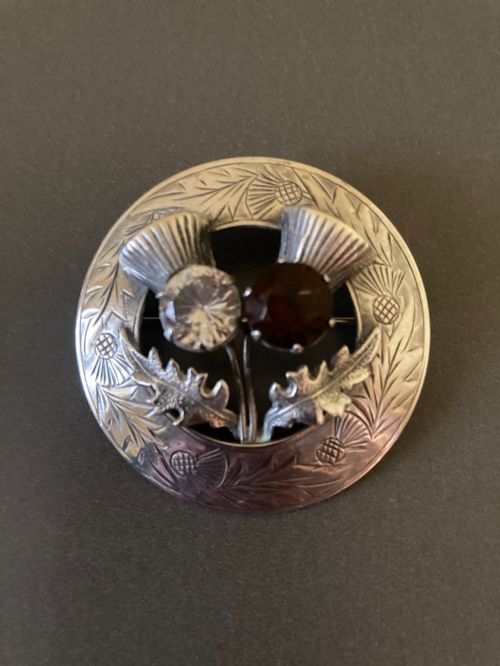
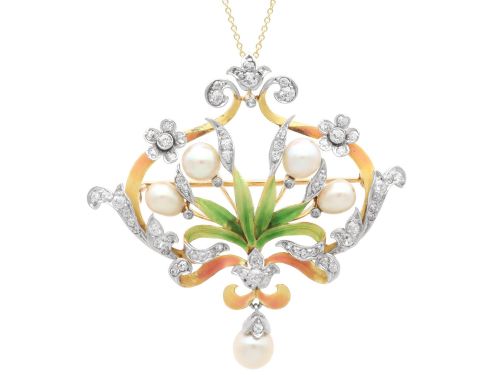
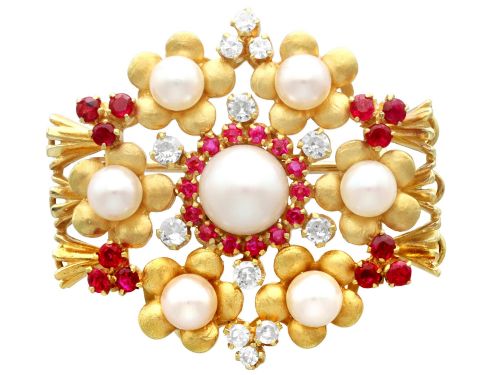
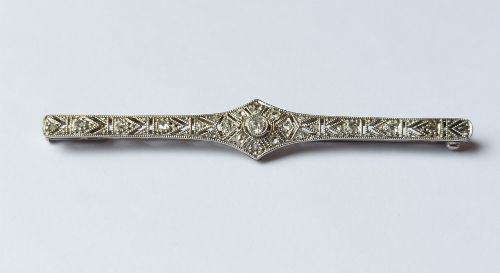
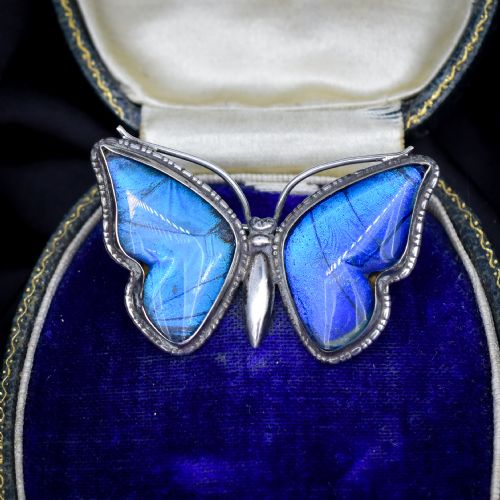
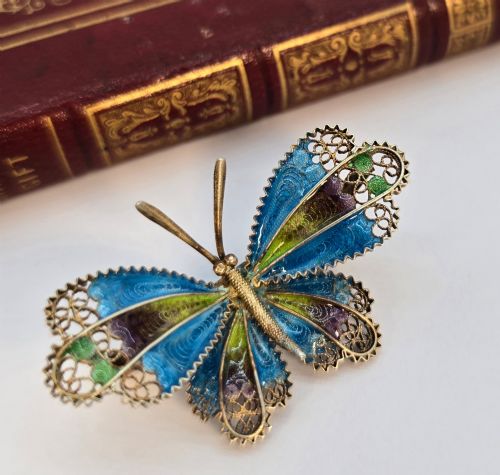
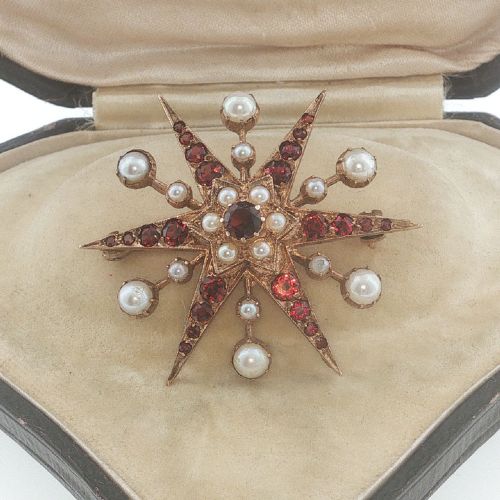
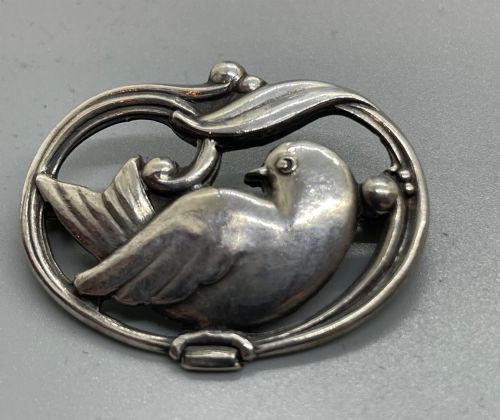
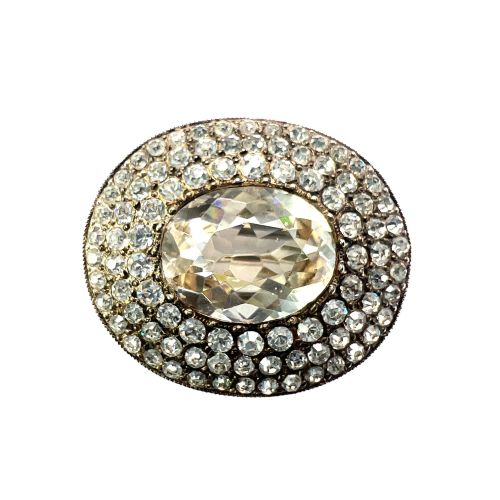
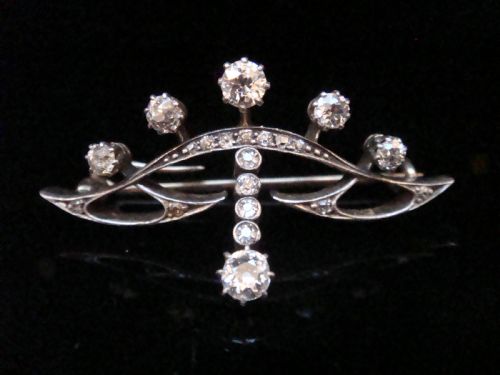
An antique style brooch covers forms from delicate bar pins and starbursts to substantial floral sprays and figural insect designs. When browsing an antique style brooch, pieces span the Victorian, Edwardian, and Art Deco periods up to the mid-twentieth century.
The selection ranges from silver paste dress pieces to platinum and diamond mountings set with rubies, sapphires, garnets, and opals. Natural motifs like butterflies, dragonflies, and flowers appear frequently alongside geometric Art Deco bar designs.
How they were made
Goldsmiths and silversmiths shaped yellow gold, white gold, sterling silver, and platinum into intricate settings, often combining metals like silver-gilt or platinum-topped gold. Stones such as diamonds, chalcedony, turquoise, and paste glass were secured using claw, bezel, or pavé techniques.
Decorative surface work included vitreous enamel, butterfly wing panels, and hand-cut stones in old European or single cuts. Makers also utilised seed pearls and delicate wirework typical of the Arts and Crafts and Etruscan Revival movements.
Antique Style Brooch Retail Price Guide 2026
Typical asking prices for style brooch among the pieces listed under this phrase on Sellingantiques today, from the lower quarter to the upper quarter. They describe what is for sale here now, not the wider market.
Listings feature items from the Victorian, Edwardian, and Art Deco periods, alongside mid-century pieces.
What varies in quality
The calibre of a piece rests on the precision of the metalwork, the matching and cut of the gemstones, and the integrity of any enamel or delicate wing panels. Superior examples show crisp casting or hand-fabrication without clumsy solder marks.
Designer attribution and period-specific finishing elevate certain items, such as marked pieces from known workshops or elaborate multi-gem settings utilising platinum and high-carat gold rather than standard silver gilt.
Charles Horner·Murrle Bennet & Co
The Antique Style Brooch Glossary
- Paste glass
- Hand-cut lead glass used to imitate gemstones. It reflects light differently than natural stones and sits in foiled or open-backed settings.
- Silver gilt
- Sterling silver treated with a thin layer of gold over the surface. This technique provides the warmth of gold with a silver base.
- Jabot pin
- A long decorative pin historically used to secure folds of fabric on a jabot neckwear ornament. They often feature an ornate terminal at one end.
- Chalcedony
- A microcrystalline variety of quartz used frequently in Victorian jewellery. It appears in smooth cabochon cuts with translucent qualities.
- Starburst
- A symmetrical design radiating outwards from a central stone. This motif gained popularity during the Victorian and mid-century periods.
Antique Style Brooch: Frequently Asked Questions
What periods do these brooches come from?
The listings encompass items from the Regency and Victorian eras, through Edwardian and Art Deco periods, up to the 1960s. Each era brings distinct metal choices and design aesthetics.
Victorian and Edwardian examples lean towards natural motifs and softer gold tones, while 1920s and 1930s pieces showcase platinum and geometric Art Deco styling.
How were antique brooches worn?
These pieces served multiple functions on historical garments, from securing lace collars and shawls to fastening heavy wool coats.
Some versatile designs also function as pendants or clip onto chains, allowing them to be worn around the neck as well as pinned to a lapel.
What materials are commonly used?
Gold in various carat weights, sterling silver, silver-gilt, and platinum form the primary structural metals for these pieces. Gemstones range from diamonds and sapphires to garnets, opals, and turquoise.
Alternative materials like coloured glass paste, enamel, and iridescent butterfly wings also appear across different decorative styles.
How can I identify an Art Deco brooch?
Art Deco pieces typically feature platinum or white gold settings combined with geometric lines, symmetrical patterns, and structured bar designs. They frequently incorporate diamonds alongside calibration-cut coloured stones.
This aesthetic, spanning the 1920s and 1930s, stands in visual contrast to the flowing organic curves of earlier Victorian and Art Nouveau styles.