



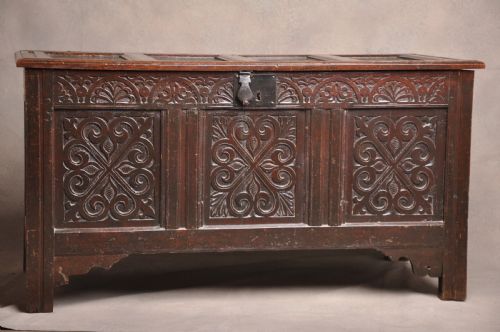


Antique Strapwork Trunk
An antique strapwork trunk brings heavy timber and forged metalwork into a room, offering robust storage built to endure centuries of use.
Antique Strapwork Trunk
An antique strapwork trunk is a sturdy storage vessel defined by external metal bands that reinforce its wooden frame. These pieces span centuries from the sixteenth through the nineteenth century, encompassing regional styles such as Iberian Baroque and Jacobean.
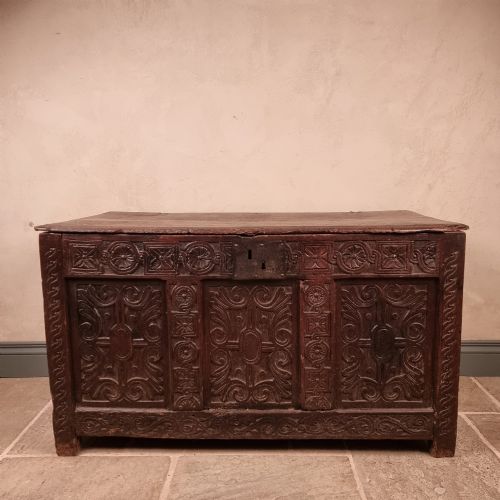
The version most commonly encountered on this page is the substantial oak or pine coffer or chest, secured with iron or brass straps. They range from early seventeenth-century north country coffers to later Victorian and Edwardian iterations.
Makers utilised various timbers including oak, camphor wood, mahogany, and kingwood, often pairing them with cast iron or wrought iron mountings. These receptacles functioned historically to secure valuables, linens, and documents before modern cabinetry took over.
How they were made
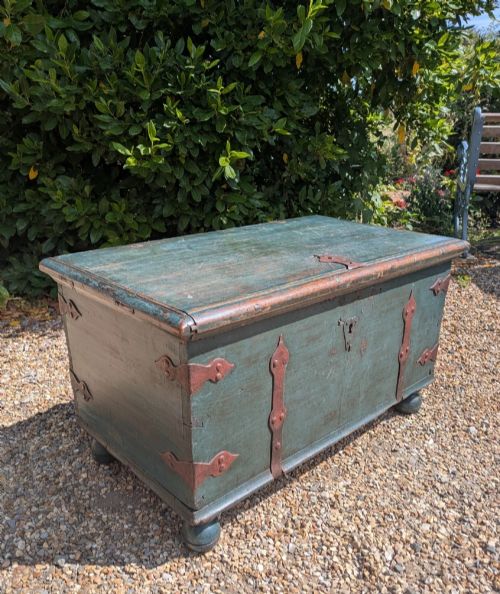
Makers constructed these trunks using solid timbers like oak, pine, and cedar, joined with traditional framing methods. Surfaces were occasionally painted or left as plain wood, displaying the natural grain of the material.
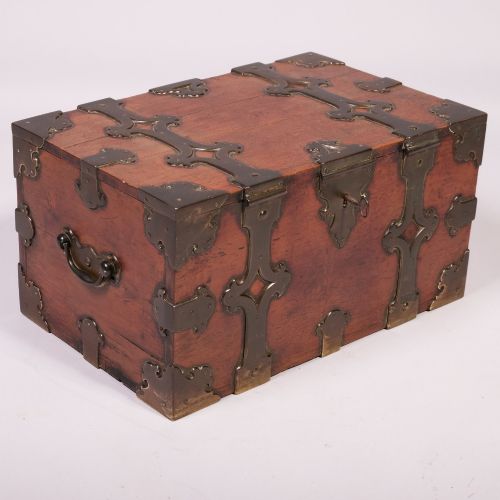
Wrought iron, hand-forged iron, and brass provided structural reinforcement and decorative strapwork across the lids and bodies. These metal bands were fastened with visible rivets and bolts to secure the wooden panels together firmly.
Antique Strapwork Trunk Retail Price Guide 2026
Typical asking prices for strapwork trunk among the pieces listed under this phrase on Sellingantiques today, from the lower quarter to the upper quarter. They describe what is for sale here now, not the wider market.
Listings feature trunks and coffers spanning from the sixteenth century through the Edwardian era, constructed from oak, pine, camphor wood, and kingwood.
What varies in quality
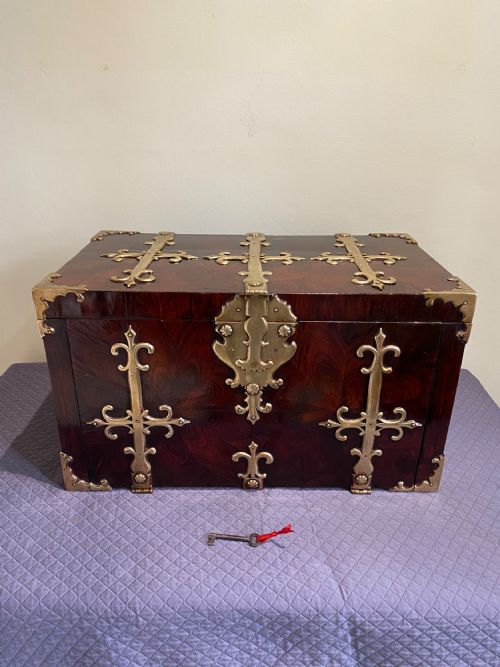
The distinction between ordinary and exceptional pieces lies in the integration of the metal strapwork with the timber frame. Finer examples display meticulous hand-forged ironwork or cast brass mounts that complement the proportions of the chest rather than overpowering them.
The choice and age of the timber also determine the character of the piece, with dense hardwoods like oak and exotic woods such as kingwood holding detail more crisply than softer painted pine.
The Antique Strapwork Trunk Glossary
- Strapwork
- Decorative or reinforcing bands of metal or wood applied to the surface of a trunk or chest. These straps provide structural strength while creating geometric patterns across the exterior.
- Coffer
- A large wooden chest traditionally used for storing valuables, plate, or documents. They often feature heavy lids and robust locking mechanisms.
- Wrought iron
- Iron that has been heated and hammered into shape by a blacksmith. This material shows slight irregularities from the forging process that distinguish it from cast metal.
- Kingwood
- A dense, richly figured timber utilised in fine cabinet making during earlier periods. It provides a dark, polished surface with varied grain patterns.
- Camphor wood
- An aromatic timber frequently utilised for trunks intended to store garments. Its natural scent helped protect contents from insects.
Antique Strapwork Trunk: Frequently Asked Questions
What was an antique strapwork trunk used for?
These trunks served primarily to store and transport valuable possessions, household linens, and important documents securely. Their robust construction made them suitable for travel as well as stationary storage in great houses and merchant dwellings.
Over time, as domestic architecture evolved, they transitioned into permanent interior fixtures used to hold blankets and heavier items in bedrooms and halls.
How do I tell an earlier trunk from a later one?
Earlier pieces from the sixteenth and seventeenth centuries typically display simpler joinery, heavy hand-forged iron straps, and native timbers like oak. The construction methods show visible signs of hand tool work rather than machine processing.
Later Victorian and Edwardian examples often incorporate softer woods, cast iron components, and stylistic revivals such as Baroque detailing or painted finishes.
How do I care for the metal straps on a trunk?
Iron and brass strapwork requires minimal intervention beyond keeping the metal dry and free from moisture accumulation. Light dusting with a dry cloth prevents the buildup of grime in the crevices around rivets and mounts.
Applying a microcrystalline wax can protect exposed iron from oxidation without altering the historic appearance of the forged surface.
Where should I place a strapwork trunk at home?
These trunks function well as coffee tables in living spaces, offering internal storage while providing a solid surface for books and objects. Their low profile also suits placement at the foot of a bed or along a wide hallway.
Avoid positioning them in areas subject to direct sunlight or rapid temperature fluctuations to protect the historical timber and metalwork.