

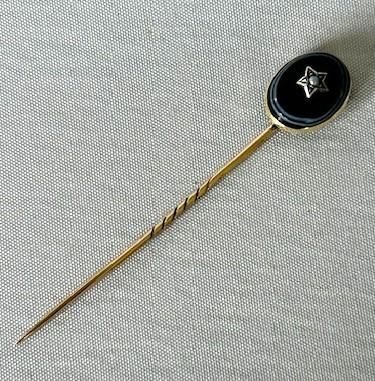
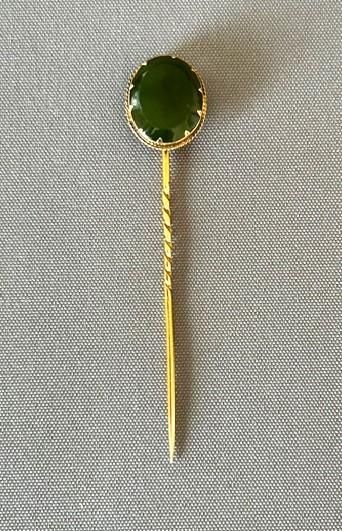


Antique Stickpin Brooch
These antique stickpin brooch pieces offer remarkable miniature scale and wearable detail, capturing Victorian and Edwardian craftsmanship in gold and gemstones.
Antique Stickpin Brooch
When you search for an antique stickpin brooch, you encounter versatile ornamental pins designed to secure cravats, lapels, and hats during the nineteenth and early twentieth centuries. These jewels combine the slender stem of a stick pin with the broader display of a brooch or hatpin, appearing across Victorian and Edwardian periods.
The pieces listed here showcase a distinct range of forms, including sporting motifs like hunting bugles and jockey caps, alongside naturalistic beetle and butterfly designs. Materials span from simple 9ct yellow gold to 18ct gold set with diamonds, pearls, bullseye agate, jade, garnet, and shell.
Origins trace through Victorian, Edwardian, and Belle Epoque eras, representing decades of varied decorative styles such as Art Nouveau and cannetille work. You are most likely to meet gold settings housing seed pearls or old cut diamonds, reflecting the wearable jewellery of 1860 to 1910.
Materials and construction methods
Maker workshops utilised 9ct and 18ct gold as the primary structural metal for stems and mountings, often combining yellow gold with intricate wirework like cannetille. Gems such as diamonds, garnets, and jade were hand-set into these precious metals alongside organic materials like seed pearls, baroque pearls, shell, and bullseye agate.
Techniques relied on traditional hand-tooling, fine metal casting, and detailed gemstone cutting, producing old cut diamonds and shaped cabochons suited to miniature scales. Enamelling and delicate bezel settings secured organic elements like pearls and shell firmly within the gold framework.
Antique Stickpin Brooch Retail Price Guide 2026
Typical asking prices for stickpin brooch among the pieces listed under this phrase on Sellingantiques today, from the lower quarter to the upper quarter. They describe what is for sale here now, not the wider market.
Someone once needed a tiny gold beetle to guard their lapel, proving that Victorian insects make surprisingly polite companions.
Distinctions in construction and design
Design execution determines visual success, separating rigid, simple pins from expressive, naturalistic forms such as carved shell, beetles, or articulated butterflies. Maker attribution, seen in notable works by Cartier or Rene Lalique, further defines the standing of individual pieces.
Rene Lalique·CARTIER
The Antique Stickpin Brooch Glossary
- Jabot pin
- An ornamental pin with decorative ends at both extremities, historically designed to fasten the jabot frill on a shirt. These pins function similarly to stick pins and brooches.
- Cannetille
- A delicate wirework technique popular in mid-nineteenth century jewellery, resembling fine gold embroidery or filigree. It creates ornate, textured surfaces on gold mountings.
- Bullseye agate
- A variety of chalcedony displaying concentric banding that resembles a target or bullseye. It was frequently cut en cabochon for Victorian rings and stick pins.
- Old cut diamond
- A diamond cut by hand before modern symmetrical facet standards were established in the twentieth century. These stones feature high crowns and small tables that catch candlelight.
- Baroque pearl
- A pearl with an irregular, non-spherical shape. Jewellers utilised their unique organic contours to inspire naturalistic subjects like floral petals or animal bodies.
Antique Stickpin Brooch: Frequently Asked Questions
What is an antique stickpin brooch?
An antique stickpin brooch is a hybrid term describing small ornamental pins with long stems and decorative heads that served multiple fastening functions in historic wardrobes.
These pieces bridge the gap between functional lapel pins and decorative brooches, often featuring intricate gem-set motifs from the Victorian and Edwardian eras.
How were stick pins worn historically?
Historic wearers used stick pins to secure cravats, neckties, scarves, and lapels, pushing the long metal stem through fabric and securing it with a small clutch or guard.
Later variations and larger formats also functioned to anchor hats or decorate the front openings of garments as jabot pins.
How do I date a Victorian or Edwardian pin?
Dating relies on stylistic clues, such as the heavy geometric motifs and yellow gold typical of mid-Victorian cannetille work, or the lighter platinum and diamond designs of the Belle Epoque.
Materials also offer clues, as seed pearls and bullseye agate point firmly to nineteenth-century preferences, while specific maker signatures help narrow down the decade.
What motifs are common in these pins?
Common motifs include sporting themes like hunting bugles and jockey caps, reflecting the leisure pursuits of the Victorian and Edwardian periods.
Naturalism also dominated, resulting in detailed depictions of beetles, butterflies, and floral elements rendered in gold, shell, and pearls.