

Antique Sterling Chain
An antique sterling chain carries the weight of practical Victorian timekeeping and early twentieth-century style, offering robust silver links built to last.
Antique Sterling Chain
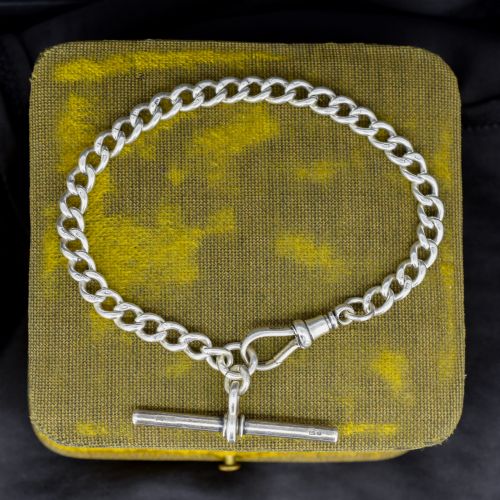
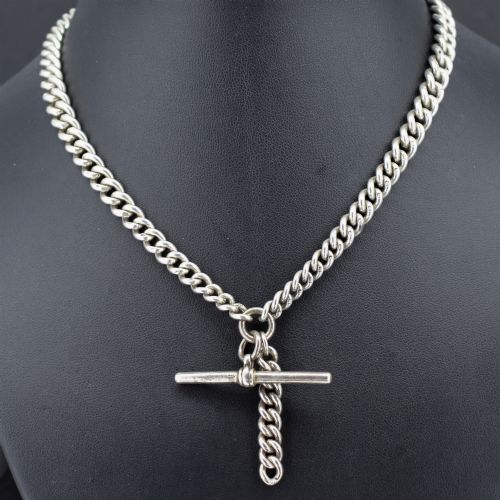
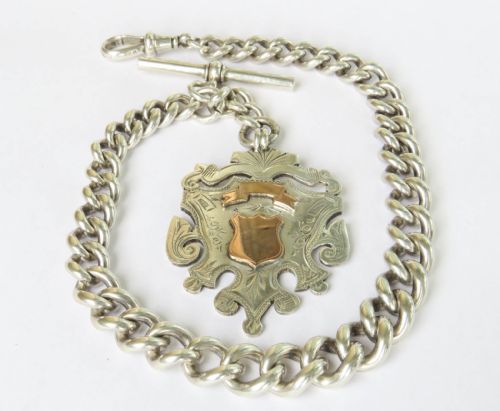
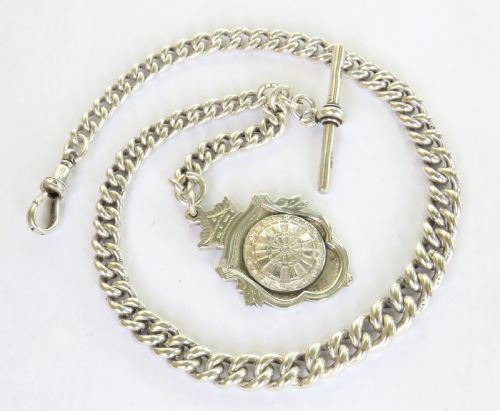
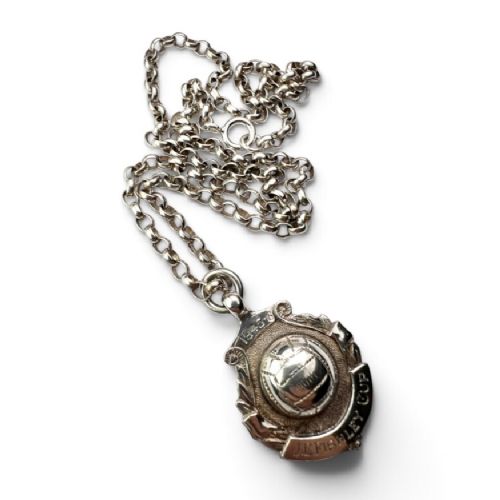
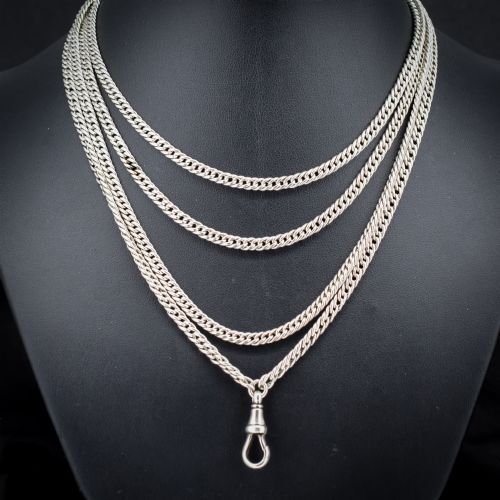
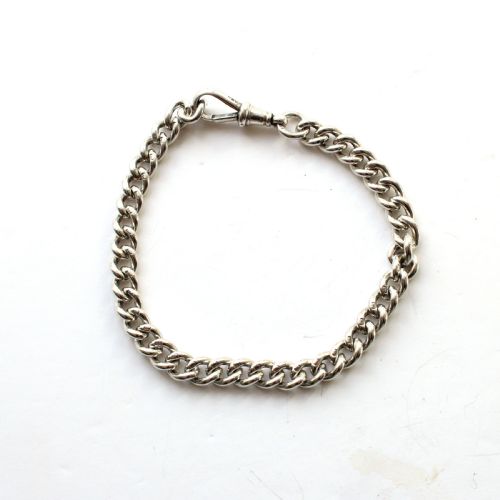
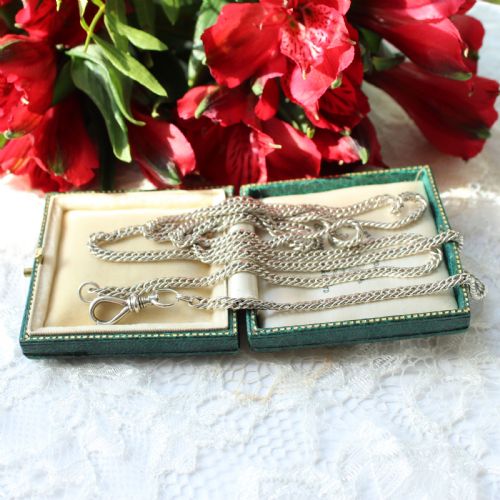
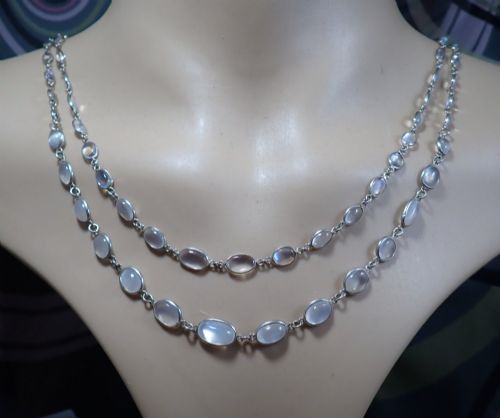
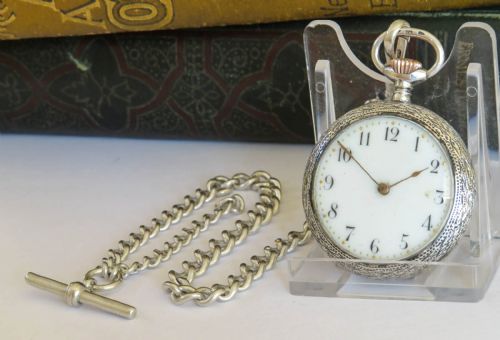
An antique sterling chain encompasses everything from functional pocket watch albert chains to long guard chain necklaces and heavy bracelets. Buyers searching for an antique sterling chain will frequently encounter robust pocket watch chains equipped with dog clips and T-bars, alongside long necklaces spanning over fifty inches.
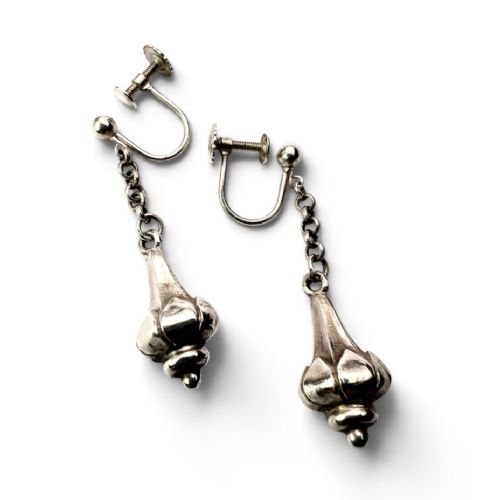
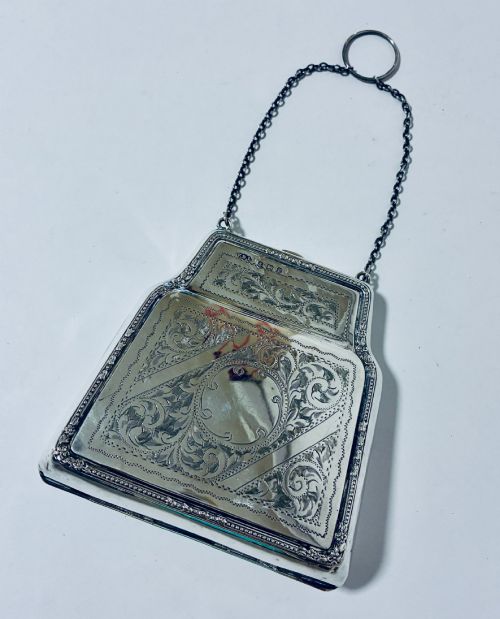
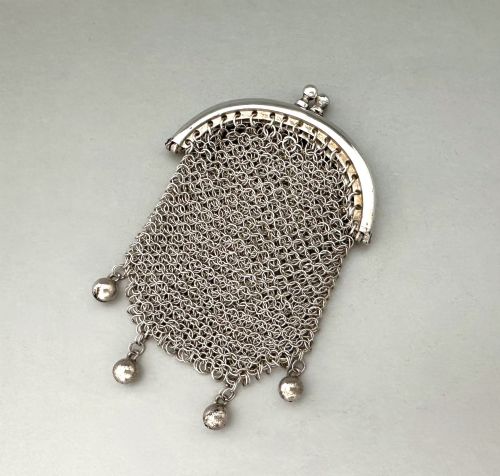
The selections span distinct historical periods from the late nineteenth century through the Edwardian era and into the Art Deco years. Forms extend beyond traditional neckwear to include purses, fobs, earrings, and bracelets fashioned from solid silver.
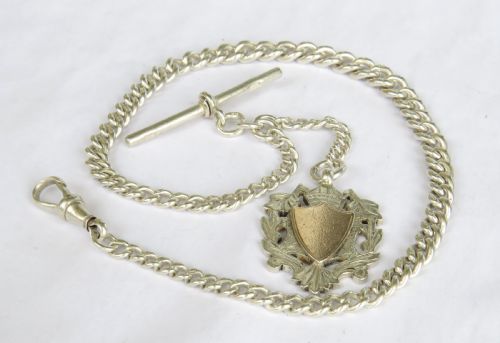
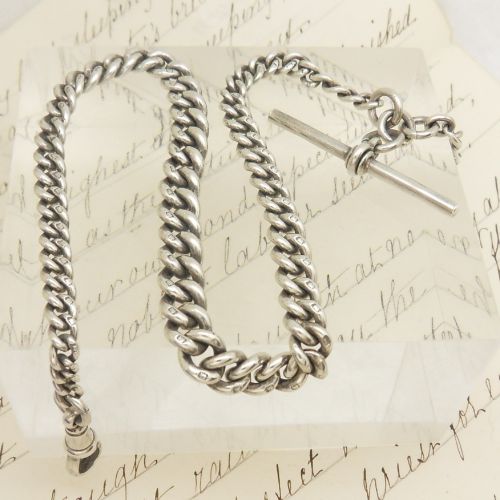
Originating predominantly from British workshops, these pieces often bear regional assay hallmarks such as those from Birmingham or Chester. The most common survivals are the substantial silver albert chains once anchored to waistcoats.
How They Were Made
Silversmiths constructed these pieces using solid sterling silver, occasionally incorporating accents of gold, enamel, moonstone, glass, or jade. Links were hand-assembled in diverse formations such as flat curb, belcher, trombone, and fancy link patterns.
Functional elements like dog clips, screw-lock clasps, and swivel bars were engineered to secure pocket watches and fobs safely to clothing. Many items carry distinct hallmarks stamped directly into the metal to verify the silver standard and year of production.
What Varies in Quality
The calibre of an antique sterling chain rests upon the structural integrity of its individual links and the original working condition of its clasps. Substantial weight and solid construction distinguish heavy albert chains from lighter decorative iterations.
Crispness of hallmarks and the survival of matching components like T-bars and dog clips elevate a piece. Finer examples retain their original geometric link precision without thinning or distortion from decades of daily use.
John Reily·John Collard Vickery·The Boots Company
The Antique Sterling Chain Glossary
- Albert chain
- A short or double watch chain designed to attach a pocket watch to a waistcoat, typically featuring a T-bar at one end and a swivel clip at the other.
- Dog clip
- A spring-loaded snap hook utilised on watch chains and bracelets to secure fobs, pendants, or pocket watches safely.
- T-bar
- A small crossbar attached to the centre of an albert chain used to anchor the chain securely through a buttonhole.
- Hallmark
- An official stamp applied to silver items indicating the standard of purity, the assay office of origin, and the year of manufacture.
- Vesta
- A small pocket case designed to hold matches, frequently found paired alongside watch chains in period ensembles.
Antique Sterling Chain: Frequently Asked Questions
How do I wear a long guard chain?
Long guard chains can be doubled around the neck or left as a continuous single strand depending on their length.
Their substantial drop makes them suited for pairing with pendants or tucking securely into pockets.
What is the difference between an albert chain and a necklace?
Albert chains were originally engineered to secure pocket watches to waistcoats using T-bars and dog clips.
Necklaces lack these specific functional pocket watch attachments, though many albert chains are worn today as decorative neckwear.
How can I date my silver chain?
Dating relies primarily upon examining the stamped hallmarks and assay office marks impressed into the silver links.
Stylistic markers such as curb links, trombone shapes, and specific period clasps also indicate the era of manufacture.
Can I attach a modern pendant to these chains?
The original dog clips and spring rings readily accommodate most pendants and charms safely.
Care should be taken to ensure the jump ring of the pendant matches the scale of the antique links.