

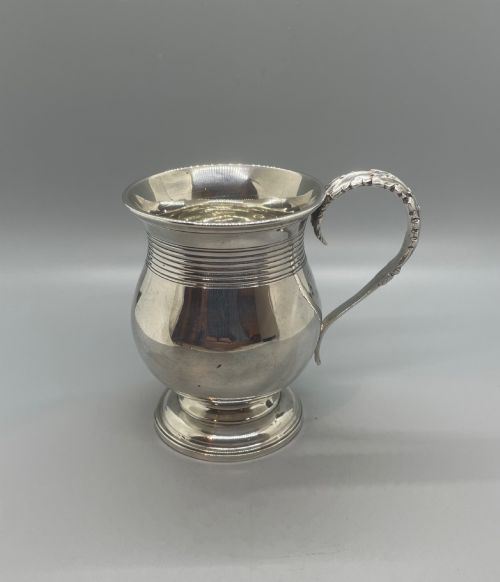
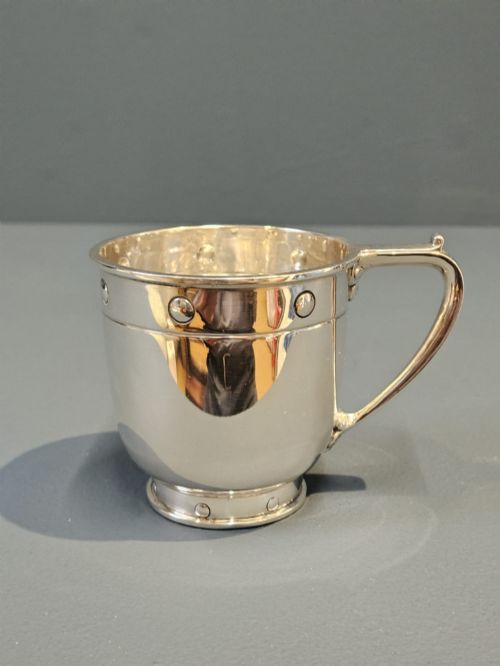
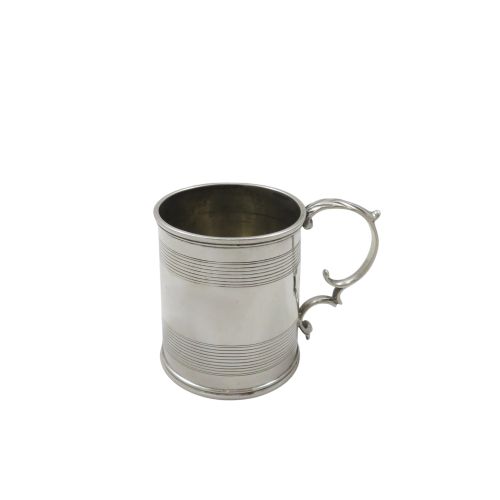
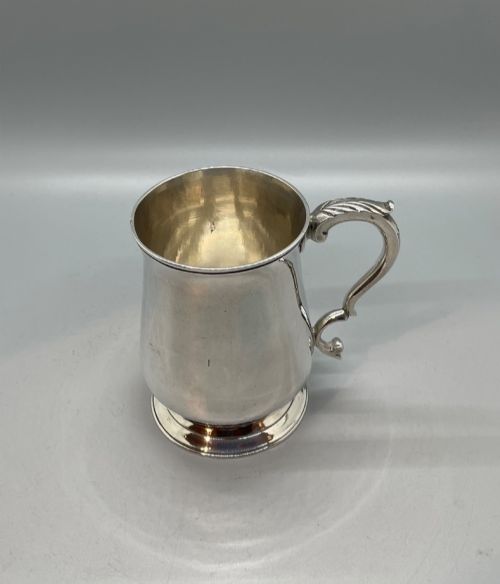
Antique Sterling Beaker
These antique sterling beakers and silver mugs span from Georgian times through to the mid-century, offering tactile weight and historic craftsmanship for daily use or display.
Antique Sterling Beaker
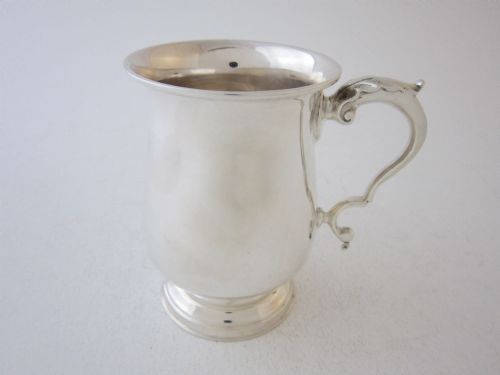
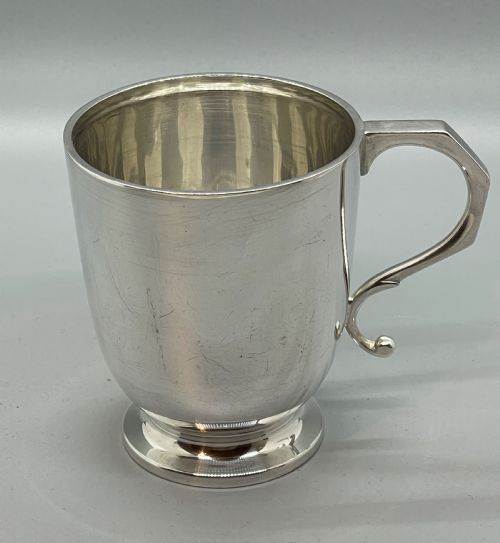
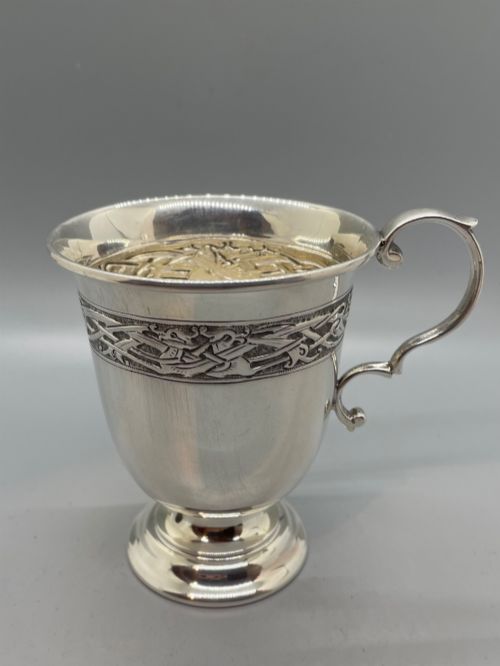
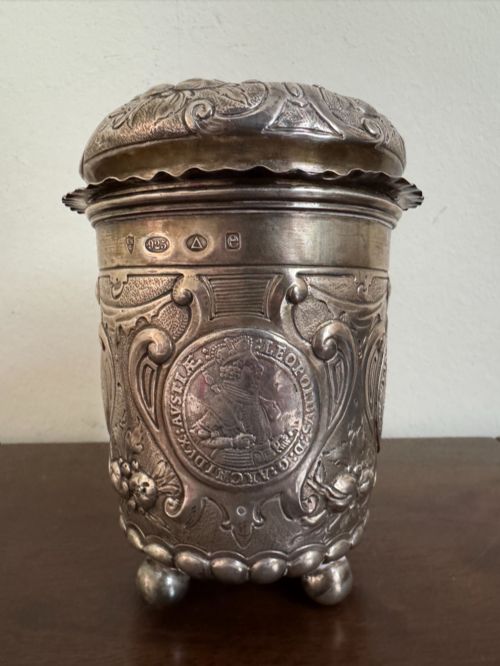
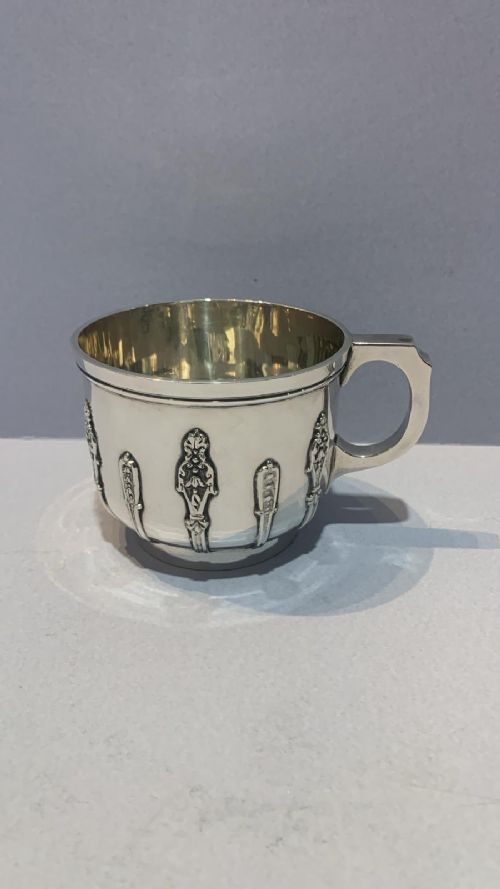
An antique sterling beaker search reveals solid silver drinking vessels, tankards, and christening mugs originating from Georgian, Victorian, Edwardian, and later twentieth-century periods. These cylindrical or baluster-formed vessels were wrought for personal utility, commemorative gifts, or travel.
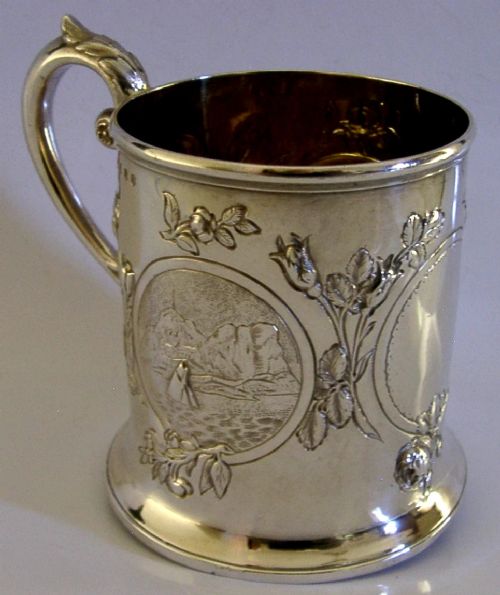
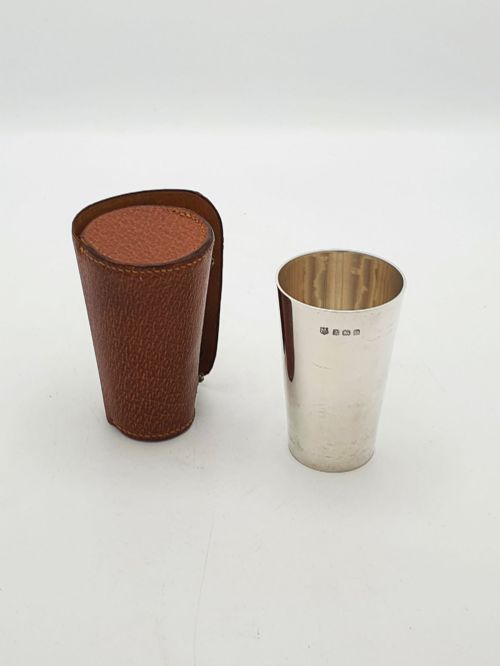
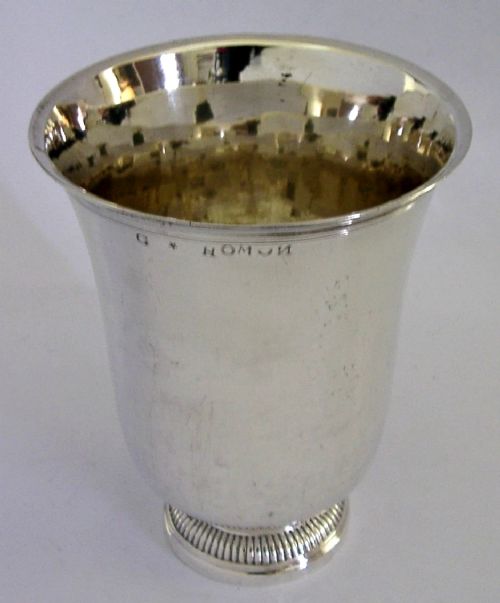
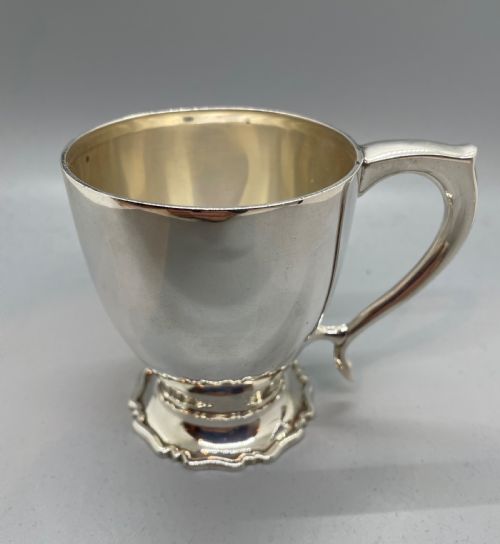
The specimens encountered here range from plain George V utility pieces and heavy Victorian christening tankards to leather-cased travel beakers and gilt-lined continental vessels. Christening mugs and handled tankards dominate the selection, alongside rarer novelty forms and travelling cups.
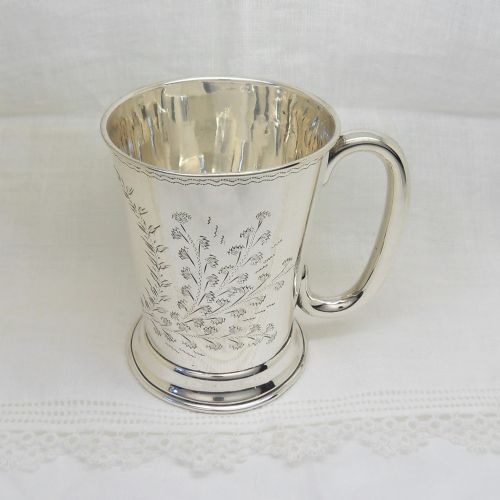
Pieces span British assay offices in London, Birmingham, and Sheffield, alongside continental European and colonial workshops. Collectors encounter everything from austere Georgian silhouettes to floral-engraved Victorian bodies and Art Deco geometric lines.
How They Were Made
Silversmiths constructed these vessels primarily from solid sterling silver or silver gilt, employing traditional hammering, spinning, and casting techniques. Handles were cast separately and soldered securely to bodies, often featuring scroll or loop configurations.
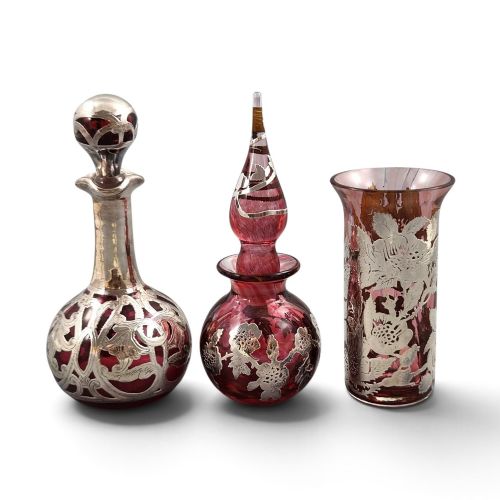
Surface decoration relied on hand engraving, floral chasing, and repoussé work, frequently framing heraldic crests or presentation inscriptions. Selected pieces integrate supplementary materials such as leather carry cases, glass bodies, or ceramic elements like Doulton Lambeth stoneware.
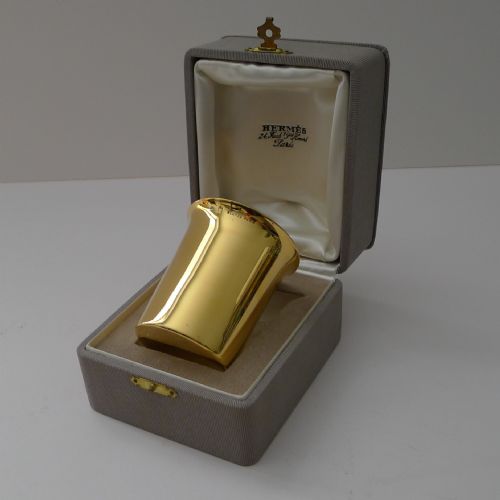
Interior gilding, known as vermeil, protected the silver from acidic contents while adding a rich golden contrast to the polished exterior. Hallmarks stamped directly into the metal record the assay town, date letter, and maker's mark.
Antique Sterling Beaker Retail Price Guide 2026
Typical asking prices for sterling beaker among the pieces listed under this phrase on Sellingantiques today, from the lower quarter to the upper quarter. They describe what is for sale here now, not the wider market.
Materials recorded across these vessels include sterling silver, silver gilt, glass, leather, and Doulton Lambeth stoneware.
What Varies In Quality
Gauge of metal dictates the foundational quality of any silver beaker, separating substantial, heavy-walled vessels from thin, easily dented counterparts. A solid, balanced heft in the hand denotes superior material investment by the original maker.
Crispness of detail in engraved motifs, floral chasing, and applied cast handles separates routine commercial production from skilled artisan output. Sharp, unrubbed hallmarks and well-preserved gilt interiors further elevate a piece's standing.
Completeness contributes significantly to worth, particularly when original fitted leather cases, matching presentation boxes, or associated sets remain intact. Evidence of careful preservation over centuries maintains the integrity of the maker's original vision.
Joseph Gloster·Hermes Paris·Barker Bros·R E Stone·Tiffany and Co·William Bateman·Thomas Sutton
The Antique Sterling Beaker Glossary
- Sterling Silver
- A standard alloy consisting of ninety-two point five percent silver and seven point five percent other metals, usually copper. This composition balances structural durability with high purity.
- Vermeil
- Sterling silver that has been plated with a thin layer of gold. This technique provides the aesthetic warmth of gold combined with the structural strength of silver.
- Baluster Form
- An architectural silhouette featuring a rounded, bulging lower body that tapers gracefully toward a narrow neck. This curving profile appears frequently on Georgian and Victorian drinking vessels.
- Hallmark
- An official stamp or series of marks applied to precious metals indicating the assay office, standard of purity, and year of manufacture. These symbols allow precise historical dating.
- Christening Mug
- A small handled drinking vessel traditionally presented as a gift to mark an infant's baptism or naming ceremony. They often bear presentation inscriptions and birth dates.
Antique Sterling Beaker: Frequently Asked Questions
How do I clean an antique silver beaker?
Wash the vessel gently in warm water using a mild washing-up liquid and a soft cloth, drying it thoroughly with a lint-free towel. Avoid abrasive dips or harsh chemical pastes that strip away patination and wear down engraved details.
Store the silver in a dry environment away from direct sunlight and rubber materials. Handling the piece regularly prevents tarnish from accumulating in recessed chased areas.
Were these mugs actually used for drinking?
Many silver mugs and beakers were produced for daily consumption at the table, accommodating ale, wine, or water. Travel beakers with fitted leather cases were specifically designed for portable dining on journeys.
Christening mugs frequently served a symbolic commemorative purpose rather than functional use, though they remain entirely structurally sound for beverages. The addition of interior gilding specifically protected the metal from acidic drinks.
How can I tell the date of my silver beaker?
Examine the stamped hallmarks on the base or rim, which typically include a standard mark, an assay office mark, and a date letter. Reference tables correlate these specific letter shapes and font panels with exact assay years.
Stylistic cues such as Rococo scroll handles, Georgian baluster proportions, or Art Deco geometric lines provide a secondary visual guide to the manufacturing period.