


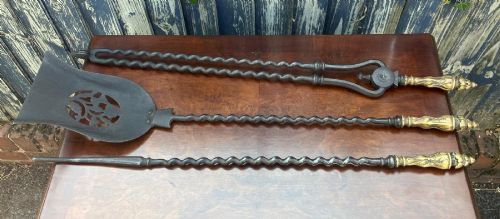


Antique Steel Tongs
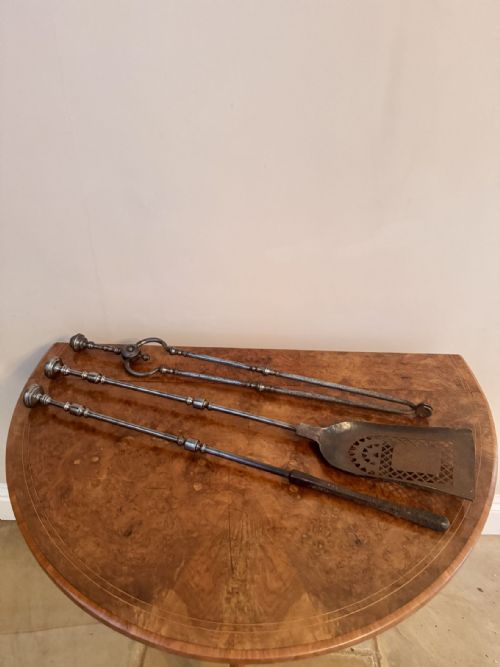
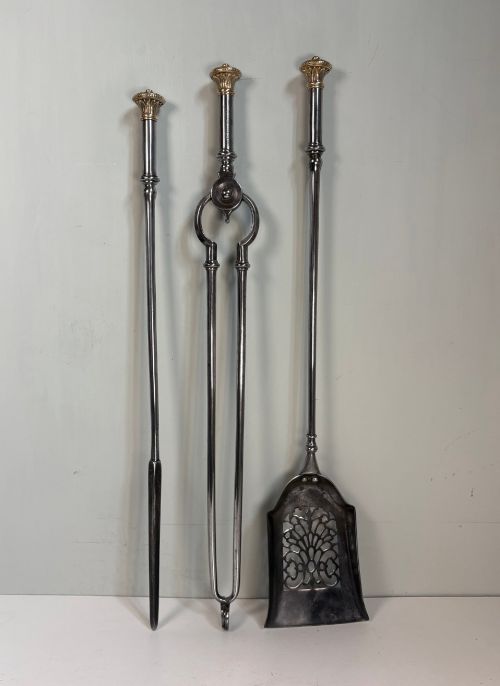
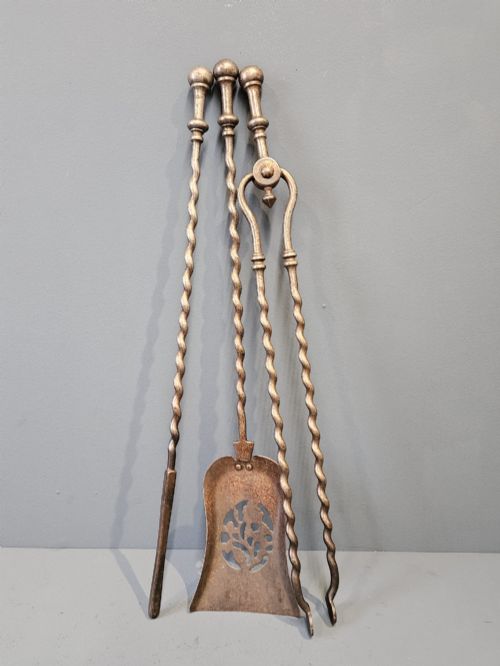
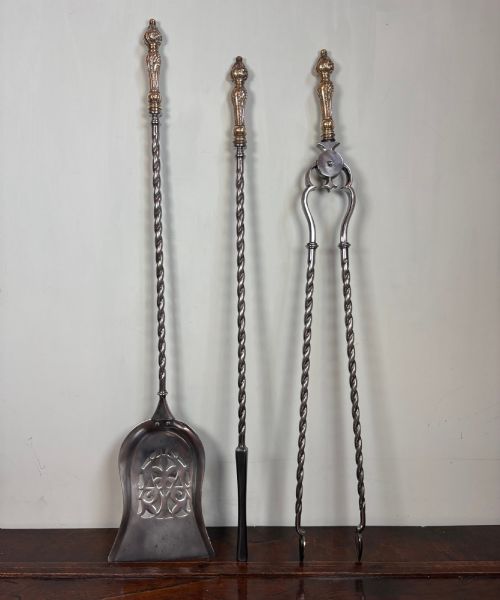
These antique steel tongs and fire irons are the hearth implements that bring period English firesides to life.
Antique Steel Tongs
When you search for antique steel tongs, you are looking at functional fireplace tools designed to manage burning fuel. The versions you are most likely to meet on this page arrive as part of sets including fire irons, fireplace accessories, and fireside companion sets.
The evidence shows pieces originating from the eighteenth century, the Regency period, the Victorian era, and into the early twentieth century. These implements served daily domestic duties around the hearth before becoming decorative elements of period interiors.
How they were made
Blacksmiths and metalworkers shaped these tools primarily from steel, iron, and polished steel. Many examples incorporate contrasting elements of brass, gilt brass, gilt metal, and gunmetal to create visual texture.
The manufacturing techniques ranged from basic forged iron to burnished steel finishes that required careful polishing. Makers combined functional durability with decorative metalwork to suit the formal and informal hearths of Georgian and Victorian homes.
Antique Steel Tongs Retail Price Guide 2026
Typical asking prices for steel tongs among the pieces listed under this phrase on Sellingantiques today, from the lower quarter to the upper quarter. They describe what is for sale here now, not the wider market.
Listings span the eighteenth, nineteenth, and early twentieth centuries, featuring materials from basic iron and steel to polished steel, brass, and gunmetal.
What varies in quality
The standard of a set rests upon the weight of the metal and the finish of the steel surfaces. Burnished and polished steel examples often display a higher degree of refinement than standard utilitarian iron tools.
Completions involving mixed metals, such as combined steel and brass or gunmetal components, show varying degrees of decorative detail in the handles and mounts that distinguish domestic tiers.
The Antique Steel Tongs Glossary
- Steel
- An alloy of iron and carbon valued for its strength and ability to take a bright polish. It forms the primary structural material for these hearth tools.
- Burnished steel
- Steel that has been mechanically polished to a smooth, reflective finish. This surface treatment enhances the lustre of nineteenth-century fire irons.
- Fireside companion set
- A coordinated group of fireplace tools, often including tongs, pokers, and shovels, displayed together on a stand or fender. These sets provided all necessary implements for tending an open fire.
- Gunmetal
- A type of bronze historically used for ordnance and machinery bearings, sometimes utilised for decorative highlights on fire tools. Its dark grey-brown tone contrasts with bright steel.
Antique Steel Tongs: Frequently Asked Questions
What are antique steel tongs used for?
These implements were designed to handle coal, logs, and embers within an open hearth. They allowed users to adjust burning fuel safely from a distance.
Over time, they evolved from purely utilitarian objects into decorative accessories that complemented period fireplace fenders and grates.
How do I identify Georgian fire tools?
Georgian pieces typically exhibit restrained classical proportions and refined handle shaping. They often pair plain steel with contrasting brass elements.
Looking closely at the construction reveals hand-forged details characteristic of eighteenth and early nineteenth-century metalworking traditions.
What is a fireside companion set?
A companion set brings together multiple hearth implements, such as tongs, pokers, and shovels, designed in a matching aesthetic. These collections ensured uniformity beside the fireplace.
Victorian examples frequently included heavy brass mounts alongside polished steel shafts to display status in the principal rooms.
How should I clean polished steel?
Polished steel requires dry storage and occasional light maintenance to prevent surface oxidation. Keeping the metal away from damp environments protects the historic finish.
Avoid abrasive cleaners that can remove the original burnished surface developed over centuries of use.