


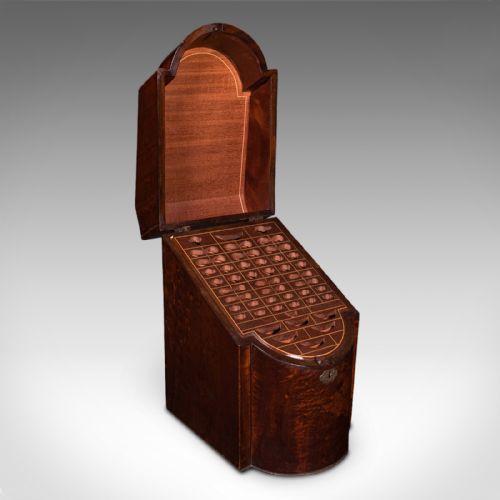


Antique Stationery Knife
An antique stationery knife is a refined desk tool used for slicing open correspondence, crafted to sit proudly amongst period writing accessories.
Antique Stationery Knife
An antique stationery knife serves as a practical desktop implement designed for opening mail and handling paper goods with care. These pieces emerge from various eras including the Georgian, Victorian, and Edwardian periods.
Buyers frequently encounter sterling silver letter openers and adapted boxes or storage vessels associated with desk organisation. Materials span from polished mahogany and satinwood to solid silver and brass mountings.
Origins range across English craftsmanship alongside continental examples such as Portuguese coromandel storage pieces. Each item reflects the writing habits of past centuries when correspondence required dedicated desk accessories.
Materials and construction
Makers utilised rich timbers like mahogany, satinwood, and coromandel, frequently incorporating intricate wood inlay and brass fittings. Boxes and storage units often featured serpentine shapes and meticulous joinery.
Metal components involved sterling silver, gilded bronze, and brass, shaped into slender blades or decorative mountings. Silversmiths and cabinetmakers combined these elements to produce durable yet elegant implements.
Antique Stationery Knife Retail Price Guide 2026
Typical asking prices for stationery knife among the pieces listed under this phrase on Sellingantiques today, from the lower quarter to the upper quarter. They describe what is for sale here now, not the wider market.
The listings span the eighteenth, nineteenth, and early twentieth centuries, featuring mahogany, satinwood, sterling silver, and brass.
Assessing quality and finish
Superior examples display crisp proportions, particularly in serpentine mahogany knife boxes and finely chased silver letter openers. The integration of brass hardware and the precision of wood inlay reveal the maker's hand.
Condition and originality dictate distinction, separating standard desk utility objects from pieces exhibiting exceptional craftsmanship. Fine grain selection in satinwood or mahogany elevates an item above baseline production.
The Antique Stationery Knife Glossary
- Serpentine
- A curved shape resembling a snake, frequently seen on the fronts of Georgian mahogany knife boxes. This undulating contour requires skilled woodworking.
- Satinwood
- A lustrous, yellowish timber utilised during the Georgian and Sheraton periods for fine furniture and decorative boxes. It provides a pale, reflective surface.
- Sterling silver
- A silver alloy containing ninety-two point five percent pure silver by mass, standard for quality British tableware and desk items. It bears hallmarks for verification.
- Coromandel
- A dense, dark timber from Asia with contrasting light streaks, favoured for nineteenth-century luxury boxes. It offers a heavy and durable structure.
- George III
- The period of British history spanning from seventeen sixty to eighteen twenty, noted for refined cabinetmaking and classical proportions. Pieces from this era often feature mahogany.
Antique Stationery Knife: Frequently Asked Questions
What is an antique stationery knife used for?
These implements were originally designed to slice open sealed envelopes and cut folded paper sheets. They remained essential desk accessories in studies and offices.
Today, they serve as functional desk tools or decorative objects for enthusiasts of historic stationery and writing equipment.
How do I identify a Georgian stationery piece?
Georgian pieces typically display classic proportions, dark mahogany timbers, and occasionally serpentine fronts associated with cutlery storage.
Examining the construction methods, such as dovetail joints and brass fittings, helps determine the eighteenth or early nineteenth-century origin.
What metals are common on these items?
Sterling silver appears frequently on letter openers, often accompanied by hallmarks indicating the assay office and year of production. Brass and gilded bronze are also utilised for handles, mounts, and desk sets.
These metals provide durability and contrast against wooden boxes or ivory blades.
Are converted boxes common?
Certain items, such as eighteenth-century knife boxes, were later adapted to hold stationery rather than cutlery. This reflects changing domestic habits over the decades.
Such conversions maintain period aesthetics while serving new organisational purposes on a modern desk.