





Antique Stationary Cabinet
An antique stationary cabinet organises correspondence with Victorian craftsmanship, bringing timber and brass fittings straight to the writing desk.
Antique Stationary Cabinet
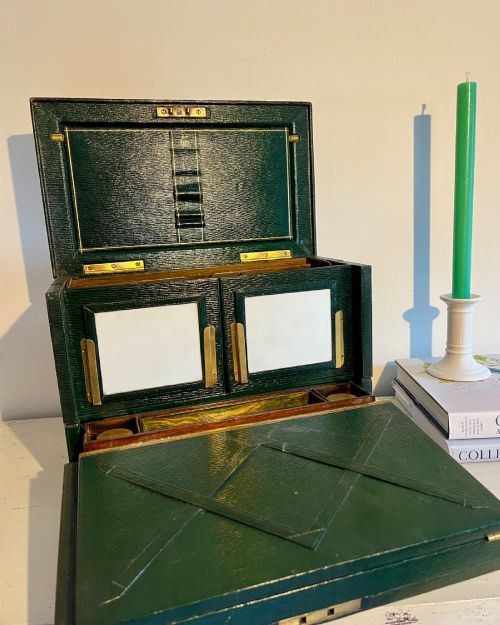
An antique stationary cabinet is a desk accessory or storage piece designed to hold writing paper, envelopes, and correspondence. The pieces found here span the Victorian period, nineteenth century, and Edwardian era, with forms ranging from desktop stationery boxes to bureau bookcases and writing cabinets.
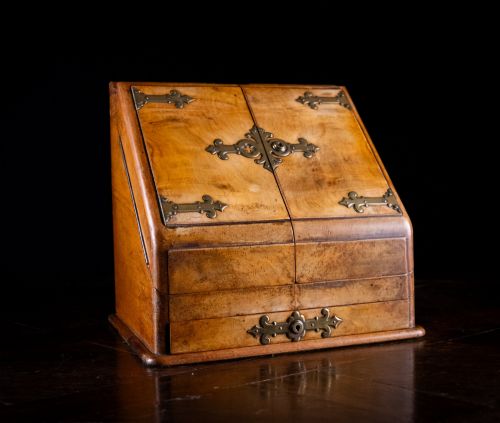
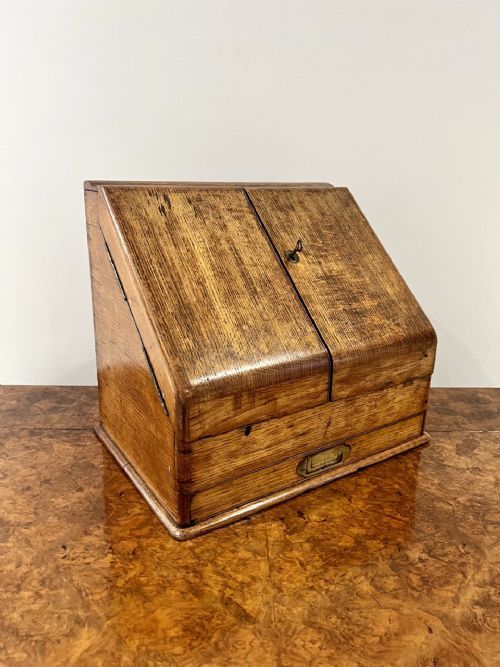
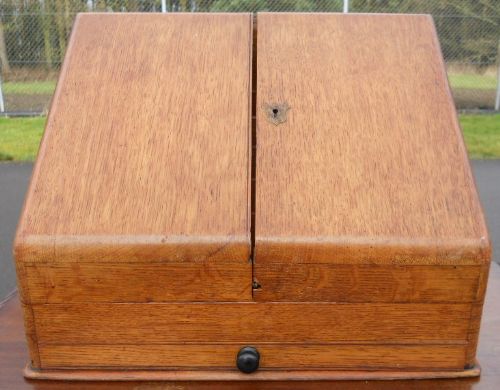
Buyers most frequently encounter Victorian examples in walnut, oak, and mahogany, often fitted with internal compartments for letters and occasionally paired with inkstands or adjustable date displays. These items reflect the heavy correspondence culture of the nineteenth century, functioning as both practical desk furniture and decorative storage.
How they were made
Cabinetmakers utilised hardwoods such as oak, walnut, mahogany, rosewood, and coromandel, constructing compact boxes and larger storage cabinets for the desktop. These timbers were selected for their rich grain and durability, frequently enhanced with polished finishes and fitted interiors.
Metalwork played a key role in the construction, incorporating brass for handles, hinges, locks, and mounts that secured the hinged lids and fall fronts. Leather inserts and glass elements also appear across the selection, adding tactile contrast and visual interest to the fitted writing compartments.
Antique Stationary Cabinet Retail Price Guide 2026
Typical asking prices for stationary cabinet among the pieces listed under this phrase on Sellingantiques today, from the lower quarter to the upper quarter. They describe what is for sale here now, not the wider market.
Desktop accessories here range from simple nineteenth-century boxes to complex bureau bookcases with multiple drawers and keys.
What varies in quality
The degree of refinement in timber selection and internal arrangement distinguishes one piece from another. Finer examples feature figured veneers like walnut and coromandel, complex fitted stationery interiors, and maker labels indicating notable workshops.
Gillows of Lancaster·Houghton and Gunn·F Waller
The Antique Stationary Cabinet Glossary
- Stationery box
- A desktop container specifically built with tiered compartments to hold writing paper and envelopes upright.
- Coromandel
- A dense, heavily figured exotic timber used for high-end Victorian cabinetmaking and luxury writing boxes.
- Davenport
- A compact form of small desk featuring a sloping writing surface above a pedestal of drawers.
- Fall front
- A hinged door or panel that drops down to reveal internal pigeonholes and storage compartments.
- Fitted interior
- The internal arrangement of dividers, ledges, and small drawers designed to organise writing materials.
Antique Stationary Cabinet: Frequently Asked Questions
What fits inside an antique stationary cabinet?
These cabinets house writing paper, envelopes, correspondence, and stamps within their partitioned internal sections.
Many examples also incorporate spaces for ink bottles, pens, and adjustable date displays to manage daily post.
How do I date a Victorian stationery box?
Dating relies on combining the timber choices, brass hardware styles, and any maker labels present on the piece.
Nineteenth-century pieces often display registration marks, specific lock stamps, or construction traits typical of the Victorian era.
Where should I place a desk cabinet?
These pieces sit comfortably on top of large desks, writing tables, or sideboards as desktop storage.
Their compact footprints allow them to function well in studies or living spaces where correspondence is handled.
What is the difference between a box and a cabinet?
Stationery boxes typically feature hinged lids that lift to expose tiered letter slots from above.
Cabinets generally incorporate doors or drop fronts that open outward to reveal internal shelving and stationery compartments.