

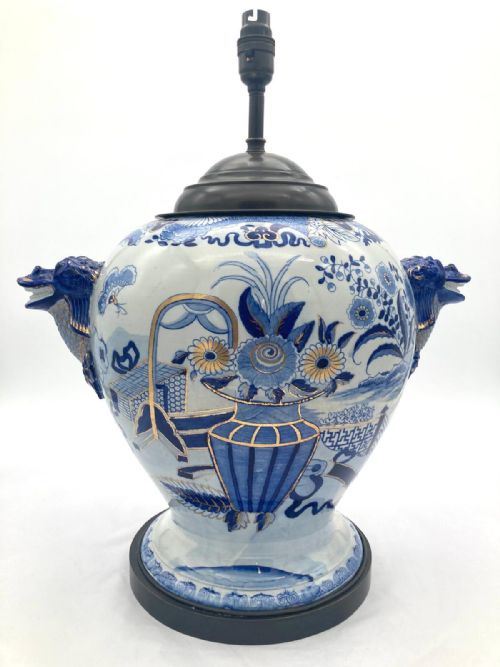


Antique Staffordshire Ceramic Vase
These antique staffordshire ceramic vases bring rustic English charm to a room, cast in earthenware and modelled with animals, figures, and architectural flatbacks.
Antique Staffordshire Ceramic Vase
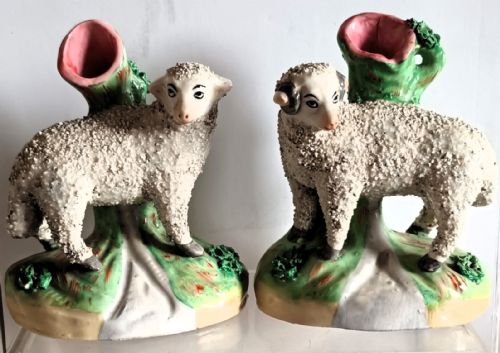
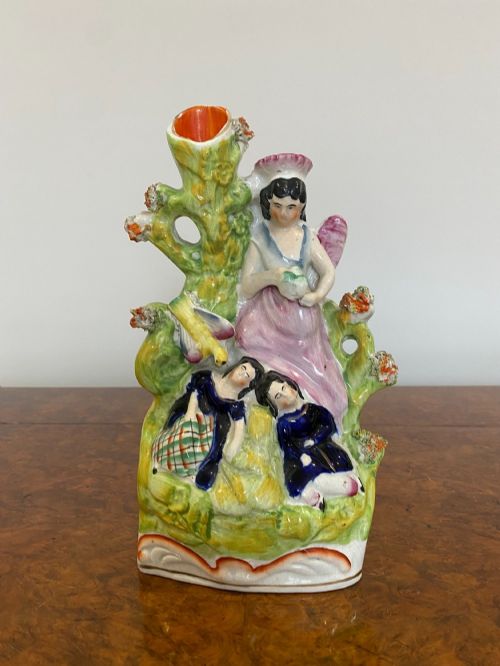
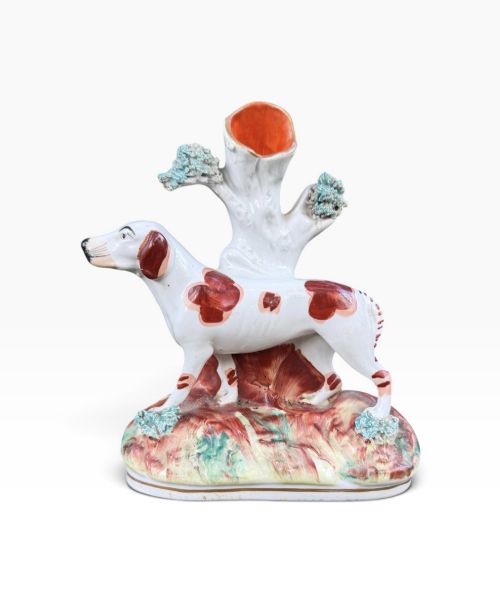
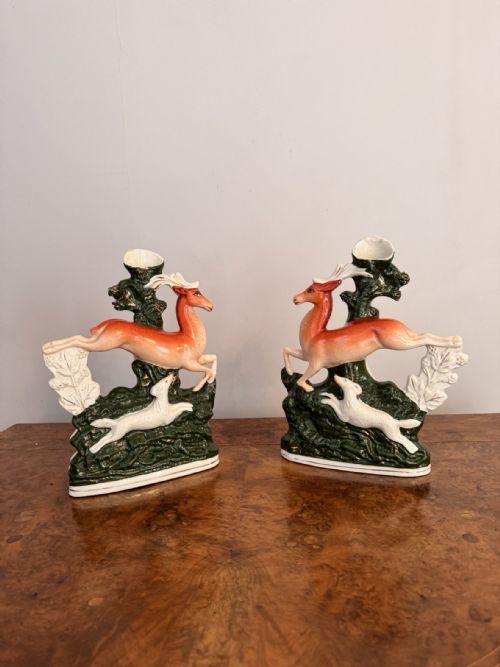
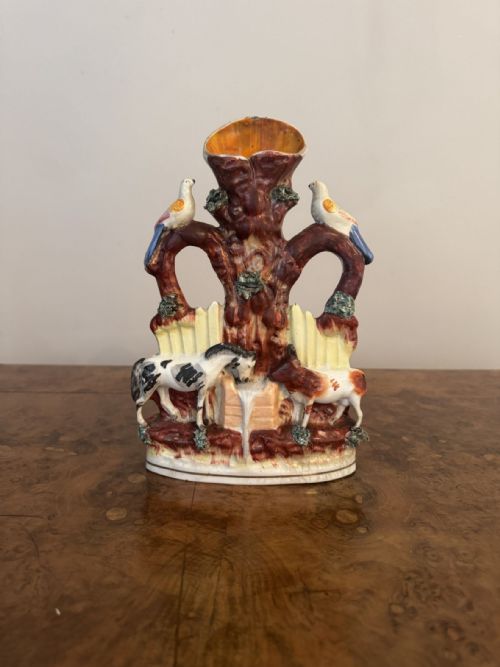
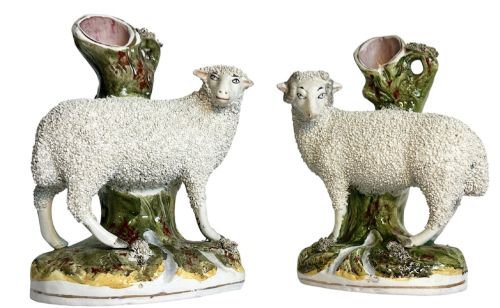
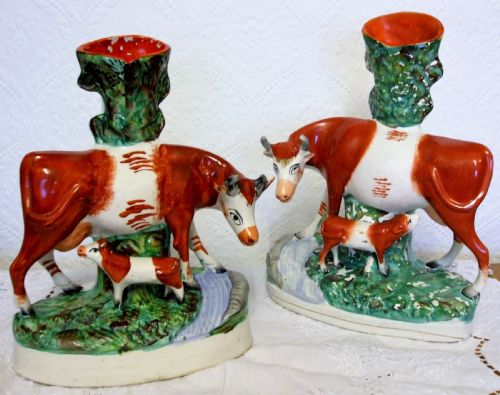
An antique staffordshire ceramic vase typically takes the form of a spill vase designed to hold taper matches, or appears as a flatback figure group meant to sit against a mantelpiece wall. Animal subjects dominate these pieces, featuring pairs of sheep, cows with calves, deer, lions, and swans alongside human figure groups.
The objects span the nineteenth century into the Edwardian era, with Victorian examples heavily represented in the form of castle flatbacks and pastoral scenes. Makers often depicted literary or moral subjects, such as Scots harvesters or figures titled 'Band of Hope', alongside rustic domestic animals.
Materials and Manufacture
Potters utilised earthenware and pearlware bodies, shaping the figures and vessels through pressing into moulds before applying lead glazes and enamel colours. Gilt and gold leaf highlights frequently accent the details, while ironstone variants offer a harder, denser ceramic composition.
Antique Staffordshire Ceramic Vase Retail Price Guide 2026
Typical asking prices for staffordshire ceramic vase among the pieces listed under this phrase on Sellingantiques today, from the lower quarter to the upper quarter. They describe what is for sale here now, not the wider market.
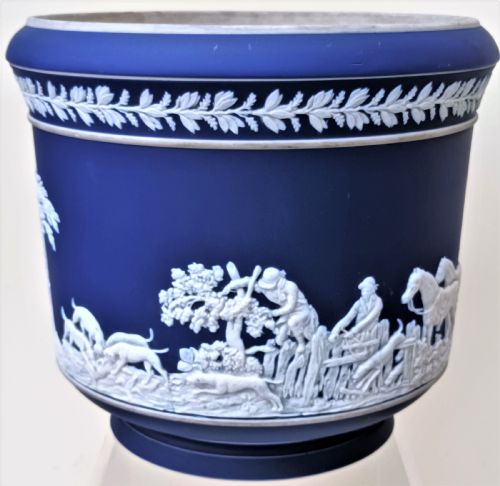
Listings show earthenware, pearlware, and ironstone bodies decorated with lead glazes, enamel colours, and gold leaf.
Assessing Quality
The crispness of the moulding and the precision of the hand-painted enamels dictate the visual strength of a piece, separating domestic Staffordshire output from finer cabinet works. Substantial scale and matched pairs command greater presence, particularly when animal subjects or architectural spill vases survive with their original modelling intact.
Secondary potteries produced simpler figures with heavy glaze pooling and blurred pigments, whereas works associated with notable makers exhibit sharper incision and more careful control of polychrome enamels.
William Adams and Sons·Hicks and Meigh·Samuel Alcock·Mason's·Spode·Walton
The Antique Staffordshire Ceramic Vase Glossary
- Spill Vase
- A hollow ceramic vessel designed to hold taper matches for lighting candles and fires. These cylindrical holders often incorporate modelled figures or animals at the base.
- Flatback
- A Staffordshire figure or vase moulded with a finished front and a flat, unglazed rear side. This construction allowed the piece to sit flush against a wall or mantelpiece.
- Pearlware
- A refined earthenware developed in the late eighteenth century featuring a subtle bluish glaze that pooled in recesses. It provided a whiter surface that imitated Chinese porcelain.
- Ironstone
- A heavy, durable type of ceramic patented in the nineteenth century. It combined earthenware clay with slag and feldspar to create a sturdy body suitable for large vases and lamps.
- Lead Glaze
- A glassy coating applied to earthenware and fired to give a protective, glossy finish. It enhances the brightness of the underlying enamel colours.
Antique Staffordshire Ceramic Vase: Frequently Asked Questions
What is a Staffordshire spill vase?
A Staffordshire spill vase combines a hollow cylinder for holding wooden spills with a decorative earthenware sculpture at the front. Potters designed them for practical domestic use beside fireplaces.
Animals and figural groups form the most common sculptural subjects attached to these vessels. They date predominantly from the nineteenth century.
How do you display flatback figures?
Flatback figures and vases sit best on narrow mantelpieces, shelves, or console tables where their unglazed rear sides remain hidden against a wall. Their shallow depth suits placement in confined spaces.
Grouping pairs of animal vases or figural spill holders creates a balanced display reminiscent of Victorian parlour arrangements.
What period do these vases date from?
The listings span the nineteenth and early twentieth centuries, covering the Regency, Victorian, and Edwardian eras. Mid-to-late Victorian examples from roughly 1850 to 1890 appear most frequently.
Earlier Regency period pieces often utilise pearlware bodies, while later Edwardian items include smaller porcelain scent bottles and miniature vessels.