




Antique Stable Painting
An antique stable painting captures the character of prized horses and their quarters, offering a glimpse into nineteenth-century equestrian life that collectors prize for its authentic detail.
Antique Stable Painting
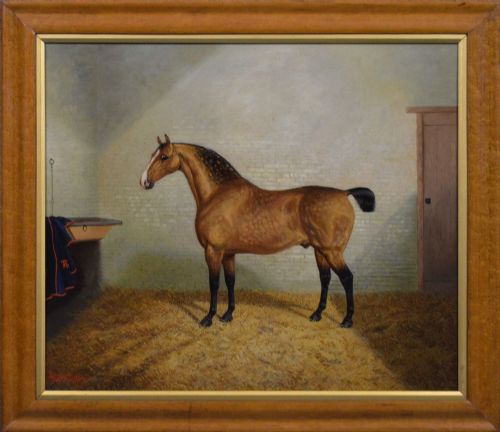
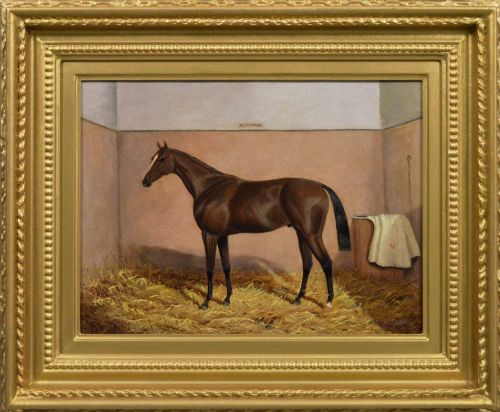
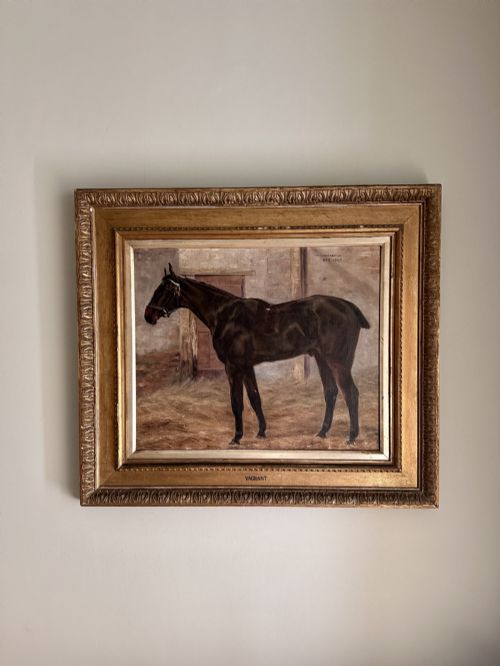
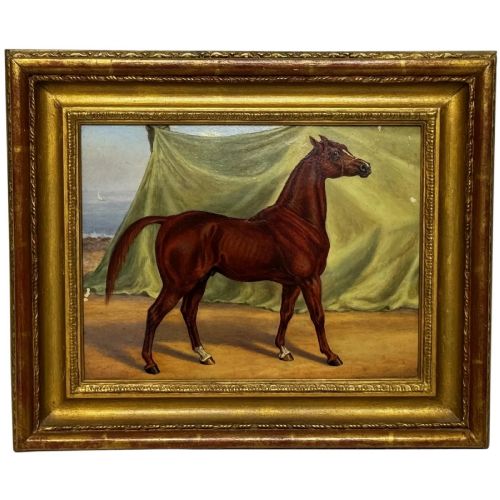
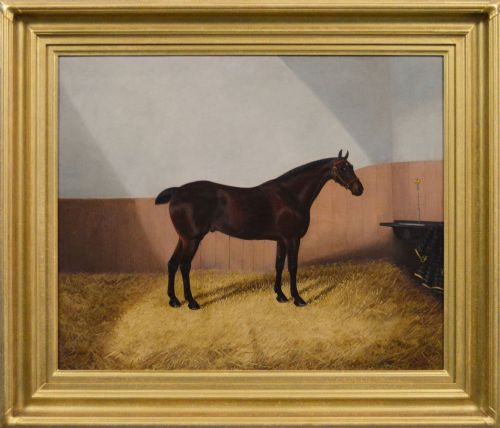
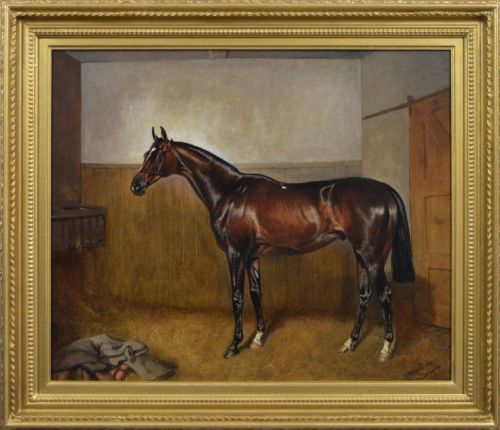
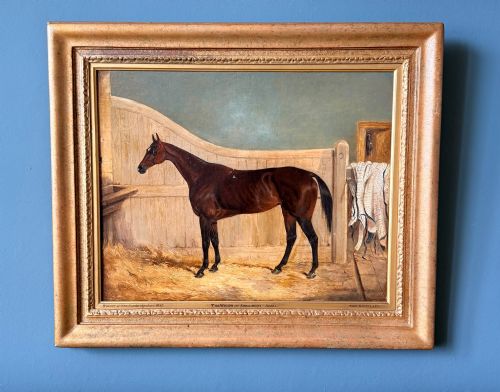
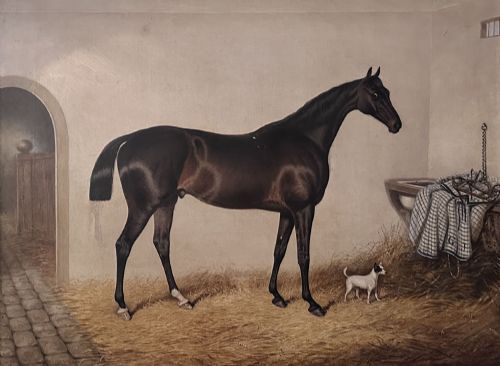
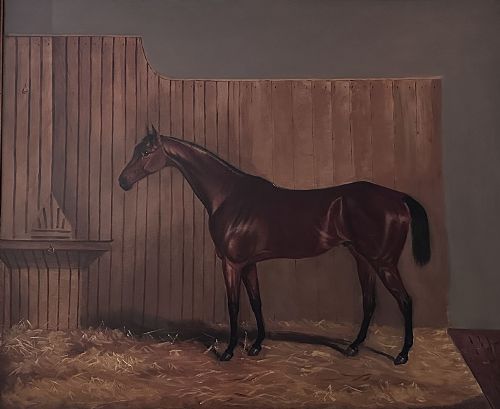
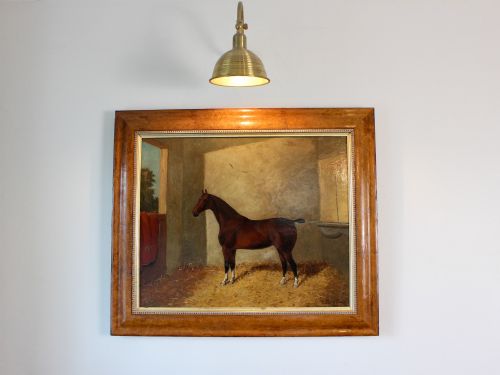
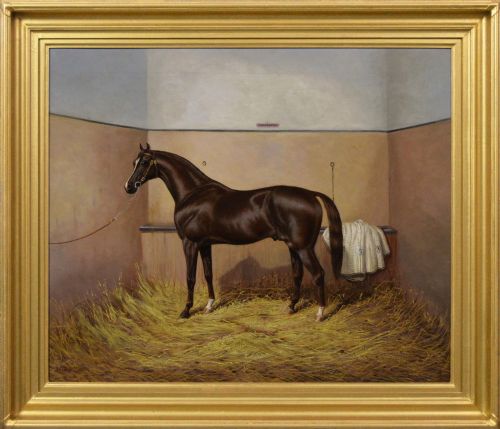
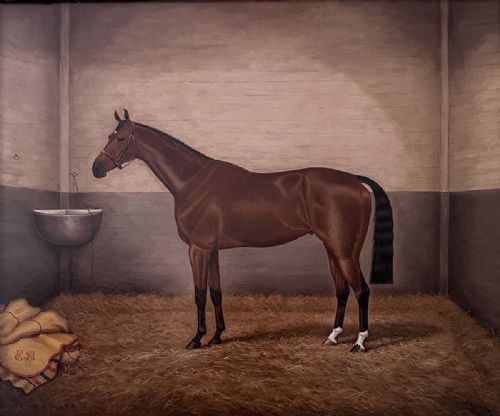
An antique stable painting typically focuses on the portraiture of horses, hunters, and racehorses housed within their stalls, often accompanied by grooms or terriers. You will most frequently encounter Victorian oil paintings on canvas depicting bay, chestnut, or grey horses in detailed interior settings.
The works span the nineteenth century and into the early twentieth century, encompassing Victorian sporting art, equestrian fine art, and occasional watercolour paintings. These pieces document named champions, working hunters, and familiar stable scenes from British and colonial settings.
Many examples capture specific animals with notable provenances, connecting individual canvases to historical estates, hunts, and named stables. The subject matter reflects a period when equine portraiture was a significant branch of sporting art.
Materials and Construction
Painters relied primarily on oil paint applied to canvas, though some works utilise wood panels or oak panels as a rigid support. Watercolour and gouache appear on paper supports in a smaller selection of works.
Canvases are commonly housed within period giltwood or gilt frames, incorporating gold leaf to accent the moulding. The physical construction reflects traditional nineteenth-century framing and stretched canvas techniques.
Listings feature works spanning the nineteenth century and the Edwardian era, predominantly executed in oil paint on canvas or wood panel.
Differentiating Quality
The standard of an antique stable painting rests upon the anatomical precision of the horse and the atmospheric rendering of the interior space. Masterful brushwork distinguishes the texture of a glossy coat, the straw underfoot, and the play of light entering from a stable door.
Signatures by recognised sporting artists and documented provenance elevate certain canvases above anonymous studio pieces. Compositional complexity, such as the inclusion of stable hands or working dogs like terriers, also shapes the standing of a work.
Henry Barraud·Albert Clark·Fred Fitzpatrick·John Alfred Wheeler·Thomas Walker Bretland·Edward Lloyd of Ellesmere·George E Sharpe·Samuel Spode·Benjamin Cam Norton·Edwin Frederic Holt·Alfred Moginie Bryant·Alfred Grenfell Haigh·Charles Bilger Spalding RA·John Nost Sartorius·John Ferneley Jnr·William Shayer Snr·R F Henderson·James Blazeby·John Constable·Evelyn Harke
The Antique Stable Painting Glossary
- Giltwood
- Wood carved and coated with gold leaf or metallic paint, commonly found on nineteenth-century picture frames. This finish provides a warm, reflective border that complements dark oil paintings.
- Sporting Art
- A genre of painting dedicated to horses, hounds, shooting, and rural sports. These works place heavy emphasis on the accurate representation of animal anatomy and breed characteristics.
- Oil on Canvas
- A technique where pigment suspended in drying oil is applied to a woven fabric stretched across a wooden frame. This medium allows for rich colour blending and deep tonal graduation.
- Provenance
- The documented history of ownership of an artwork, establishing its authenticity and chain of custody. A clear provenance often links a painting to specific country houses or estates.
- Watercolour
- A paint consisting of colour pigments suspended in a water-soluble vehicle, typically applied to paper. It yields translucent washes that capture light differently from opaque oil paints.
Antique Stable Painting: Frequently Asked Questions
What is an antique stable painting?
An antique stable painting is a nineteenth-century artwork depicting horses, hunters, or racehorses inside their stalls or stable yards. These works often include detailed portraits of named animals alongside stable staff or farm dogs.
The genre forms a distinct branch of Victorian sporting art, valued for its documentation of historical equine breeds and rural architecture.
How do I identify the period of these paintings?
The period is usually indicated by the clothing of any human figures, the style of the framing, and the painting technique itself. Victorian works frequently feature rich oil on canvas surfaces framed in giltwood.
Signatures, dates inscribed on the canvas or stretcher, and historical provenance records further help narrow down the exact decade of creation.
Where were these paintings displayed originally?
These paintings were commonly commissioned by estate owners, breeders, and patrons of the hunt to decorate country houses and sporting lodges. They served as proud records of prized bloodstock, successful racehorses, and working hunters.
Today, collectors hang them in studies, libraries, and living spaces where traditional equestrian art complements period interior design.
What distinguishes a racehorse portrait from a hunter?
Racehorse portraits typically emphasise lean muscle, slender legs, and dynamic posture, often recording historic race winners on British turf. Hunter portraits showcase sturdier builds suited for cross-country riding and foxhunting.
Stable settings for hunters often incorporate working terriers and rustic tack, whereas racehorse depictions may focus more closely on the animal's conformation.