



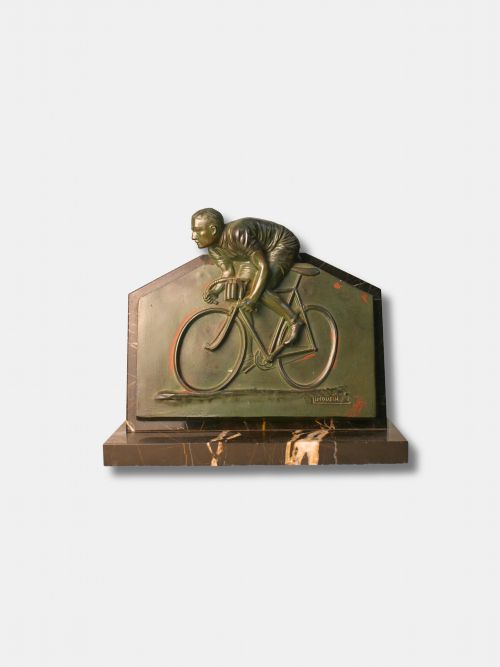


Antique Sports Sculpture
An antique sports sculpture captures the grit of the field, the piste, and the road in enduring bronze, carved wood, and silver.
Antique Sports Sculpture
When you search for antique sports sculpture, you enter a field populated by bronze figures, carved wood decoys, and sterling silver table ornaments representing athletic pursuits and field sports. These works capture specific disciplines, from cycling and rugby to fencing and skiing, alongside hunting dogs and waterfowl.
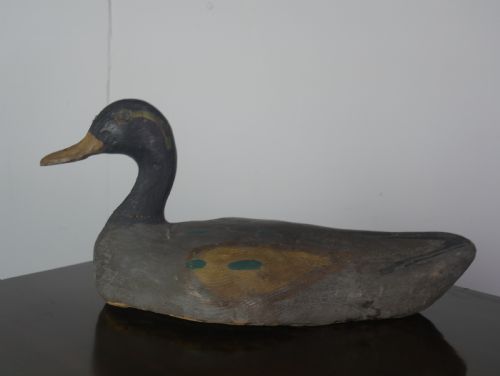
The versions most likely to meet you on this page range from Victorian and Edwardian bronze hounds to early twentieth-century painted wood decoy ducks and cast metal cyclists. Origins stretch across English workshops and French foundries, mixing utilitarian working objects with fine art table bronzes.
Subjects divide neatly between active human competitors and the animals central to rural pursuits. You encounter rugby players, fencers, and cyclists cast in spelter or bronze alongside setters, pointers, and pigeons rendered in timber, silver, and cast iron.
Materials and construction methods
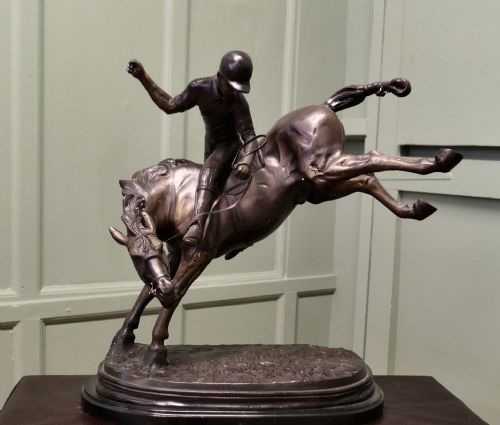
Bronze forms the backbone of these figurative works, cast through the lost-wax method or sand casting to achieve fine anatomical detail in subjects like setters, polo players, and rugby figures. Foundries frequently mounted these heavy metal sculptures on marble or onyx plinths for stability and contrast.
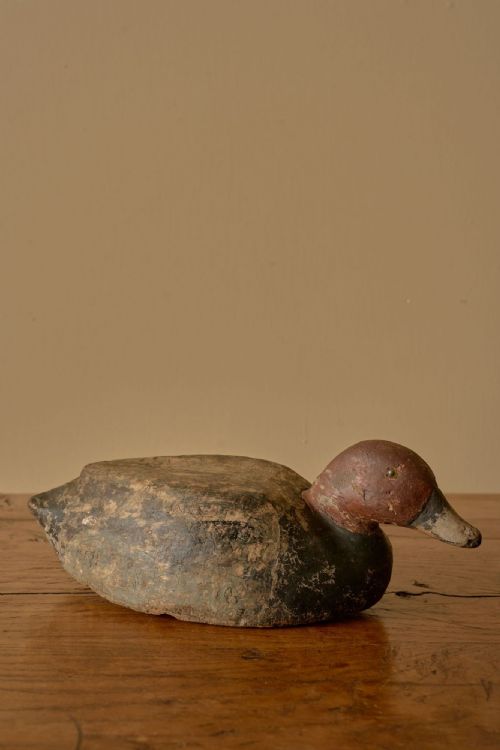
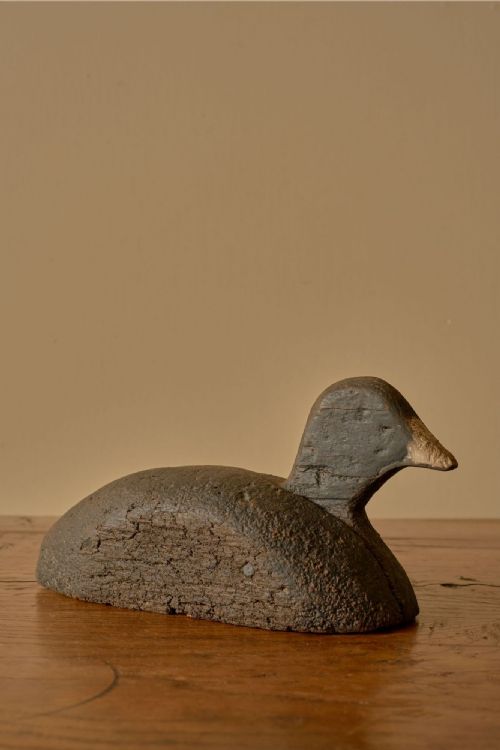
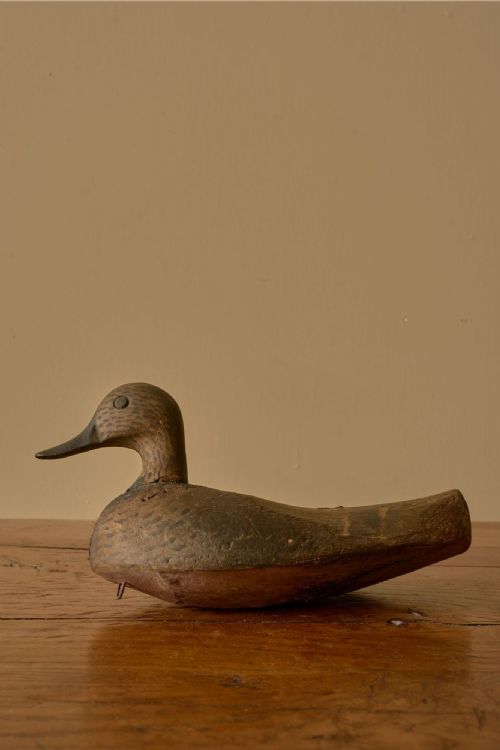
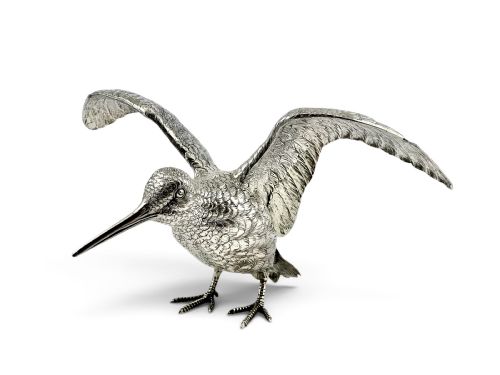
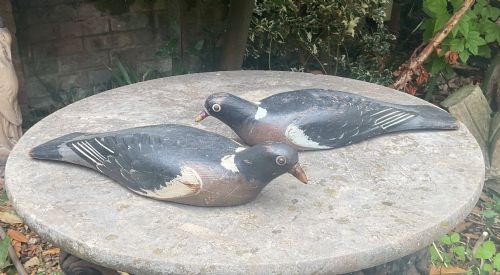
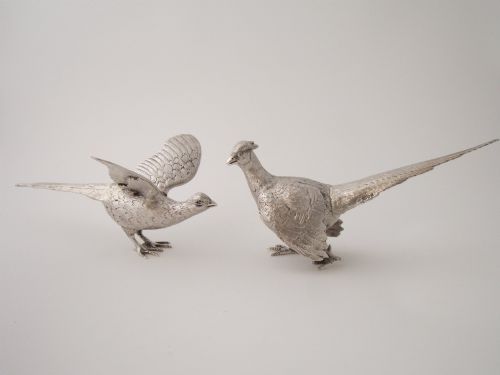
Wood serves predominantly in the creation of decoys and sporting figures, carved from timber and finished with hand-painted surfaces to mimic the plumage of ducks, pigeons, and woodcocks. Artisans also utilised sterling silver and cast iron to model birds, hounds, and utilitarian hearth fixtures.
Antique Sports Sculpture Retail Price Guide 2026
Typical asking prices for sports sculpture among the pieces listed under this phrase on Sellingantiques today, from the lower quarter to the upper quarter. They describe what is for sale here now, not the wider market.
Even a life-size wooden cricketer manages to stand completely still at the crease.
Distinguishing quality in the medium
In carved and painted wooden works, the distinction lies in the realism of the form and the preservation of the original surface paint. Superior decoys show confident knife work and naturalistic weathering, while inferior pieces lack anatomical proportion or bear unsympathetic modern overpaint.
The Antique Sports Sculpture Glossary
- Animalier
- A nineteenth-century artistic movement focused on the realistic depiction of animals, particularly hounds, game birds, and horses in motion. Sculptors in this tradition studied anatomy closely.
- Cold painted bronze
- A technique where bronze sculptures are painted with natural oil paints and heated gently to bind the pigments. This finish appears frequently on small figures and animal groups.
- Decoy
- A carved and painted wooden or metal bird utilised by hunters to attract waterfowl or pigeons. Many examples transition from working field tools to decorative folk art objects.
- Spelter
- An alloy of zinc and other metals utilised as a cheaper alternative to bronze for casting decorative figures and statues. It often receives a bronze-like finish.
- Onyx
- A banded variety of chalcedony employed as a heavy, decorative base for metal sculptures and table ornaments. It adds stability and a polished surface beneath the figure.
Antique Sports Sculpture: Frequently Asked Questions
What materials were used for these sculptures?
Makers utilised bronze, sterling silver, cast iron, and painted wood to construct these figures and objects. Metal pieces often feature marble or onyx plinths for added weight and display.
Wooden items rely on carved timber finished with hand-applied paint to render birds and sporting figures. These diverse materials reflect both fine art foundry practices and traditional folk craft.
How do I tell a working decoy from a decorative one?
Working decoys typically show honest wear from outdoor use, including weathered paint surfaces and utilitarian ballast weights or attachment holes on the underside. They were constructed strictly to perform a specific task in the field.
Decorative versions often display finer carving, pristine original paint, or mounting systems designed for interior display. Many rural pieces crossed between practical utility and folk art display over time.
Where were most of these bronzes cast?
Many bronze and spelter figures originated in French foundries during the nineteenth and early twentieth centuries. These workshops specialised in animalier subjects and human athletic figures.
English makers contributed significantly through sterling silver table ornaments and carved wooden sporting figures. Both traditions emphasised anatomical accuracy and dynamic posture.
How should I display a heavy bronze figure?
Heavy bronze and marble sculptures require a sturdy surface capable of supporting considerable weight without sagging. Ensure the display shelf or table sits level and away from high-traffic edges.
Keep metal and stone pieces out of direct sunlight to protect patinas and natural mineral bases. Gentle dusting with a soft cloth preserves the surface finish without chemical cleaners.