



Antique Split Ring
An antique split ring is a double-coiled band of precious metal designed for securing charms, seals, or pendants with complete security.
Antique Split Ring
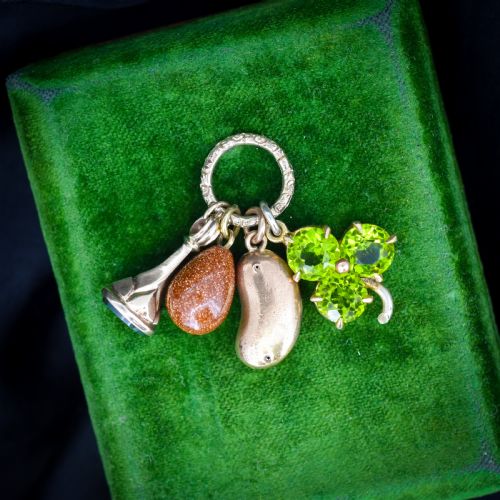
When you search for an antique split ring, you encounter small, resilient circles of gold formed like miniature key rings. These pieces serve primarily to hold charms, fobs, and seals securely in place without the risk of an open jump ring bending apart under daily wear. They appear frequently alongside pocket watch chains, chatelaines, and pendant collections from the Georgian and Victorian eras.
Makers of these items focused on functional durability combined with decorative restraint, ensuring the dual coils remained tightly shut while retaining spring tension. Surviving pieces demonstrate the varied ways owners utilised them, from securing heavy seals to gathering multiple small trinkets on a single loop. They remain a practical and subtle piece of period hardware that transitions easily into modern jewellery wear.
How they were made
The construction relies on drawing precious metals such as 15ct gold, 9ct gold, and silver into wire before winding it into a double-layered spiral. This overlapping circular form provides the necessary spring tension that allows the ring to open slightly when manipulated while returning firmly to its closed position. Jewellers utilised high-karat gold alloys to ensure the metal possessed both adequate flexibility and lasting strength.
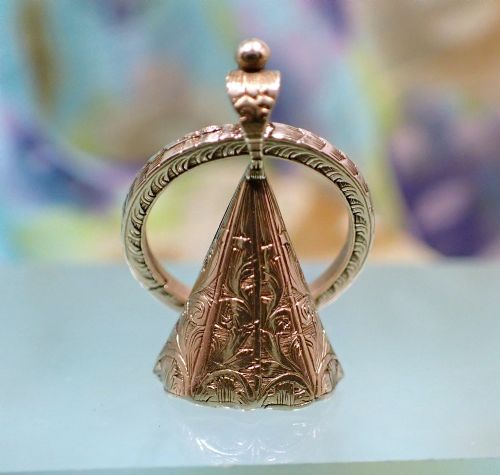
Surface decoration on these pieces was occasionally applied by hand engraving, scoring geometric patterns or floral motifs into the outer band of the gold. In more utilitarian examples, the wire was left plain and smooth to prevent snagging on fabrics or clothing. The joints and terminations were neatly finished to ensure no sharp edges remained exposed during handling.
Materials recorded across these items include 15ct gold, 9ct gold, and silver, often accompanying engraved fob assemblies.
What varies in quality
Quality in these items rests upon the elasticity and resilience of the metal coil rather than elaborate ornamentation. A superior example maintains a tight, uniform closure between the double loops without sagging or leaving gaps after being opened. Inferior specimens often lose their spring tension over time, resulting in a loose gap where attached charms might slip free.
The choice of metal alloy also distinguishes the range, with higher gold karats and crisp, deep hand-engraving marking out the finer pieces. Plain, unpretentious examples can still achieve high quality if the wire gauge is substantial and the circular geometry remains true and unblemished by heavy wear.
The Antique Split Ring Glossary
- Split ring
- A double-coiled circular metal ring operating on the principle of a key ring to secure pendants safely. This construction prevents charms from sliding off accidentally.
- Albert clip
- A hinged hook fitting often attached to watch chains and split rings for securing pocket watches or fobs to a waistcoat buttonhole. It represents standard Victorian hardware design.
- Book chain
- A necklace formed of folded rectangular metal links resembling miniature book covers. These chains frequently incorporate split rings to suspend lockets or seals.
- Chatelaine
- A decorative belt hook worn from the waist with a series of suspended chains carrying useful items like keys, seals, and charm split rings. It was a staple accessory of the nineteenth century.
Antique Split Ring: Frequently Asked Questions
What is an antique split ring used for?
These rings were traditionally used to connect pocket watches, seals, and charms securely to chains without the risk of loss.
Today, collectors use them to hang antique pendants or charms from modern neck chains with absolute reliability.
How do you open an antique split ring?
You gently lift the end of the inner coil using a fingernail or a small tool, then slide the charm onto the track.
Guide the charm all the way around the double loop until it rests securely on the single inner layer.
What gold karats are found on this page?
The listings feature pieces rendered in 9ct and 15ct yellow gold, reflecting standard British gold standards of the nineteenth century.
These alloys provide the specific spring tension required for the double-coil mechanism to function correctly over generations.
Are these rings solid gold?
The pieces recorded here are formed from solid gold wire rather than plated or filled base metals.
This solid construction ensures the metal retains its spring memory and durability through repeated opening and closing.