


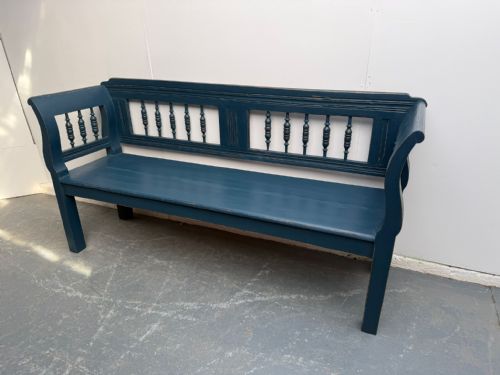


Antique Spindle Settle
These antique spindle settle benches bring rustic charm and practical seating to any room, offering traditional craftsmanship rooted in European country homes.
Antique Spindle Settle
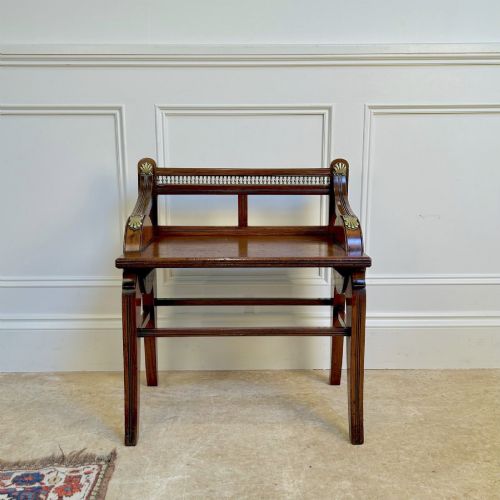
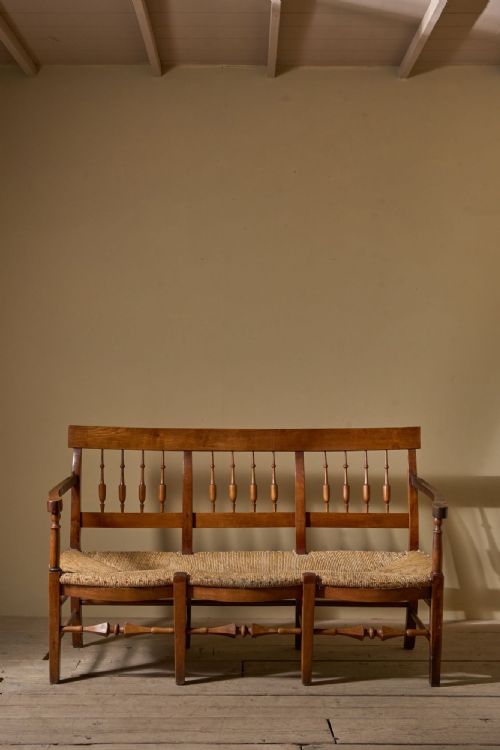
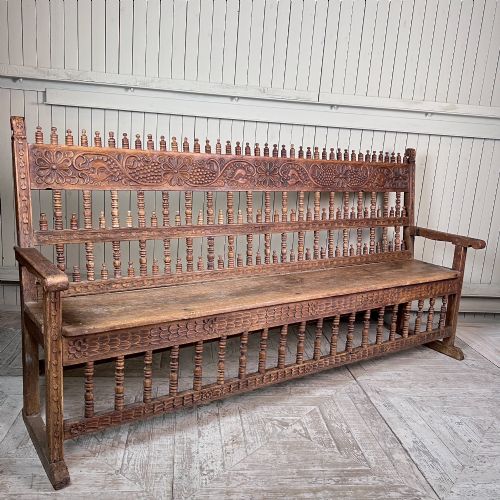
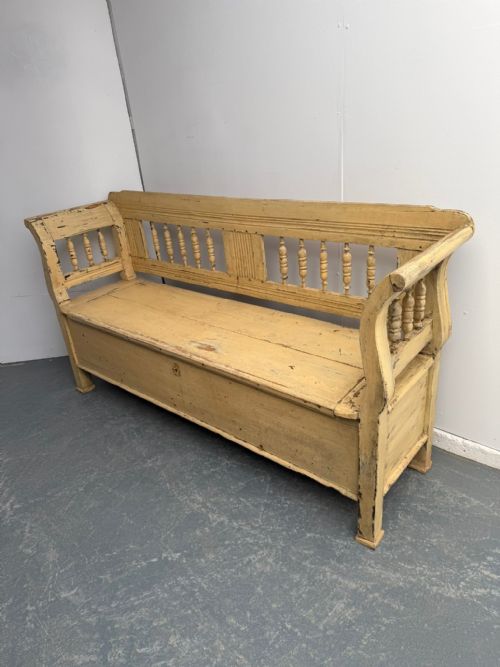
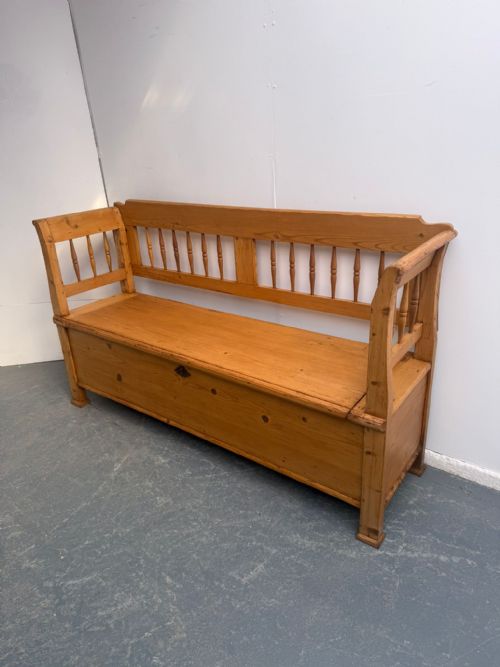
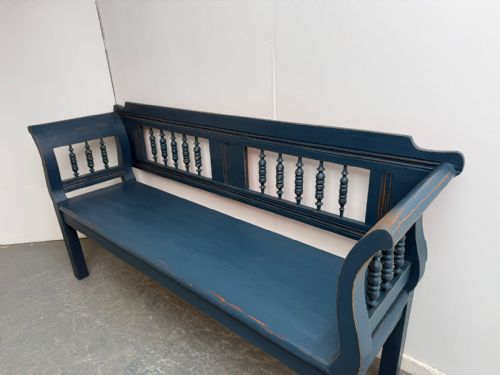
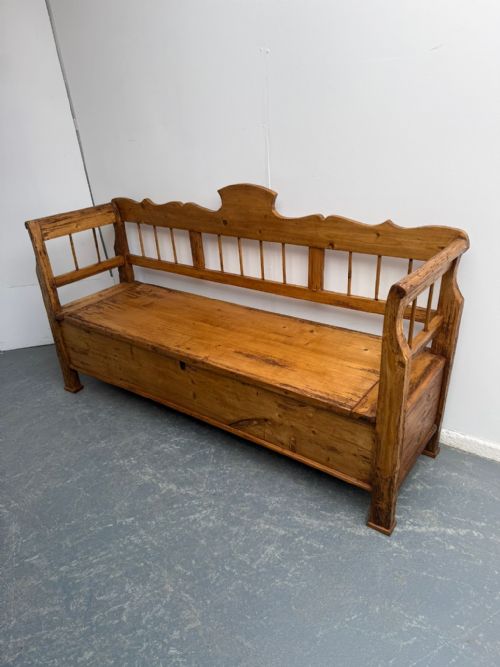
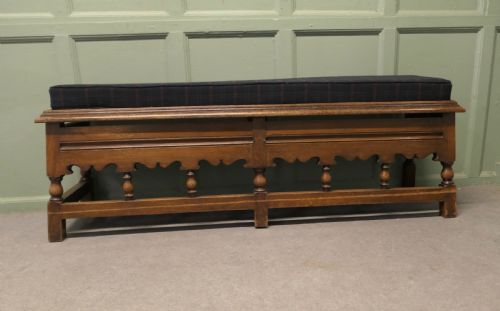
An antique spindle settle is a traditional long wooden bench featuring a high back constructed with vertical wooden spindles, often incorporating a box seat or storage base. These pieces originate from various European traditions, including Hungarian folk art, French provincial, and Swedish country styles.
The examples found here span from the eighteenth century through to the early twentieth century, with Victorian and nineteenth-century pieces appearing most frequently. Materials range from waxed pine and fruitwood to painted hardwoods like ash and chestnut.
Makers utilised local timbers to build sturdy seating for farmhouses and halls, creating functional furniture that doubled as storage or draft protection by the hearth. Today, buyers encounter these benches in both natural waxed finishes and aged painted surfaces.
Materials and construction
Construction relies heavily on solid timbers such as pine, oak, fruitwood, and chestnut, often shaped and joined using traditional peg and mortise methods. Regional workshops selected local hardwoods and softwoods depending on availability, resulting in distinct regional variations.
Surfaces are typically finished with natural wax to preserve the grain or coated in historical paint layers, which often show pleasing patination from decades of use. Seating surfaces occasionally incorporate rush webbing or solid wooden planks designed to support daily domestic life.
Antique Spindle Settle Retail Price Guide 2026
Typical asking prices for spindle settle among the pieces listed under this phrase on Sellingantiques today, from the lower quarter to the upper quarter. They describe what is for sale here now, not the wider market.
Several pieces include integrated storage compartments originally designed to hide away muddy boots and spare knitting wool from stray farmyard goats.
Variations in quality
Quality in these benches rests upon the integrity of the original timber and the survival of early surface treatments like historic paint or warm wax patination. Pieces that retain their original structural joinery without excessive timber replacement command greater appreciation among collectors.
The refinement of the spindle turnings and the balance of proportions between the high back and the bench seat distinguish finer regional examples from simpler utility seating.
The Antique Spindle Settle Glossary
- Box settle
- A wooden bench featuring a compartment beneath the seat for storage, often hinged to lift open. This design kept household items tidy while blocking cold drafts near the fire.
- Spindle
- A turned wooden rod forming part of the open-backed structure of the settle. These vertical elements provide back support while maintaining a light, airy appearance.
- Rush seat
- A seating surface woven from dried marsh rushes, commonly found on traditional country chairs and benches. It offers a resilient and flexible texture.
- Patina
- The surface sheen and colour developed by wood and paint over decades of handling and ageing. This visual depth indicates genuine historical use.
- Waxed finish
- A protective treatment applied to bare wood using natural wax to nourish the grain and produce a soft lustre. It highlights the natural character of pine and fruitwood.
Antique Spindle Settle: Frequently Asked Questions
Where were settle benches used?
These benches traditionally stood in the kitchens and halls of farmhouses and country homes. Their high backs helped shield occupants from cold draughts near open hearths.
Over time, they transitioned into boot rooms and hallways, serving as practical seating where families could remove muddy footwear.
How do I identify an older settle?
Dating relies on examining the construction methods, tool marks, and timber shrinkage visible beneath the surfaces. Hand-turned spindles and pegged joints usually point to traditional craftsmanship.
Paint layers and wax finishes also reveal age through natural wear patterns and distinct patination acquired over generations.
Are painted finishes original?
Many European country benches retain early or original painted surfaces, often in shades of blue, cream, or green. These coatings frequently exhibit craquelure and softening from decades of domestic life.
Careful inspection of the underlying wood helps determine whether the paint represents a historic decorative scheme.
How should I care for waxed pine?
Maintaining waxed timber requires simple dusting with a soft cloth and occasional applications of traditional beeswax to nourish the wood. Avoid placing these pieces near direct heat sources to prevent the timber from splitting.
Keeping the environment stable preserves both the structural integrity and the soft surface sheen.