




Antique Spindle Bench
An antique spindle bench brings character and sturdy seating to a hallway or living space.
Antique Spindle Bench
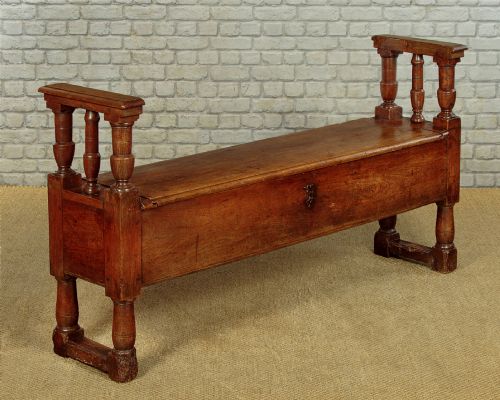
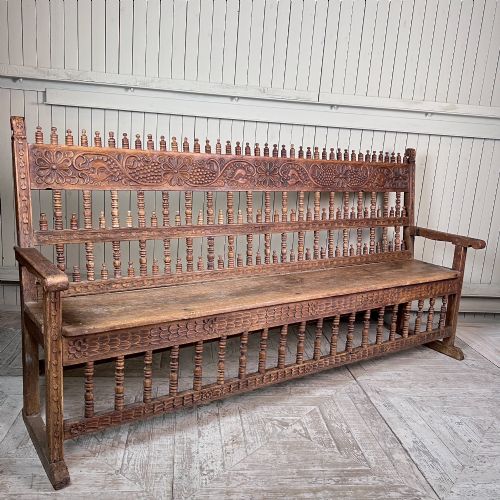
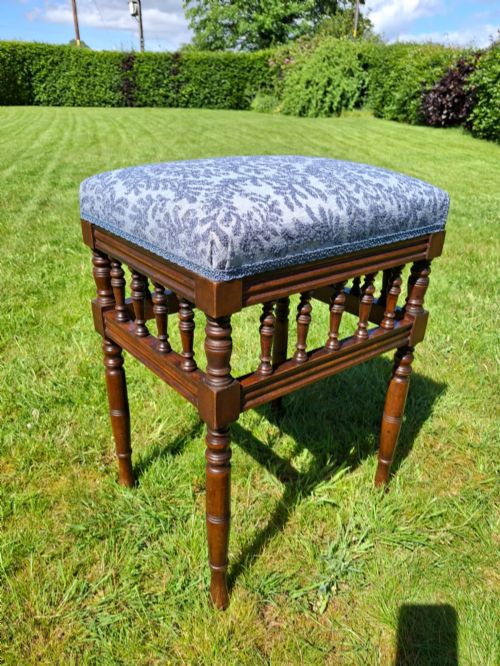
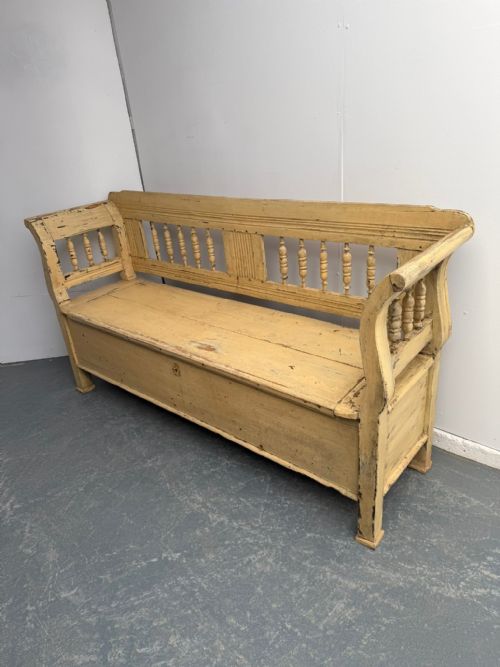
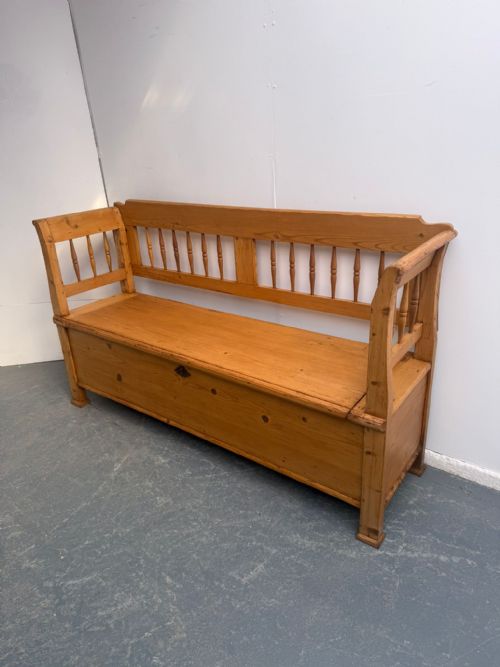
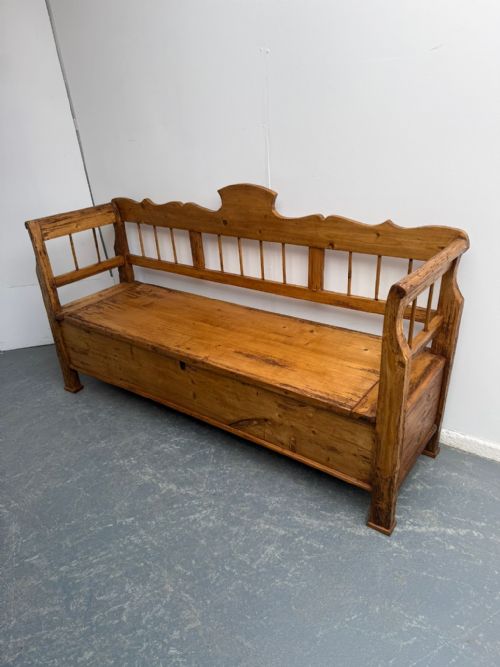
An antique spindle bench is a traditional seating form defined by its turned wooden uprights along the back or sides, creating an open and airy silhouette. These pieces encompass regional European country seating, including Hungarian three-seater settles, Swedish painted pine benches, and Austrian settles.
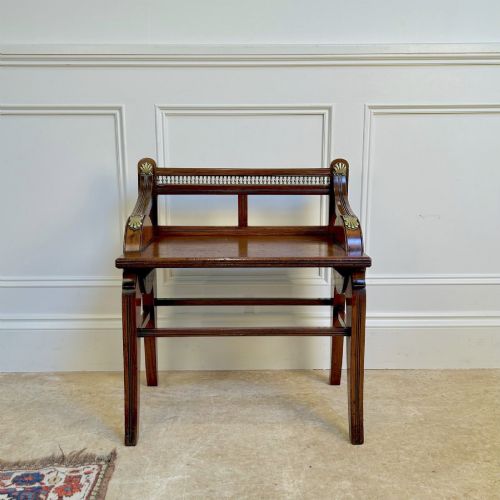
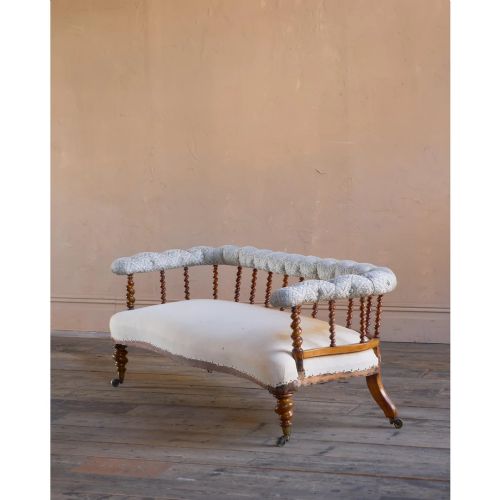
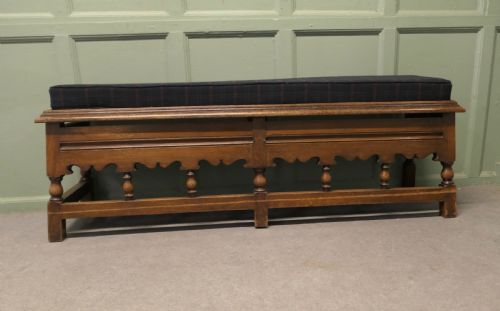
The selection ranges from robust pine box settles and rustic farmhouse seating to refined Victorian salon sofas and Aesthetic movement ebonised settees. Most examples originate from the eighteenth and nineteenth centuries, spanning Georgian, Victorian, and Edwardian periods.
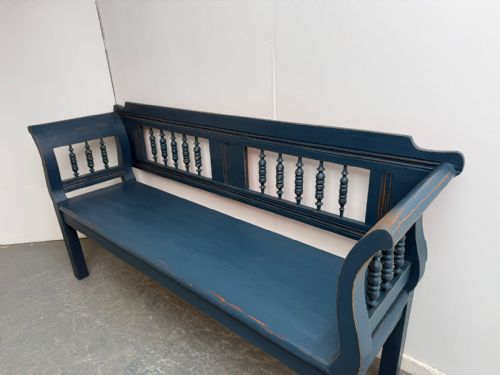
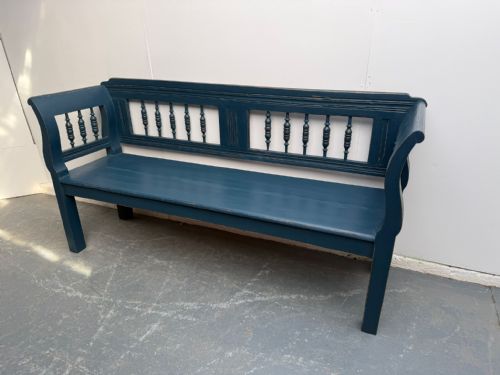
Buyers seeking an antique spindle bench will encounter variations in scale, from compact hall seats to generous three-seater formats with integrated storage boxes. Painted finishes in blue and cream appear alongside waxed pine, bleached chestnut, and carved hardwoods.
How they were made
Construction relies heavily on traditional joinery using regional timbers such as pine, ash, elm, chestnut, and mahogany. Spindles are individually turned on a lathe and fitted into mortised rails to form the characteristic backrests.
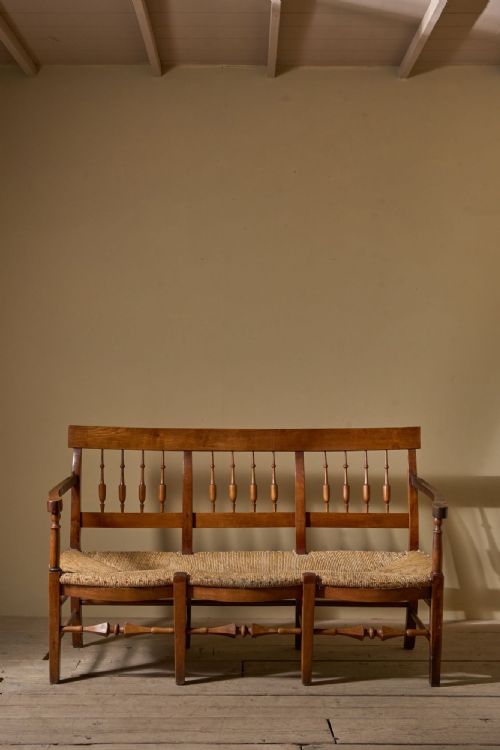
Surfaces receive various traditional treatments, from simple wax polishing on pine and hardwood to layered painted finishes in cream and blue. Upholstered variants incorporate fabric, velvet, or tapestry seats supported by brass details or webbed frames.
Antique Spindle Bench Retail Price Guide 2026
Typical asking prices for spindle bench among the pieces listed under this phrase on Sellingantiques today, from the lower quarter to the upper quarter. They describe what is for sale here now, not the wider market.
Many a tired hallway has found its salvation in a three-seater box settle hiding muddy boots beneath the spindles.
What varies in quality
Quality rests in the integrity of the structural frame and the fidelity of the turned spindles, where uniform crispness denotes better workshop production. Original surface treatments, particularly untouched regional paintwork or authentic patinated wax, elevate the standing of a piece considerably.
Proportion and timber selection also divide standard utility seating from finer salon pieces, with dense hardwoods and well-balanced frames showing superior design ambition. The survival of original rush, wooden, or upholstered seats without intrusive later alterations preserves the historical value of the bench.
C. Hindley & Sons
The Antique Spindle Bench Glossary
- Spindle back
- A chair or bench back constructed with vertical turned wooden rods rather than solid panels or upholstered pads. This method lightens the visual weight of the furniture while maintaining structural rigidity.
- Box settle
- A high-backed wooden bench featuring a storage compartment beneath the seat, often accessed by lifting the hinged seat board. It served to keep draughts away from the user while providing household storage.
- Ebonised
- Wood treated with a chemical stain or black finish to imitate expensive ebony. This technique was favoured during the nineteenth century for decorative salon furniture.
- Rush seat
- A seating surface woven from dried marsh rushes around a wooden frame. It appears frequently on traditional country and provincial seating.
- Salon sofa
- An upholstered seating piece designed for formal reception rooms rather than everyday family use. These pieces often exhibit lighter proportions and more decorative frames than country settles.
Antique Spindle Bench: Frequently Asked Questions
Where should I put an antique spindle bench?
These benches suit narrow entrance halls, boot rooms, or living areas where an open backrest maintains a sense of space.
Box settle variants work particularly well in hallways for concealing shoes and winter accessories.
How do I care for a painted wooden bench?
Clean painted surfaces gently with a soft, dry cloth and avoid harsh chemical cleaners that might lift historic pigment.
Waxed pine surfaces benefit from occasional application of traditional beeswax to nourish the timber.
Are these benches comfortable for daily use?
Many regional country benches feature upright wooden seats designed for sturdy utility rather than lounging.
Adding a custom seat cushion or scatter cushions can improve comfort for extended sitting in a living room.
How do I distinguish a Victorian settle from an earlier piece?
Eighteenth-century and early Georgian pieces often show heavier tool marks and regional construction quirks unique to rural workshops.
Victorian examples frequently display more standardised turning and sometimes incorporate stylistic influences from the Aesthetic movement.