


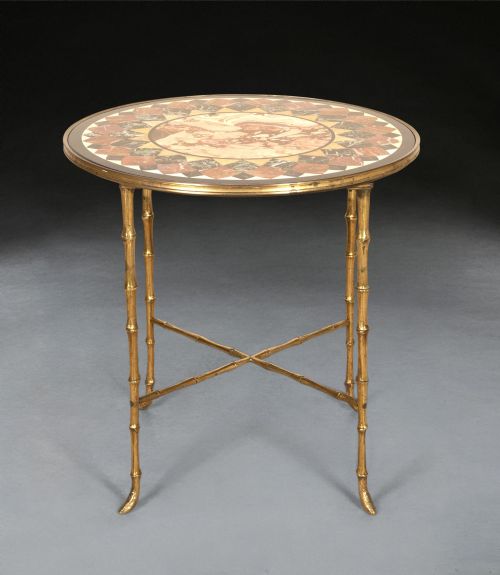


Antique Specimen Marble
Antique specimen marble objects bring the geological variety of the Grand Tour directly into the home through intricate stone inlay.
Antique Specimen Marble
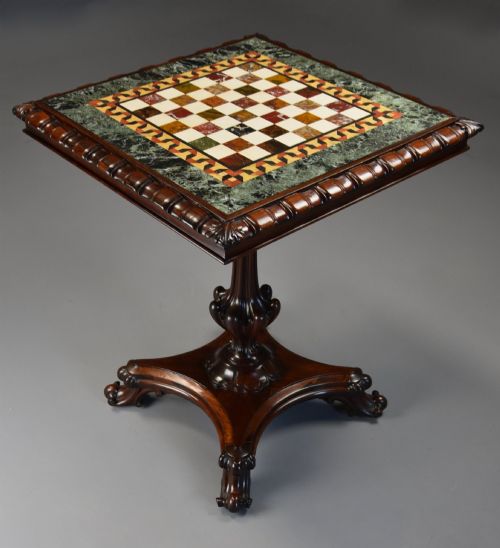
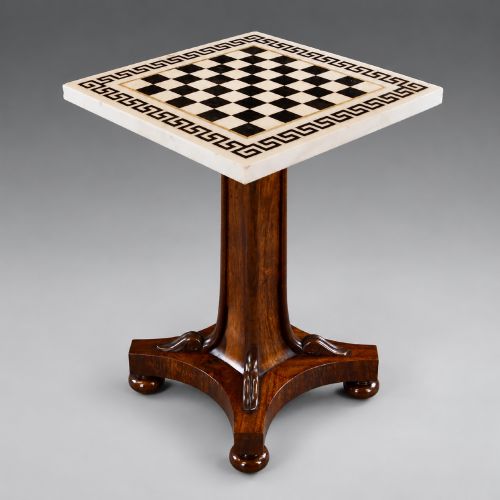
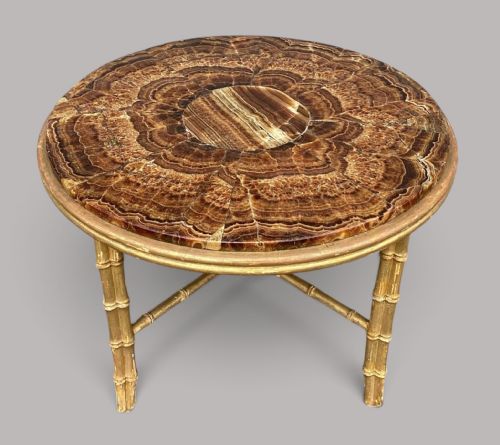
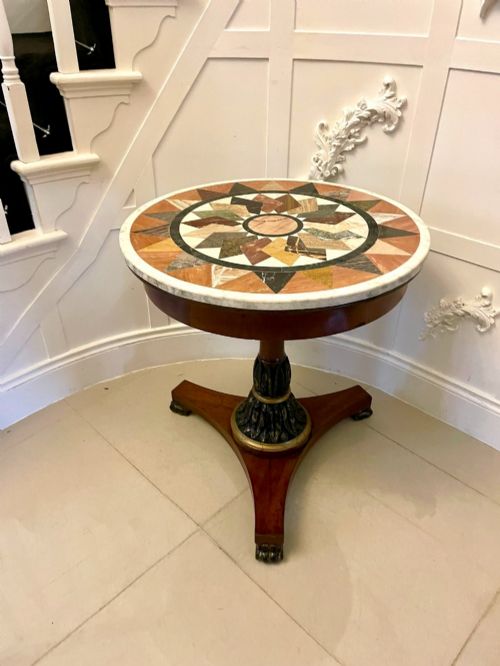
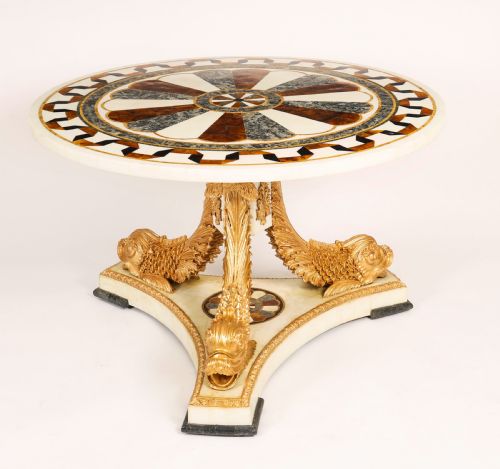
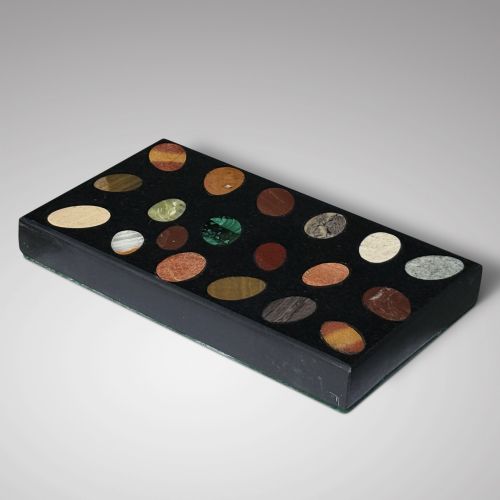
When searching for antique specimen marble, a buyer encounters pieces incorporating geometric and pictorial arrangements of numerous mineral types. These items range from small decorative objects and paperweights to large centre tables and chess boards.
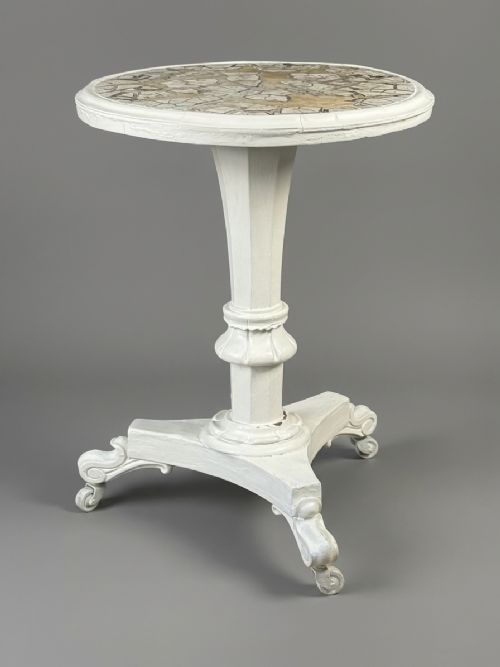
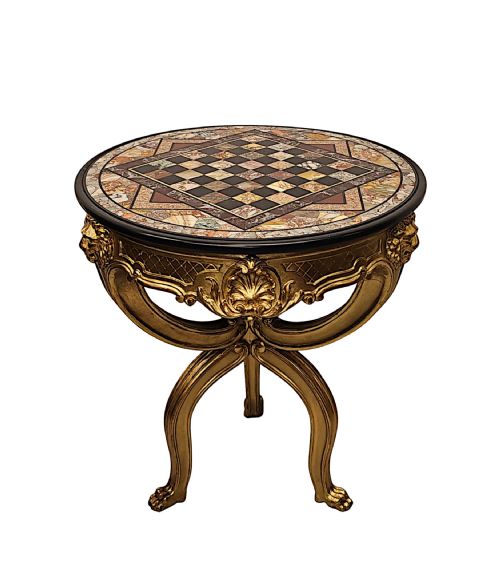
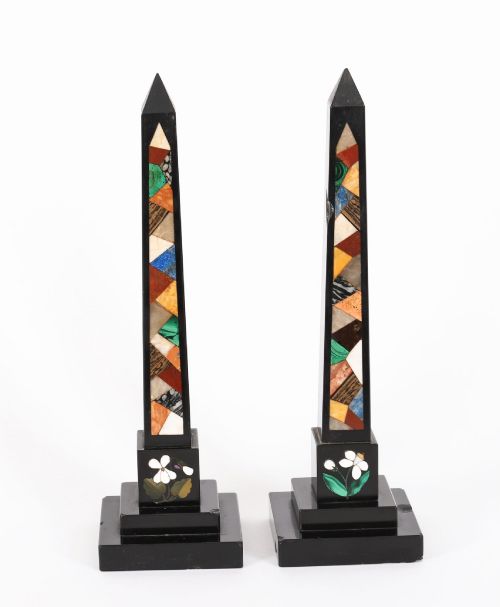
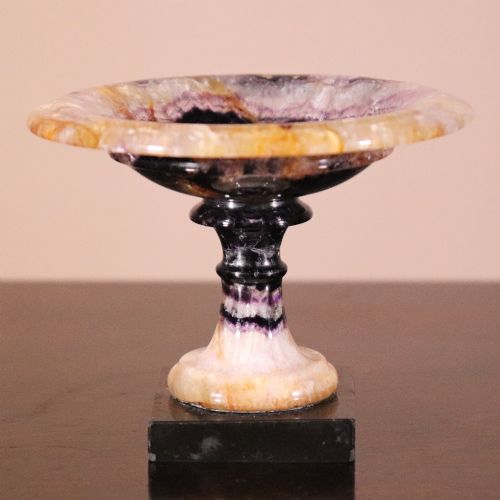
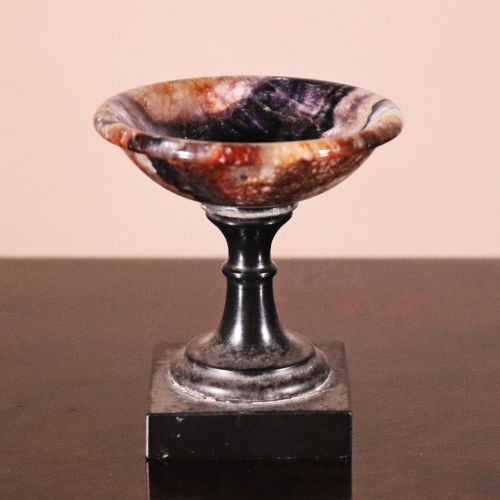
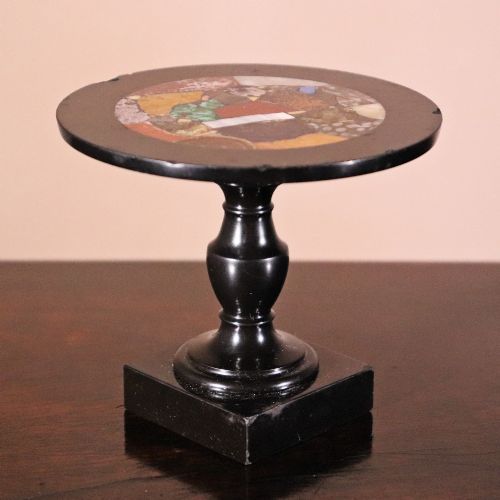
The most common forms on this page are centre tables, occasional tables, and decorative items originating from nineteenth-century workshops. Many reflect Grand Tour influences, featuring inlaid Florentine pietra dura work or local British stones such as Ashford marble and Blue John.
How they were made
Masons shaped individual fragments of marble, malachite, and other stones into precise geometric or pictorial tesserae, bedding them into a solid stone or slate foundation. This mosaic technique required exact hand-fitting to ensure seamless joints between contrasting mineral colours.
Supports varied according to the scale of the object, combining marble tops with mahogany, rosewood, oak, cast iron, or giltwood bases. Some tables incorporate carved swan supports, lion head detailing, or neoclassical dolphin motifs to carry the weight of the heavy stone tops.
Antique Specimen Marble Retail Price Guide 2026
Typical asking prices for specimen marble among the pieces listed under this phrase on Sellingantiques today, from the lower quarter to the upper quarter. They describe what is for sale here now, not the wider market.
Materials appearing across current inventory include malachite, Blue John, and various coloured marbles.
What varies in quality
Quality rests on the complexity and geological variety of the stone selection within the mosaic design. Elaborate pictorial pietra dura compositions of birds or floral motifs distinguish finer workshop output from simpler geometric checkerboards.
The precision of the stone cutting and the tightness of the mortar joints dictate the structural integrity of the surface. Superior examples maintain perfectly flat table tops where individual marble and malachite specimens sit flush without perceptible gaps.
Woodley family
The Antique Specimen Marble Glossary
- Pietra dura
- An Italian mosaic technique involving the inlay of cut and fitted polished coloured stones to create pictorial images. Master craftsmen used this method for tabletop panels and decorative paperweights.
- Grand Tour
- A cultural journey undertaken by wealthy young Europeans through France and Italy during the eighteenth and nineteenth centuries. Travellers collected specimen marble objects and obelisks as souvenirs of their travels.
- Ashford marble
- A Derbyshire limestone, primarily black in colour, inlaid with coloured minerals in floral and geometric patterns. Local craftsmen produced miniature tables, obelisks, and candlesticks using this specific stone.
- Tazza
- A shallow cup or ornamental vessel mounted on a stem and foot, frequently carved from decorative stone.
Antique Specimen Marble: Frequently Asked Questions
What is antique specimen marble?
Antique specimen marble refers to decorative objects and furniture tops composed of numerous different types of polished stone arranged in geometric or pictorial patterns. These pieces primarily date from the eighteenth and nineteenth centuries.
Craftsmen assembled these geological collections into table tops, chess boards, and paperweights, often highlighting the natural colour variations of marbles, malachite, and fluorite.
How do I care for a marble table top?
Marble surfaces require dusting with a soft cloth and immediate blotting of liquid spills to prevent staining. Avoid acidic cleaning agents that etch polished stone.
Using coasters and protective pads under heavy decorative objects helps preserve the smooth finish of the inlaid stone mosaic.
What is pietra dura?
Pietra dura is an inlay technique where artisans cut and fit highly polished coloured stones to form decorative pictures or motifs. This meticulous craft flourished in Italy during the Renaissance and later revived during the Grand Tour period.
Table tops and paperweights created with this method display intricate floral or avian designs set into a dark marble or slate background.
Where were these pieces made?
These items originated across European and British workshops, with significant production centres in Italy and Derbyshire. Italian craftsmen specialised in pictorial pietra dura and grand centre tables for tourists.
English makers in Derbyshire utilised local stones like Ashford marble and Blue John to produce smaller decorative obelisks, candlesticks, and miniature tables.