
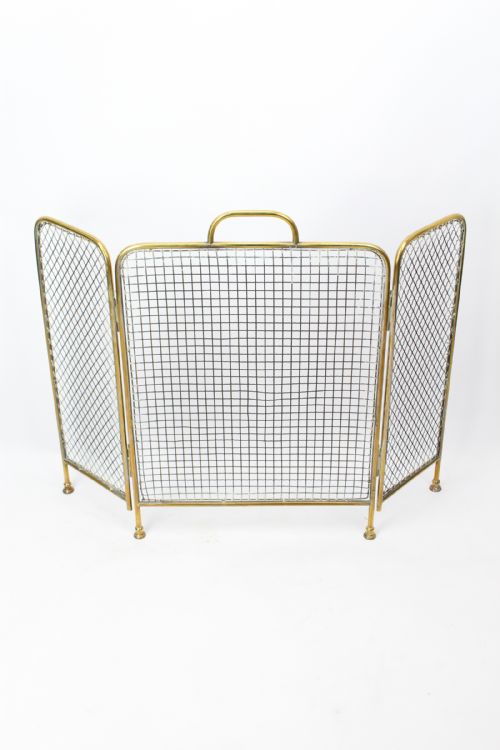


Antique Spark Protector
An antique spark protector shields a room from leaping embers, combining functional safety with period craftsmanship.
Antique Spark Protector
An antique spark protector guards hearths against stray embers while anchoring a room's fireplace arrangement. These pieces take the form of fire screens, nursery guards, and folding fireguards spanning the Victorian, Edwardian, and earlier decades.
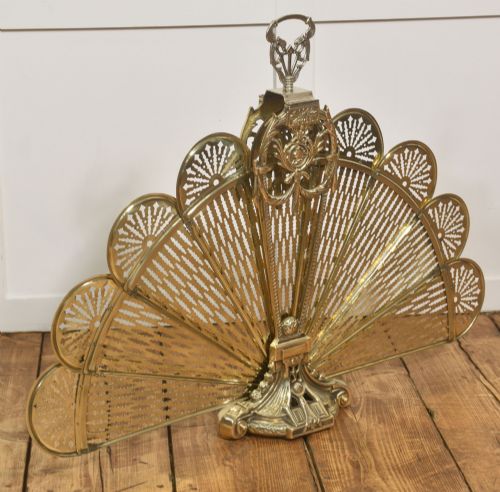
Buyers encounter folding brass peacock fan screens alongside tripartite folding guards and rigid framed fire screens. Materials range from polished brass and gilt bronze to wrought iron, copper, and steel mesh.
Victorian and Edwardian examples predominate on this page, offering both decorative French Rococo or Empire Revival motifs and plain utilitarian mesh construction. Many pieces incorporate wire mesh or iron mesh panels designed to contain sparks effectively.
How they were made
Maker construction relies heavily on hammered and cast brass, iron, and copper combined with woven wire mesh or steel mesh panels. Frames are often riveted, hinged, or soldered to allow folding functionality in tripartite or fan designs.
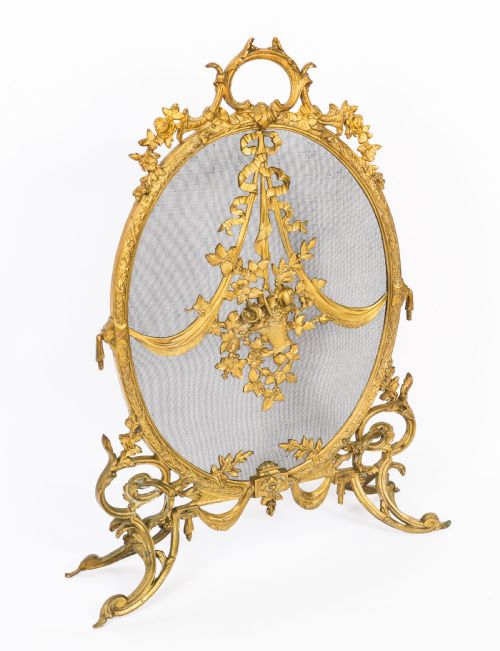
Decorative screens utilise cast gilt bronze or applied brass ornamentation featuring French Rococo Revival or Gothic Revival motifs. Structural stability is achieved through heavy metal bases, bowed frames, or demi-lune feet.
What varies in quality
Quality separates through the weight of the metal gauge and the precision of the mesh weaving. Thicker brass frames and tightly woven wire mesh indicate sturdier construction designed for daily hearth use.
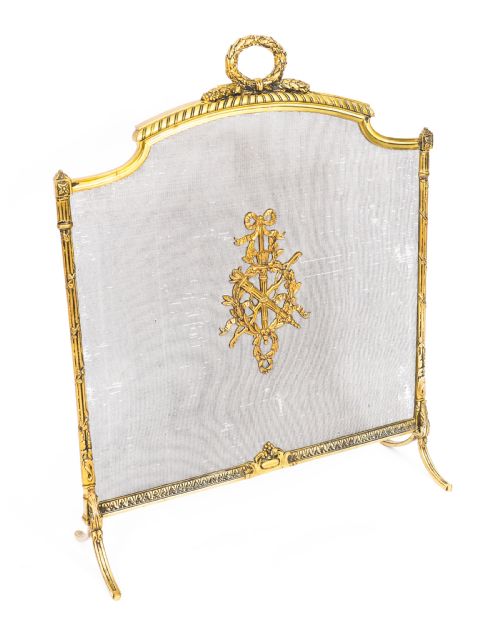
Artistry in the cast ornamentation, such as detailed French Empire Revival flaming torches or Rococo scrolling, distinguishes standard utility guards from finer decorative fire screens.
The Antique Spark Protector Glossary
- Spark guard
- A physical barrier placed before an open fireplace to catch flying embers. These typically feature wire mesh or iron mesh mounted within a metal frame.
- Nursery fender
- A taller protective enclosure designed to keep children and pets at a safe distance from the fire. These often encircle the entire hearth area with a rigid metal barrier.
- Peacock fan screen
- A folding fireplace screen composed of pivoting metal blades that spread outward like a tail. They fold flat when the hearth is not in use.
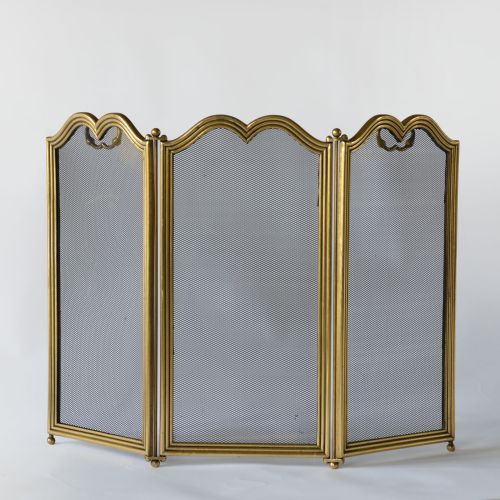
- Tripartite folding guard
- A three-panel screen hinged to adjust around a hearth opening. This design allows the protector to fold compactly for storage.
- Gilt bronze
- Copper alloy treated with a gold or mercuric gold finish to produce a lustrous decorative surface. This material appears on revival style fireplace accessories.
Antique Spark Protector: Frequently Asked Questions
How do I measure for a spark guard?
Measure the width and height of your fireplace opening, ensuring the guard covers the entire aperture with clearance on each side. Account for any hearth projections or protruding fire irons.
Allow extra space if you require a folding or bowed design that sits further out from the mantel opening.
Were these guards used in nurseries?
Many taller pieces were specifically designated as nursery guards to protect children from open flames. These typically feature higher mesh barriers and sturdier frames.
Standard domestic spark protectors focus more on catching embers rather than enclosing the hearth perimeter.
How do I clean brass fire screens?
Dust the wire mesh and metal frame regularly with a soft dry cloth. Avoid harsh chemical polishes that strip historical patination from antique brass.
Gentle cleaning preserves the original surface finish accumulated over decades of use near the hearth.
Can I use an antique screen with a modern fire?
These screens function effectively with both wood-burning hearths and gas fire installations. Ensure the mesh density is sufficient to contain sparks from your specific fuel type.
Check that the folding or freestanding base remains stable on your hearth surface.
What is the difference between a fire screen and a guard?
Fire screens often prioritise decorative appearance with solid panels or ornate brass framing for summer months. Spark guards emphasise protective mesh construction to catch active embers during fires.
Many period pieces combine both functions through decorative metalwork housing fine wire mesh.