
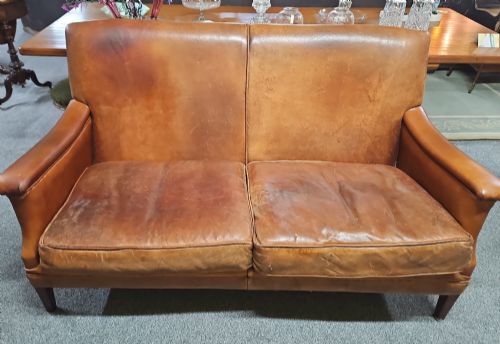
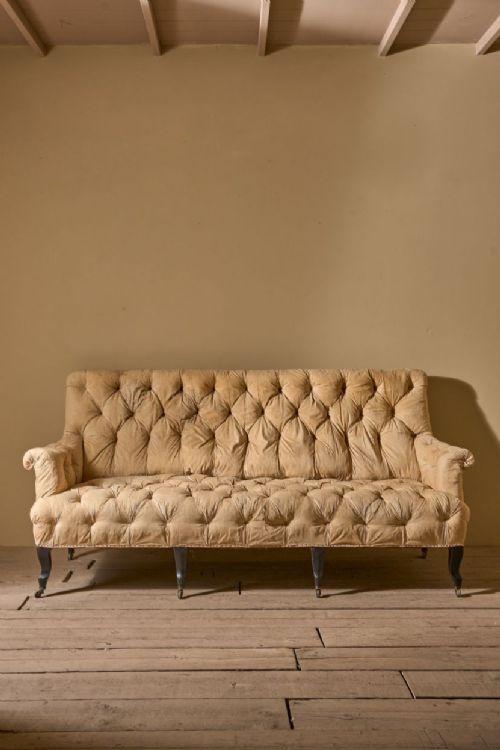
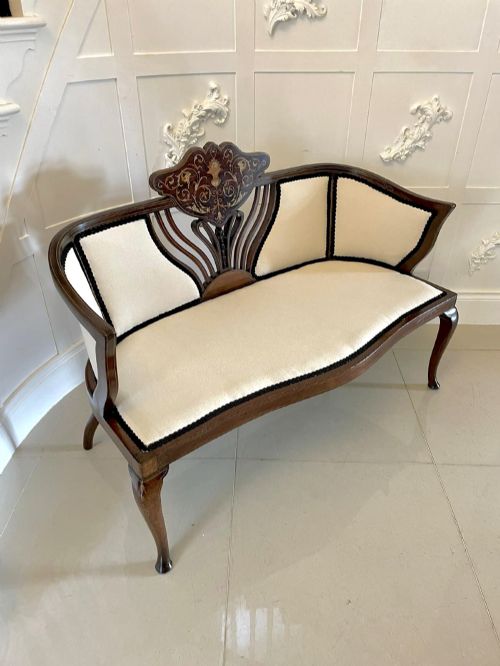
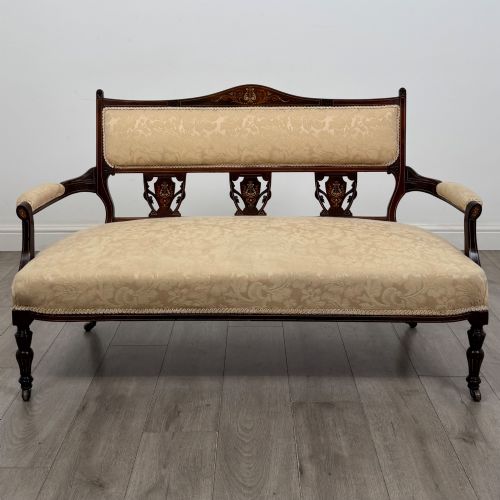

Antique Sofa Settee
An antique sofa settee brings centuries of craftsmanship into a room, offering generous proportions and distinct period character.
How they were made
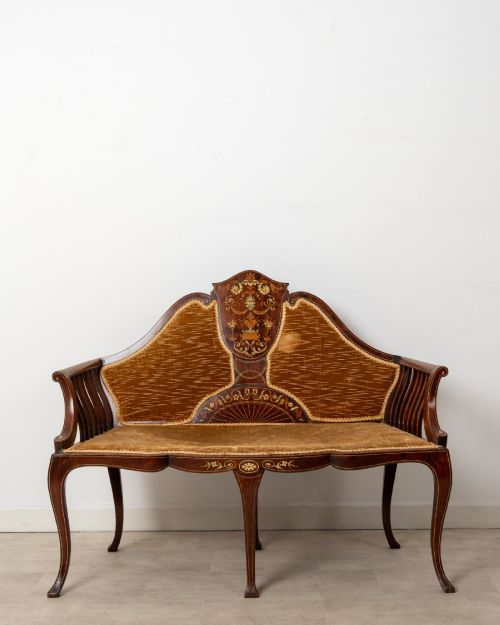
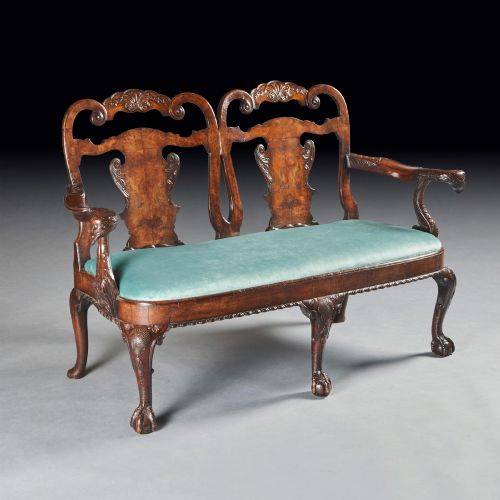
Makers utilised solid hardwoods such as mahogany, walnut, and beech for structural integrity, often applying intricate hand-carvings or delicate satinwood inlay to show frames. Structural members relied on traditional joinery techniques, reinforced by robust turnings, ball and claw feet, or ebonised detailing.
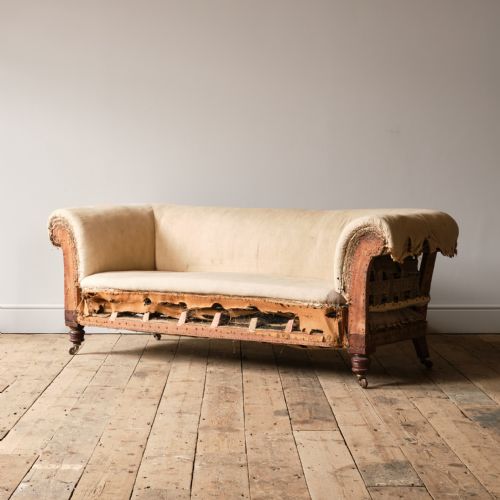
Upholstery methods defined the interior comfort, employing coiled steel springs paired with horsehair stuffing, calico linings, and top layers of leather, velvet, brocade, or tapestry. Canework panels were carefully woven into beech or oak frames, particularly within Edwardian and French-influenced seating designs.
What varies in quality
The integrity of the internal webbed frame and the density of the traditional hand-tied coil springs dictate the structural longevity of the seating. Superior examples retain their original timber patina, crispness of carved detail, and maker signatures such as documented stamps on the timber or castors.
Upholstery materials range from simple calico foundations to heavy silk brocades, deep pile velvets, and hand-tooled leathers. Pieces retaining documented workshop provenance or high-grade textiles demonstrate superior initial investment by the original commissioners.
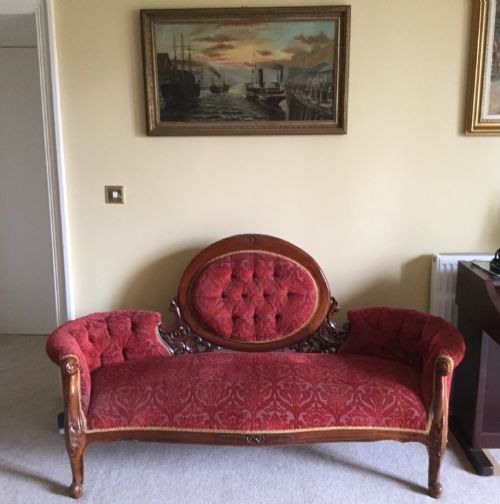
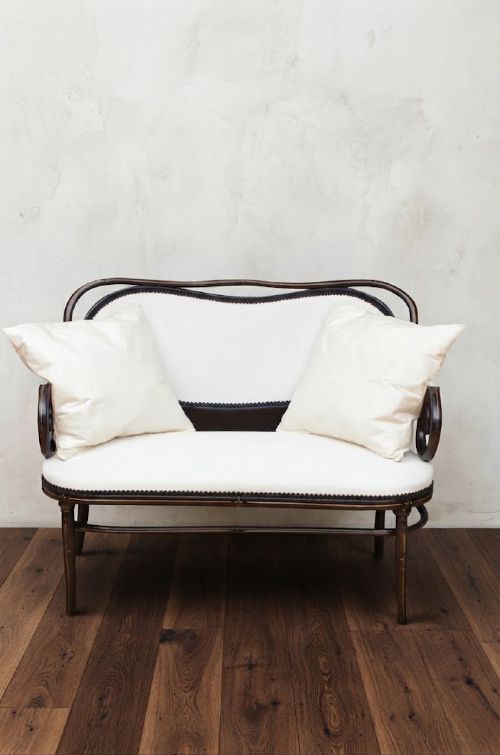
Conversation pieces included curved double seats designed so chatting sweethearts sat face to face without risking a tumble.
Thonet·Hampton and Sons·Howard and Sons·J. S. Kinsey
The Antique Sofa Settee Glossary
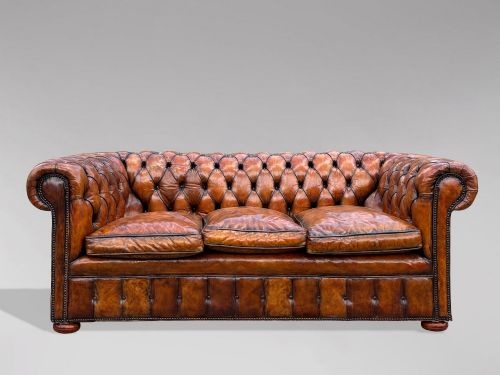
- Chesterfield
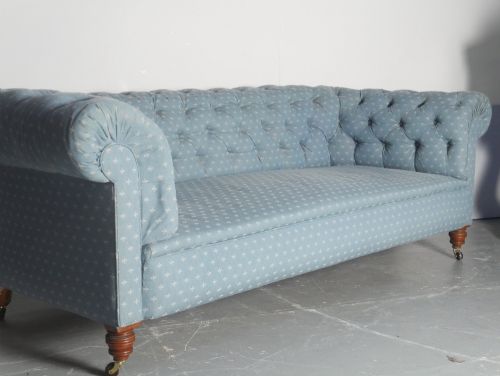
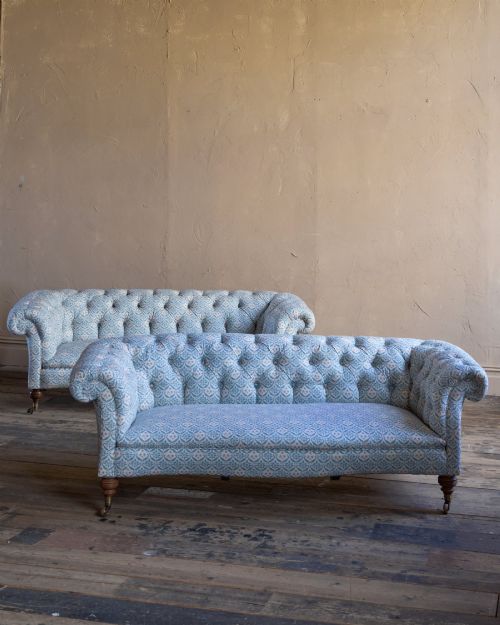
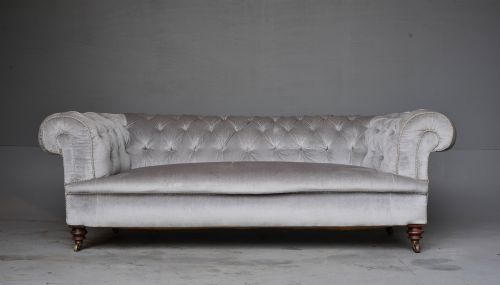
- A deeply buttoned upholstered sofa featuring arms and back of equal height. This form originated in the nineteenth century and typically employs leather or heavy fabric.
- Chaise Longue
- An elongated upholstered chair designed for reclining, combining a seat with a backrest positioned at one end. Examples frequently date from the Victorian period.
- Bergere
- An enclosed upholstered armchair or sofa featuring woven cane panels on the back and sides. This style gained popularity during the Edwardian era.
- Spoon-Back
- A padded chair or sofa back curved in the concave shape of a spoon. This silhouette is characteristic of mid-Victorian walnut seating.
- Canapé
- A decorative French-style upholstered sofa often featuring an exposed carved or painted wooden frame. These pieces frequently reflect Louis XV or Louis XVI aesthetic influences.
Antique Sofa Settee: Frequently Asked Questions
What is a double ended sofa?
A double-ended sofa incorporates matching scroll-over or raised ends rather than a distinct head and foot, allowing a person to recline comfortably from either direction. These pieces often date from the William IV or Regency periods.
The symmetrical design makes them effective as central room dividers rather than being pushed strictly against a wall.
How do I care for antique leather upholstery?
Antique leather requires gentle cleaning with a damp cloth followed by the application of traditional leather conservation waxes or balms to prevent drying and cracking. Avoid modern chemical treatments that strip the original patina.
Keep leather seating away from direct sunlight and heat sources to maintain the suppleness of the nineteenth-century hide.
Are salon suites sold together?
Salon suites comprise a matching set usually consisting of a larger settee alongside matching armchairs or occasional chairs designed for formal entertaining. They share identical timber frames, carving motifs, and upholstery fabrics.
Placing a complete suite together in a reception room maintains the unified decorative scheme intended by the original nineteenth-century maker.