


Antique Sofa Frame Castors
These antique sofa frame castors support heavy seating furniture from the Regency, Victorian, and later periods, offering period character and mobility to traditional rooms.
Antique Sofa Frame Castors
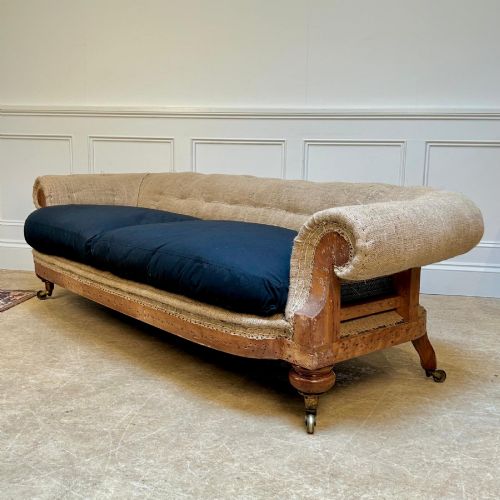
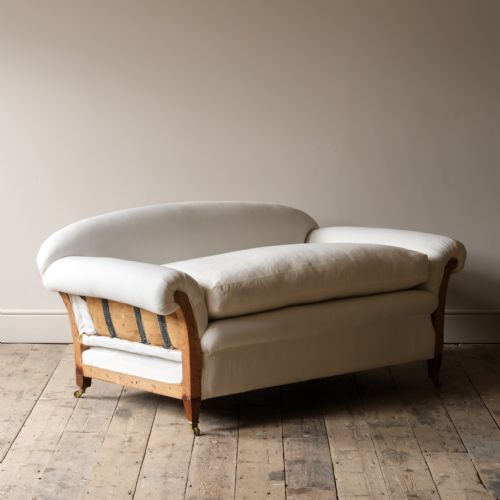
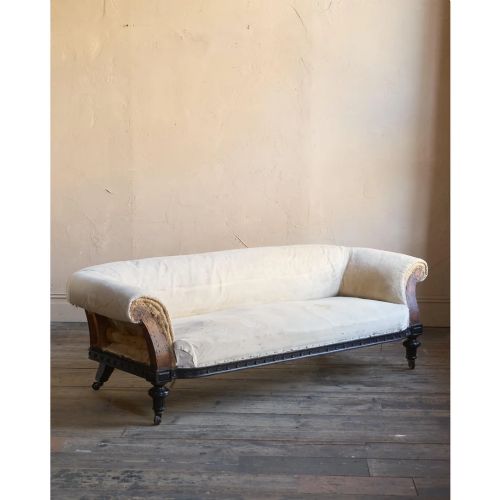
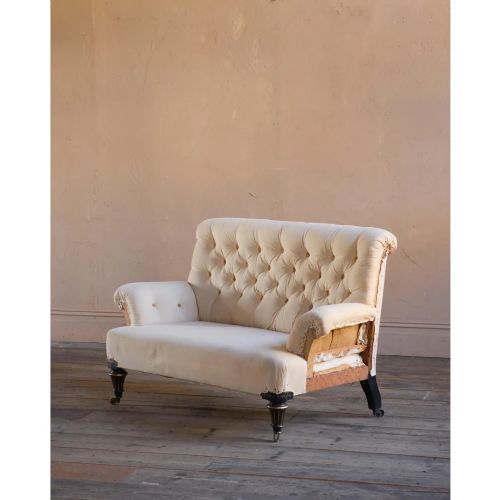
When searching for antique sofa frame castors, buyers look at brass fittings designed to support heavy wooden furniture bases such as sofas, settees, and writing tables. The pieces listed span from the 18th century George III era through the Regency and Victorian periods up to the 1930s.
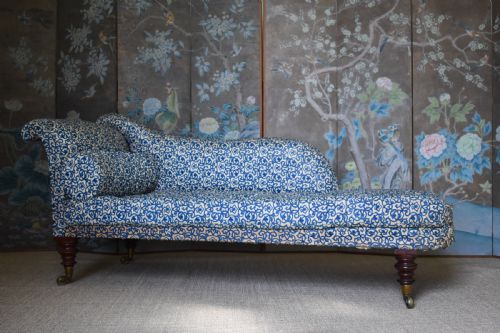
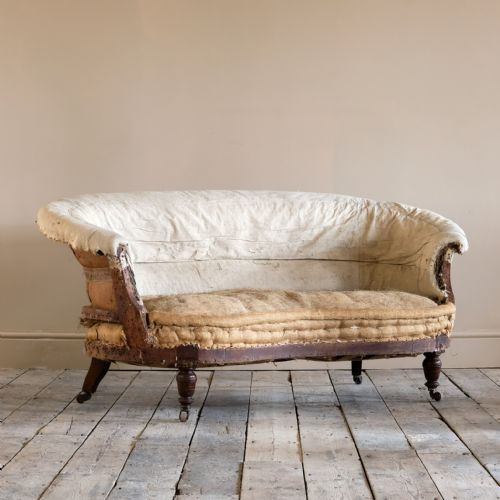
The selections on this page include large country house sofas, deep seated two-seater sofas, aesthetic chesterfields, and chaise longues. These seating forms often incorporate structural brass and wood elements beneath upholstered frames in hessian, calico, cotton, and fabric.
Most items represent established English cabinet-making traditions, with specific pieces linked to prominent London makers like Miles & Edwards, Jackson and Graham, Hampton & Sons, and Holland & Sons. Buyers meet both grand Regency designs and simpler 1930s deep seated models.
How they were made
Makers utilised durable hardwoods such as mahogany and walnut for the primary structural frames of sofas and writing tables, often applying simulated rosewood finishes for decorative effect during the Regency period. These robust timbers provided the necessary foundation to bear the weight of heavy upholstery and frequent movement.
Cast brass components formed the functional rolling mechanisms attached to the lower frame, working in tandem with internal stuffing and outer coverings of hessian, calico, and cotton. Craftspeople constructed these seating items by hand, integrating metal fittings directly into timber legs or base rails.
Listings feature brass, mahogany, walnut, and hardwood across 18th century, Regency, Victorian, and 1930s periods.
What varies in quality
The standard of timber selection and metal casting distinguishes the finer pieces from simpler domestic examples, with dense hardwoods and heavy-gauge brass indicating superior workshop output. Maker attribution also influences standing, as pieces associated with recorded London firms demonstrate higher execution levels.
Proportion and upholstery integrity shape the overall character of each item, ranging from large grand proportions to modest country house formats. The precision of the joinery and the finish applied to exposed wood elements mark the distinction between standard production and top-tier work.
Miles and Edwards·Jackson and Graham·Hampton and Sons·Holland and Sons
The Antique Sofa Frame Castors Glossary
- Castor
- A small wheel or revolving fitting attached to the bottom of heavy furniture to allow smooth rolling and repositioning. These brass elements support the weight of large timber frames.
- Regency
- An English design period spanning the early 19th century, known for classical restraint and refined classical ornamentation. Pieces from this era often feature simulated rosewood and elegant proportions.
- Chesterfield
- A traditional upholstered sofa style characterised by deep buttoning and rolled arms of equal height to the back. Victorian examples remain sought after for traditional libraries and drawing rooms.
- Hessian
- A coarse woven fabric made from jute fibres, traditionally utilised as an internal support layer beneath outer upholstery. It provides foundational tension for heavy seat stuffing.
Antique Sofa Frame Castors: Frequently Asked Questions
What periods do these sofas and castors come from?
The listings span several centuries, starting from 18th century George III pieces through Regency and Victorian eras, up to early 20th century and 1930s examples.
This broad chronological range reflects changing domestic tastes, from grand formal drawing room seating to comfortable country house styles.
Which timber types appear most frequently?
Mahogany and walnut form the primary structural timbers for the frames and associated writing tables, alongside simulated rosewood finishes.
These durable hardwoods provided the structural strength required for heavy upholstered seating and frequent movement on castors.
How do I identify a Howard style sofa?
Howard style pieces typically feature low, scrolling open arms and deep, sprung seating designed for domestic comfort rather than formal display.
Originating in the 19th century, these items prioritise relaxed proportions and generous padding beneath traditional fabric or calico covers.
What upholstery materials were used originally?
Makers employed natural foundation layers including hessian and calico to support internal stuffing before applying final covers in cotton, fabric, and velvet.
These traditional textile layers maintain the correct tension and shape across the curved frames of settees and chaise longues.