


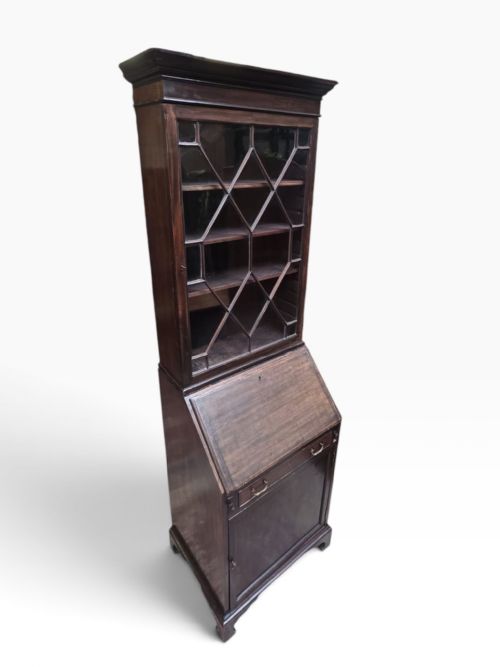
Antique Slope Bureau
An antique slope bureau brings centuries of fitted stationery storage and a practical writing flap straight into a modern study.
Antique Slope Bureau
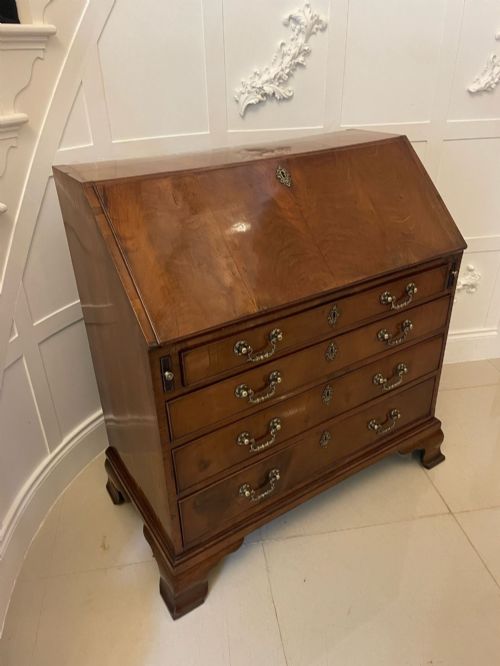
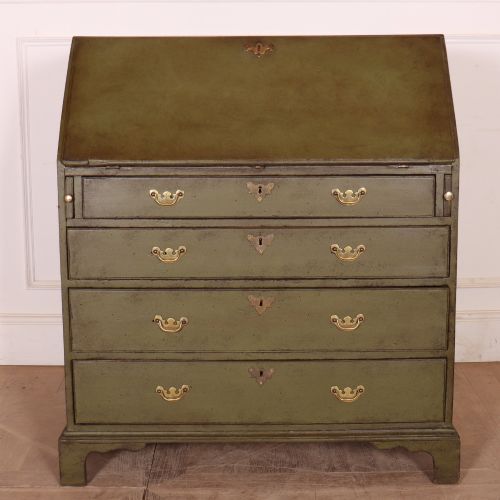
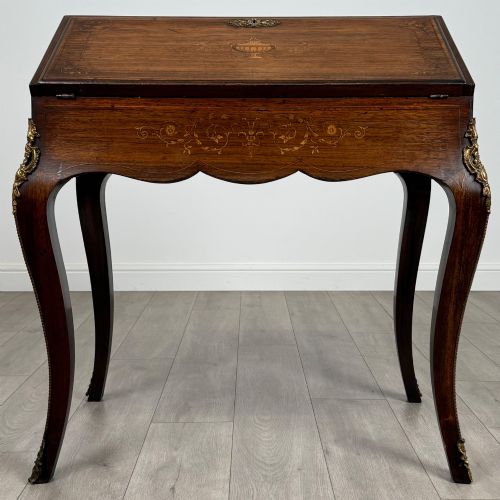
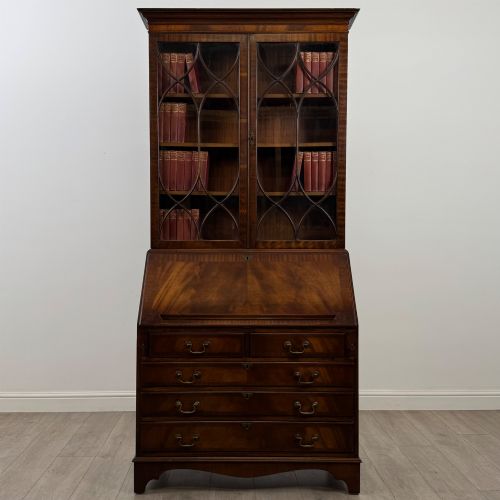
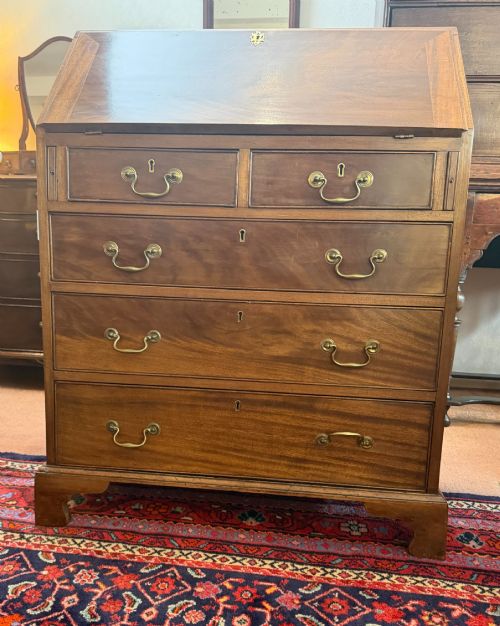
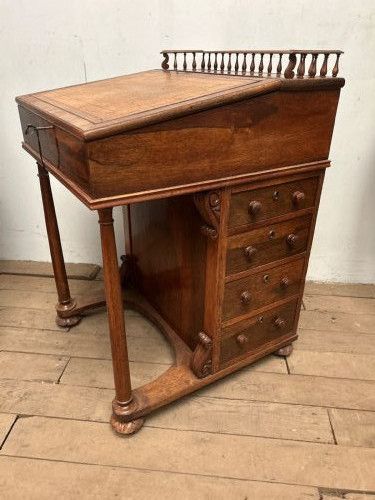
An antique slope bureau is a traditional writing cabinet featuring a sloping lid that opens down to reveal a fitted interior of small drawers and pigeonholes. Buyers examining this page will encounter various formats spanning the seventeenth to the twentieth centuries, including compact Davenport desks and towering bureau bookcases.
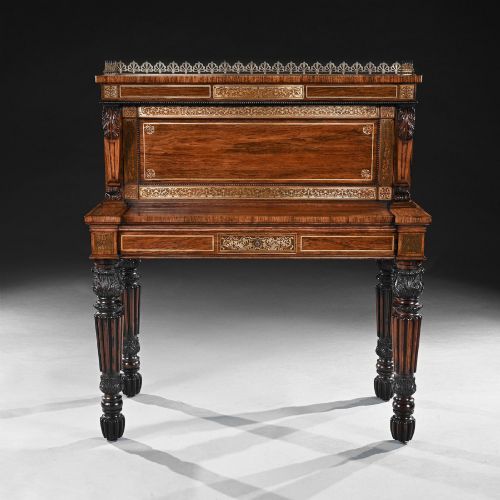
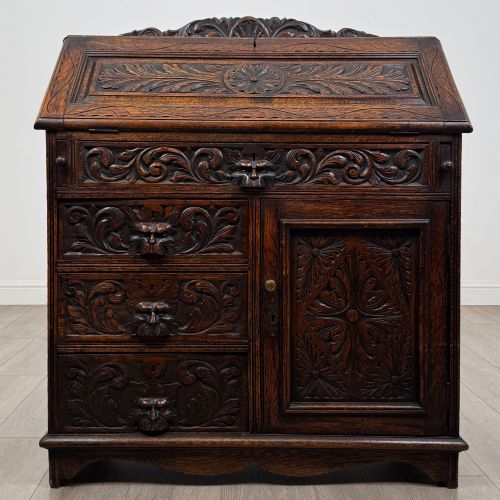
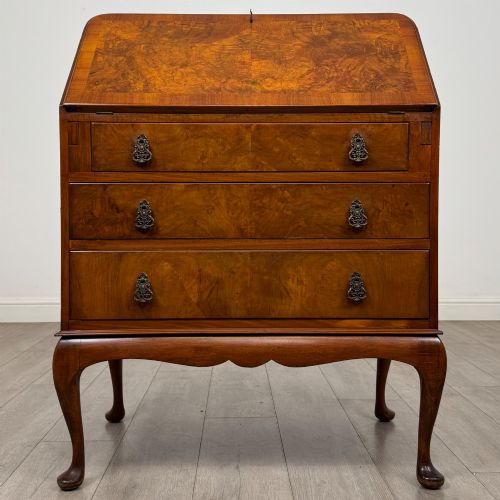
Mahogany and oak form the backbone of these listings, often accompanied by walnut, burr walnut, and rosewood. Pieces range from unpretentious provincial oak examples to elaborate George II and George III models featuring marquetry or brass inlay.
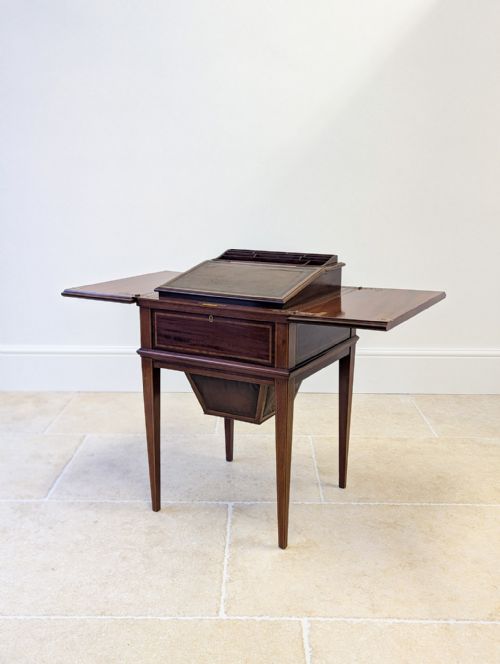
The selection includes specialised forms such as the bureau de dame and tabletop variants, alongside revival styles from the Edwardian era. These items bridge the gap between ornamental furniture and functional workspace.
Materials and construction
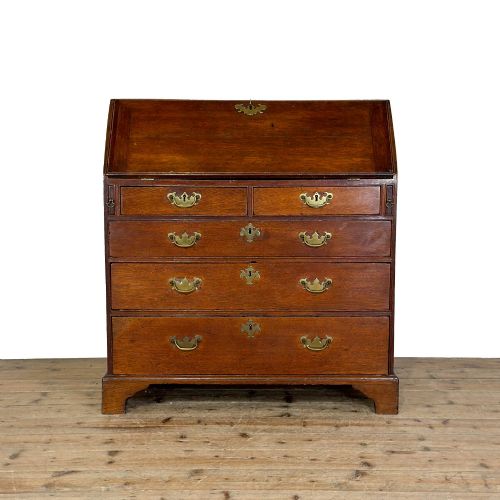
Cabinet makers relied on sturdy timbers like oak and mahogany for structural carcases, frequently applying decorative veneers such as burr walnut, satinwood, and rosewood to the fall-front flaps and drawer fronts. Brass hardware, including drop handles and escutcheons, secures the functional compartments.
Advanced techniques included floral marquetry, intricate wood carving, and brass inlay set flush into dark woods. Drawers typically feature hand-cut dovetailing, whilst fall-front slopes rely on robust internal hinges or lopers to support the writing surface.
The furniture spans multiple centuries, incorporating Georgian proportion, Victorian marquetry, and Edwardian revival styles.
Assessing quality and execution
The distinction between standard and superior pieces rests on the choice of timber figure, such as highly figured walnut or richly grained mahogany, and the precision of the cabinet work inside the writing compartment. Finer examples display meticulous internal drawer arrangement with secret compartments and superior marquetry.
Proportion and execution drive value, where restrained scaling and undisturbed original surfaces outweigh heavy restoration. Pieces attributed to notable workshops display refined carving and substantial brass mounts that elevate them above standard regional output.
Gillows Oxford Street Workshop·Heals of London
The Antique Slope Bureau Glossary
- Bureau
- A writing cabinet with a sloping front lid that opens to form a desk surface. It usually sits atop a chest of drawers.
- Fall-front
- The hinged sloping lid of a bureau that drops forward to create the writing surface. This panel conceals the inner stationery compartments when closed.
- Davenport desk
- A compact type of small desk featuring a slope top and drawers accessed from the side. They often incorporate writing surfaces lined with leather.
- Bureau bookcase
- A taller furniture form combining a slope bureau base with an upper shelving or cabinet section enclosed by doors. These units provide integrated storage for books and correspondence.
- Lopers
- Wooden pull-out support arms that slide out from the main carcase to hold the opened fall-front flap in a stable horizontal position.
Antique Slope Bureau: Frequently Asked Questions
What is a bureau de dame?
A bureau de dame is a ladies' small writing desk, typically featuring a sloping fall-front and delicate proportions suited to parlour use.
These pieces frequently utilise decorative veneers like burr walnut or rosewood and often incorporate fine brass inlay work.
How do I use a slope bureau?
Pull out the wooden lopers from beneath the slope, then lower the hinged flap to create a sturdy writing surface.
Inside, you will find pigeonholes and small drawers designed for organising letters, pens, and stationery items.
Are these desks good for laptops?
Many compact slope bureaux provide adequate depth for modern laptops, provided the interior fittings do not restrict the space.
Check the internal dimensions and ensure the pull-out lopers can support the weight of electronic devices safely.
How do I date an oak bureau?
Early oak examples from the seventeenth and early eighteenth centuries often display pegged joints, hand-planed surfaces, and simpler panel construction.
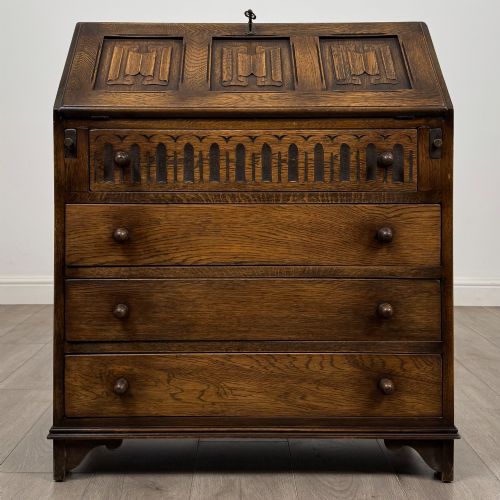
Later Edwardian revivals employ machine-cut elements, lighter oak tones, and styles such as linenfold carving.