



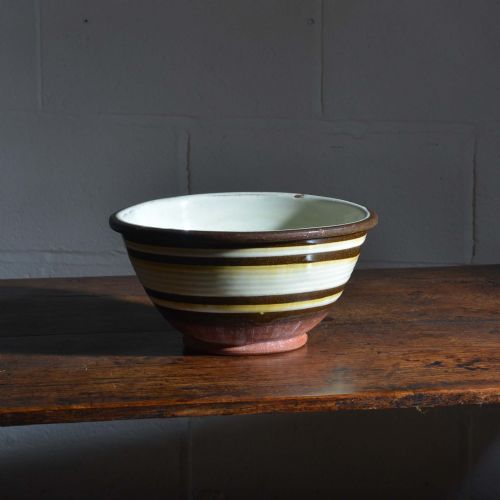


Antique Slipware Ceramic
These antique slipware ceramic pieces bring tactile warmth to a room, uniting centuries of hand-thrown earthenware and fluid clay decoration.
Antique Slipware Ceramic
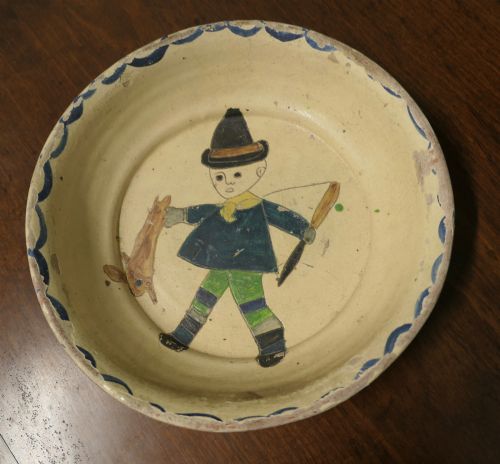
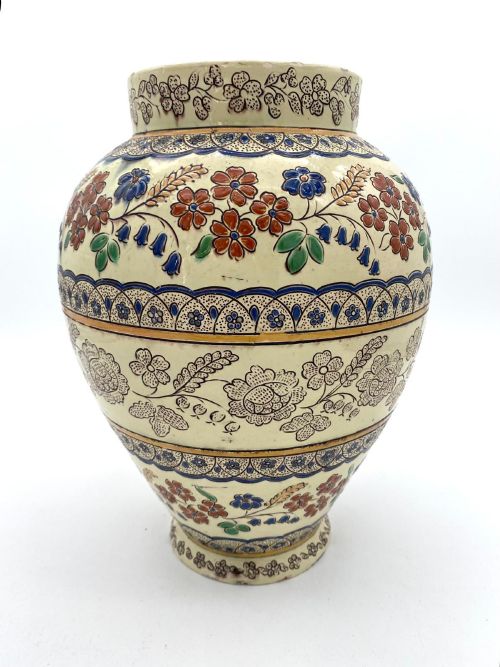
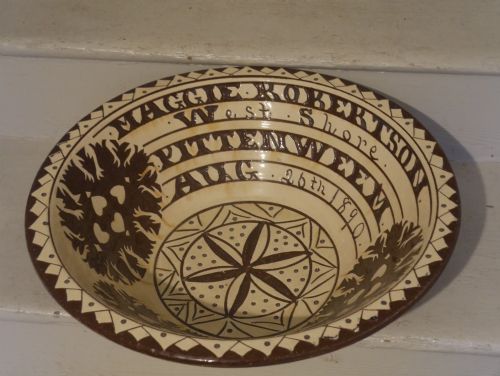
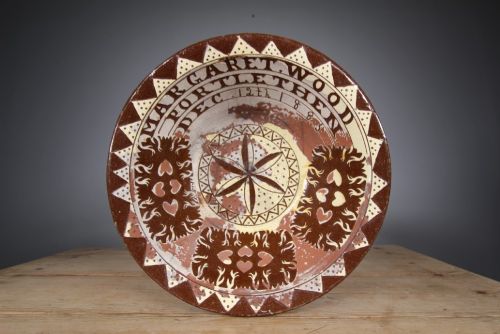
When you search for antique slipware ceramic, you are looking at items shaped from clay and decorated with liquid slip before firing. The examples seen here range from early Islamic buffware bowls to regional British dairy bowls and studio art pottery.
You are most likely to meet 19th century items on this page, including Seaton pottery bowls, North Country slip glaze vessels, and studio pieces from the 1890s. Earlier examples such as 17th century Dutch jugs and 10th century Nishapur bowls also appear.
The forms span utilitarian objects like pitchers, teapots, and strawberry jars alongside purely decorative vases and bowls. Each piece demonstrates how makers utilised fluid clay layers to create patterns upon earthenware and terracotta bodies.
Assessing quality and character
Quality in these ceramics rests upon the confidence of the hand in applying the slip and the harmony between form and decoration. A piece succeeds when the liquid clay flows naturally across the earthenware body without crowding the shape.
The depth of the glaze and the preservation of the surface markings determine the visual weight of the object. Better examples display crisp brushwork or distinct trailing, while retaining the honest irregularities characteristic of historic pottery.
Antique Slipware Ceramic Retail Price Guide 2026
Typical asking prices for slipware ceramic among the pieces listed under this phrase on Sellingantiques today, from the lower quarter to the upper quarter. They describe what is for sale here now, not the wider market.
Listings feature earthenware bodies decorated with slip glazes and lead glaze across 17th century Dutch forms and 1890s studio art pottery.
Seaton Pottery·Sir Edmund Elton·Burmantofts Faience
The Antique Slipware Ceramic Glossary
- Slip
- A fluid suspension of clay in water used for decorating ceramic bodies. It is trailed, brushed, or dipped onto the raw clay before firing.
- Earthenware
- Porous pottery fired at relatively low temperatures. It requires a glaze to become impermeable to liquids.
- Buffware
- Pottery made from clay that fires to a pale yellowish-cream colour. This body is common in early Islamic and Persian ceramic traditions.
- Lead glaze
- A shiny, transparent coating made with lead oxide applied to earthenware. It melts during the kiln firing to seal the porous clay.
- Agateware
- Pottery formed from layers of different coloured clays twisted together. This technique creates marbled patterns resembling natural stone.
Antique Slipware Ceramic: Frequently Asked Questions
What is slipware?
Slipware is pottery decorated with a liquefied suspension of clay called slip, applied to the unfired body.
This method allows makers to create contrasting lines and patterns before applying a transparent glaze.
How old are these pieces?
The items span a wide chronological range from the 10th century up to the early 20th century.
Most examples on this page date from the 17th century through to the 1890s and 1910.
Where were these ceramics made?
The collection includes pieces from Britain, the Netherlands, and Persia.
Regional British potteries sit alongside Dutch vessels and Islamic buffware bowls.
How should I display them?
These earthenware vessels work well grouped on open shelves or tables where their tactile surfaces can be appreciated.
Their earthy tones and hand-thrown forms suit both traditional and contemporary interiors.