





Antique Sitzendorf Porcelain
Antique Sitzendorf porcelain brings the extravagant romance of continental factories into your home through charming figural candlesticks and ornate oil lamps.
Antique Sitzendorf Porcelain
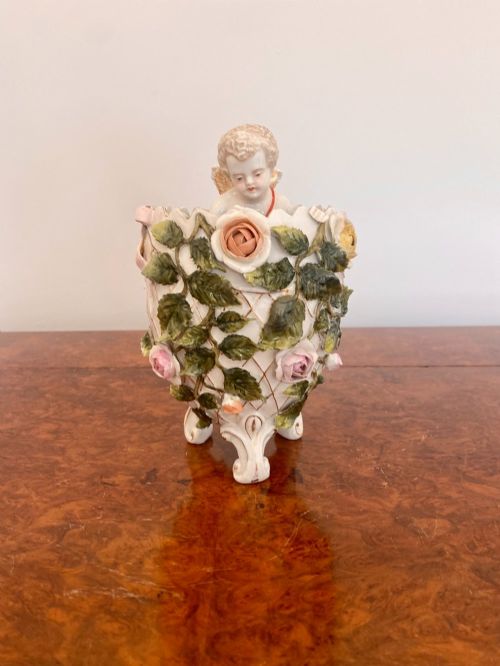
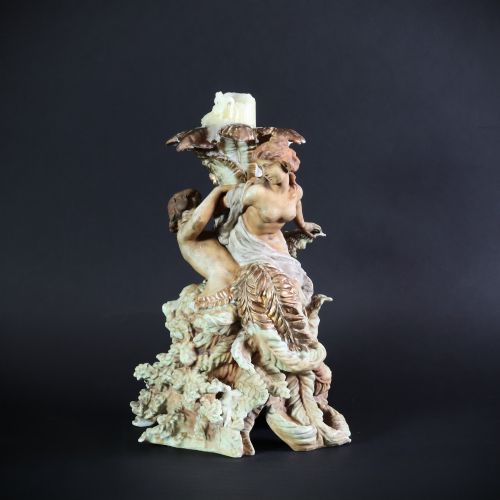
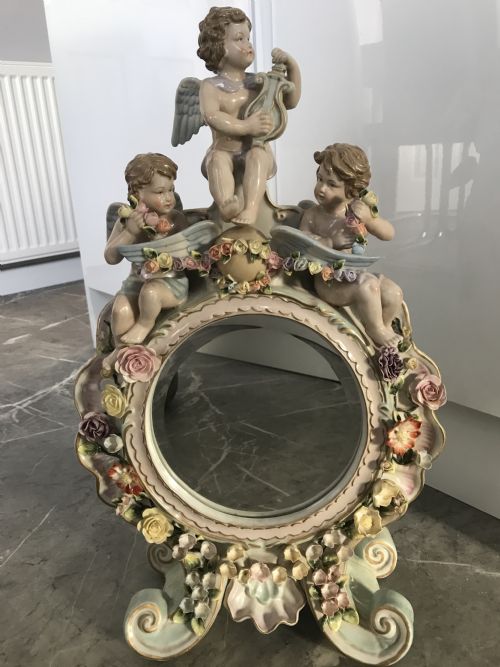
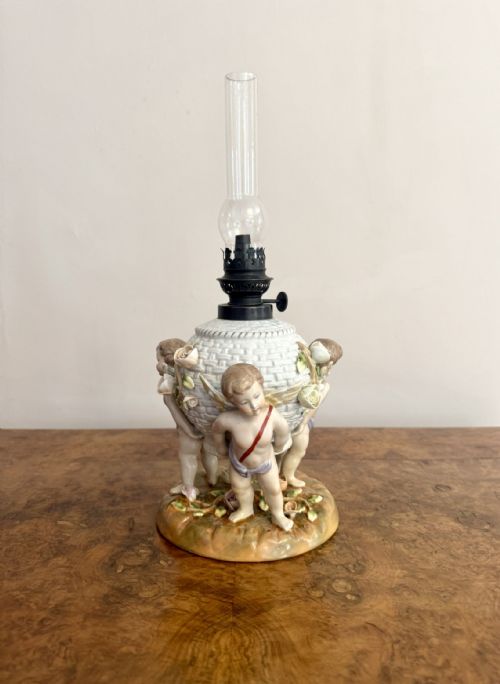
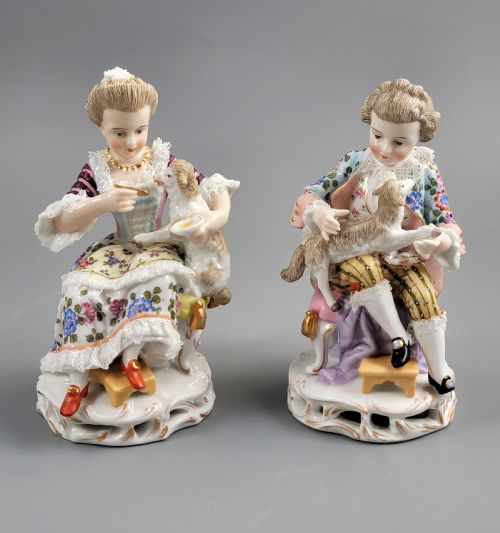
When you search for antique Sitzendorf porcelain, you encounter elaborate ornamental items produced in Germany during the nineteenth and early twentieth centuries. The selection on this page centres heavily on figural candlesticks, oil lamps, dressing table mirrors, and decorative vases populated by cherubs and children.
Most examples date from the nineteenth century down to the nineteen-thirties, spanning periods from Victorian Rococo Revival to later continental designs. You will frequently find pairs of figures, lidded potpourri vases, and sculptural candelabra that reflect the playful theatricality of the era.
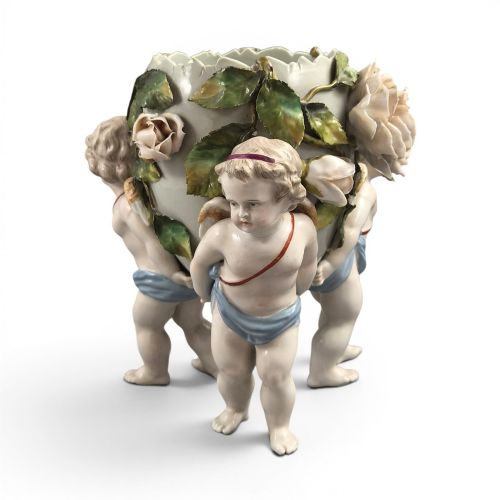
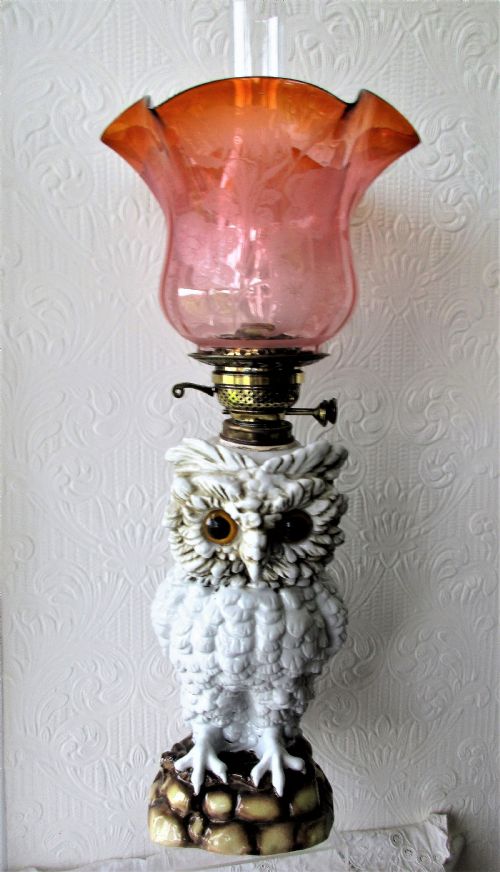
The objects serve primarily as decorative centrepieces and functional lighting adapted for period interiors. Whether shaped as an owl oil lamp or an egg vase supported by cherubs, each piece relies on detailed sculptural modelling.
How they were made
These pieces are fashioned from hard-paste porcelain, moulded into complex shapes and finished with hand-painted enamel decoration. Artisans applied intricate floral elements and applied details by hand before firing the ceramics at high temperatures.
Gilding and gold leaf accents highlight the raised relief work on vases, lamps, and mirrors. Many items incorporate secondary materials such as brass, glass, and gilt mounts to complete the functional components of oil lamps and candelabra.
Antique Sitzendorf Porcelain Retail Price Guide 2026
Typical asking prices for sitzendorf porcelain among the pieces listed under this phrase on Sellingantiques today, from the lower quarter to the upper quarter. They describe what is for sale here now, not the wider market.
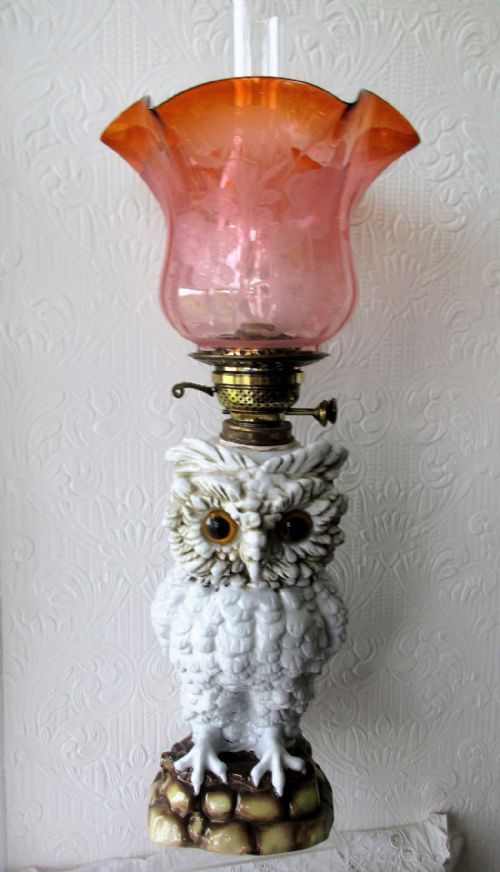
An inquisitive porcelain owl sits atop several oil lamps, keeping watch over Victorian sitting rooms.
What varies in quality
The standard of antique Sitzendorf porcelain is defined by the crispness of the sculptural modelling and the delicacy of the hand-painted floral motifs. Superior examples display finely rendered facial expressions on figures and cherubs, whilst lesser pieces can feel heavy or lack definition in the applied flowers.
Complicated forms such as four-arm figural candelabra and large lidded vases demonstrate greater technical ambition than simpler single figures. The precision of the gilding and the preservation of the enamel colours further distinguish top-tier examples.
Sitzendorf Factory
The Antique Sitzendorf Porcelain Glossary
- Hard-paste porcelain
- A durable ceramic composition fired at very high temperatures, creating a vitrified body suitable for intricate sculptural forms. This material forms the solid foundation of nineteenth-century German figures.
- Rococo Revival
- A nineteenth-century design style that imitates the asymmetric curves, scrolls, and naturalistic motifs of the eighteenth century. You see this aesthetic in the scrolling bases of candlesticks and mirrors.
- Potpourri
- A lidded vase or vessel perforated to diffuse the scent of dried flowers and spices placed inside. These decorative containers often feature cherubs or hand-painted floral decoration.
- Blanc de chine
- A French term used to describe white-glazed porcelain without coloured enamel overglaze. Certain nineteenth-century candlesticks utilise this plain white finish.
- Comport
- A decorative raised dish or bowl used as a centrepiece on a table for displaying fruit or sweets. These porcelain centrepieces stand on formal pedestals.
Antique Sitzendorf Porcelain: Frequently Asked Questions
What periods do these pieces come from?
The items span from the nineteenth century through to the early decades of the twentieth century. Many date specifically from the Victorian era and the decades around eighteen-eighty to nineteen-hundred.
Production continued into later periods, resulting in twentieth-century examples that maintain traditional German factory styles and figural subjects.
How were these porcelain lamps used?
These oil lamps served as decorative lighting for Victorian drawing rooms and boudoirs. They combined functional brass burners and glass components with ornate porcelain figural bases.
Owners placed them on tables and sideboards where their painted flowers and cherubs contributed to the ambient decor of the room.
How do I identify Sitzendorf figures?
Identification relies on recognising characteristic continental factory styles, such as modelled children, cherubs, and animal motifs like owls. Hand-painted floral applications and Rococo revival bases are typical indicators.
Pieces frequently take the form of candlesticks, mirrors, and comports rather than simple tableware.
How should I display porcelain oil lamps?
These lamps look best placed on sturdy side tables or mantels where their detailed modelling can be viewed up close. Pairing them with matching vases or candlesticks creates a balanced arrangement.
Keep them away from busy traffic areas to protect delicate applied porcelain flowers and gold leaf details.