
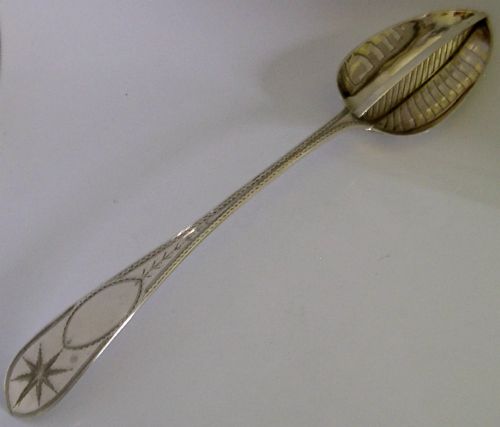
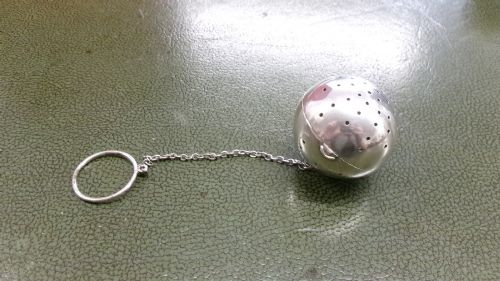
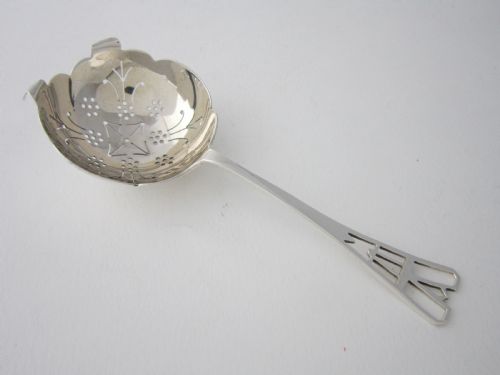


Antique Silver Strainer
When you search for an antique silver strainer, you enter a diverse category spanning wine funnels, tea strainers, and specialised spoons.
Antique Silver Strainer
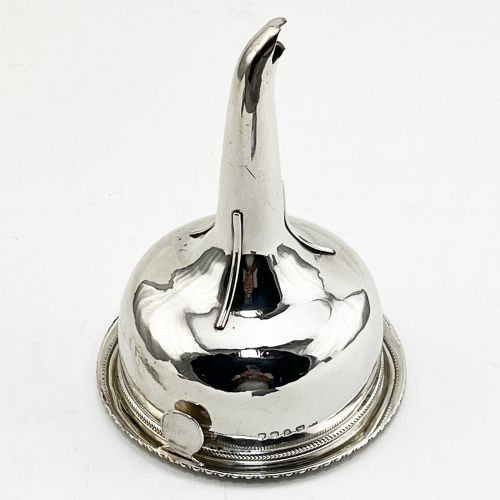
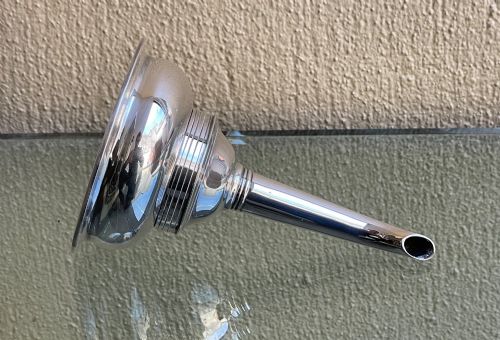
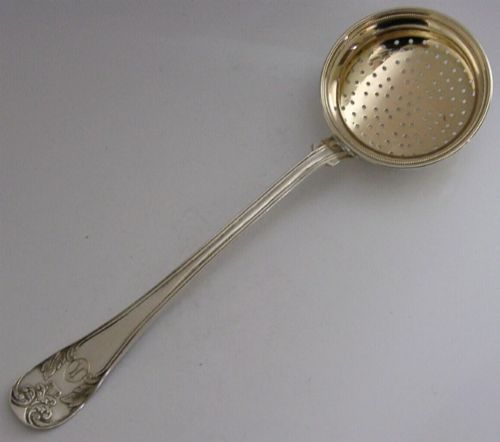
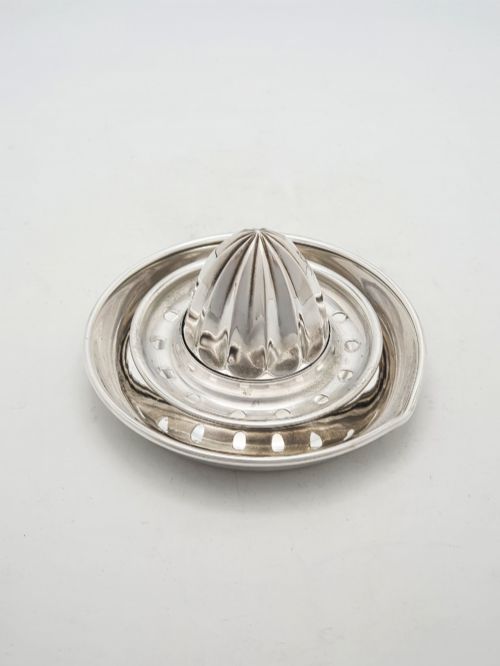
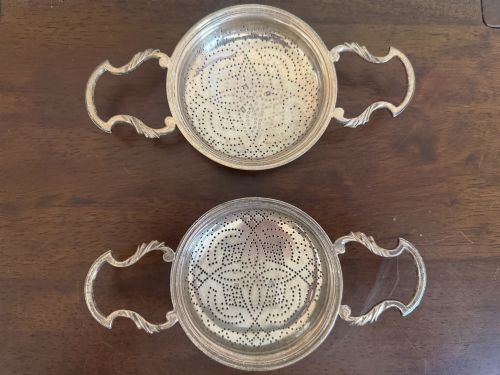
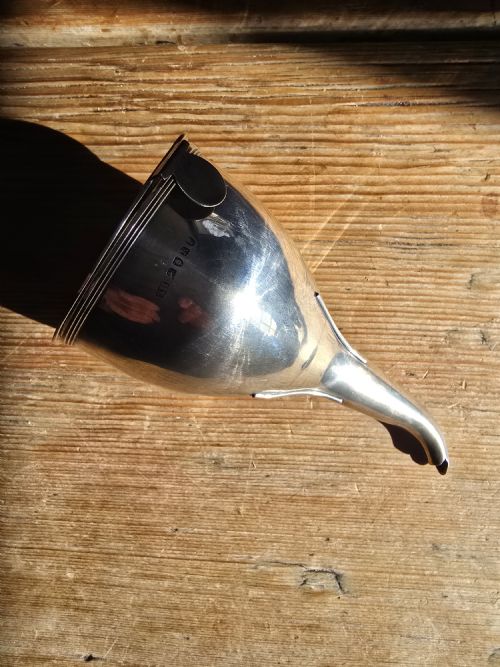
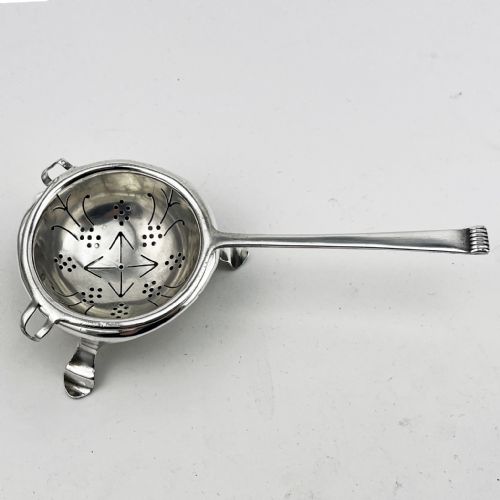
An antique silver strainer serves specific culinary and beverage rituals, primarily managing liquids from tea leaves and wine to gravy and punch. The forms on this page range from multi-part wine funnels and tea strainers with drip bowls to mote spoons and straining ladles.
You are most likely to meet tea strainers from the Edwardian and Art Deco periods, alongside Georgian wine funnels and various straining spoons in sterling silver or silver plate. These pieces originate from British, continental European, and American makers.
The category encompasses both barware and teaware, reflecting how domestic routines shifted across the eighteenth, nineteenth, and twentieth centuries. Each form tells a story of dining customs that required the separation of solids from liquids.
Materials and construction
Makers utilised sterling silver, solid silver, and silver plate, frequently pairing the metal with turned wooden handles or incorporating old Sheffield plate and silver gilt vermeil. Piercing techniques formed the intricate draining patterns seen in mazarines, strainer bowls, and fruit spoons.
Construction methods involved casting, hammering, and soldering, particularly visible in multi-part Georgian wine funnels and tea strainers equipped with matching drip bowls. Individual components like chains for infusers or detachable strainer rings highlight the mechanical ingenuity applied to small domestic utensils.
Some tea strainers feature embossed cherubs, turning a mundane kitchen task into a baroque theatrical event.
Distinctions in quality
Quality rests upon the thickness of the gauge, the crispness of the pierced decoration, and the integrity of the maker marks. Substantial weight in the hand indicates a superior grade of metal, distinguishing robust utility pieces from lighter counterparts.
Design execution separates standard domestic items from exceptional examples, seen in finely turned wooden handles, matched pairs, and intricate embossed motifs such as cherubs or floral patterns. The clarity of hallmarks and the seamless fit of multi-part vessels reveal the proficiency of the silversmith.
Lowe & Sone of Chester·Solomon Hougham·David Hennell·Jeremiah Lee·Philippe Berthier·Magnus Aase
The Antique Silver Strainer Glossary
- Mote Spoon
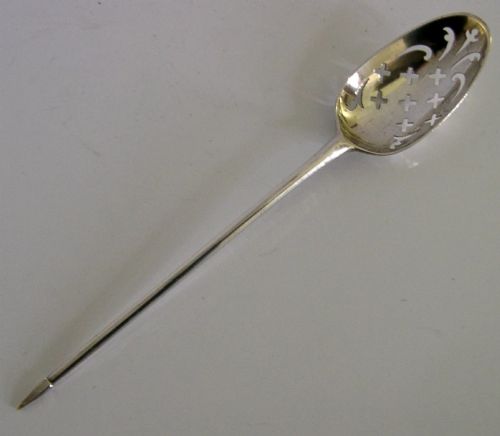
- A slender eighteenth-century spoon featuring a pierced bowl for skimming tea leaves and a pointed terminal used to clear tea kettle spouts.
- Wine Funnel
- A conical utensil designed to channel and strain wine into decanters, often featuring a removable mesh or pierced insert.
- Old Sheffield Plate
- A composite material formed by fusing a sheet of silver to a copper base, prevalent in items predating modern electroplating.
- Mazarine
- A flat draining plate or insert placed inside a dish or tray to keep food or vessels clear of accumulated juices.
- Silver Gilt
- Silver that has been coated with a thin layer of gold on its surface, also known as vermeil.
Antique Silver Strainer: Frequently Asked Questions
What is a wine funnel used for?
A wine funnel channels wine from the bottle into a decanter while filtering out sediment and cork fragments through its removable strainer insert.
These pieces often come in multiple parts to accommodate the filtering mesh and fit securely into decanter necks.
How do you use a mote spoon?
The pierced bowl skims stray tea leaves from the surface of brewed tea, while the pointed tip clears leaves from the spout.
Dating primarily to the Georgian era, these slender spoons combined dual practical functions for early tea service.
What is Old Sheffield Plate?
Old Sheffield Plate is an early composite material created by fusing a thin layer of sterling silver to a thicker copper core.
This technique produced durable domestic items and serving utensils before the invention of nineteenth-century electroplating.
Why do some tea strainers have drip bowls?
Drip bowls provide a clean resting place for wet tea strainers immediately after pouring, protecting table linens from stains.
Matched sets combining a strainer and a bowl became particularly popular during the Edwardian and Art Deco periods.