


Antique Silver Plated Mustard
These antique silver plated mustard pieces are essential dining accessories offering practical service and decorative charm from the Victorian and Edwardian eras.
Antique Silver Plated Mustard
When buyers search for antique silver plated mustard items, they encounter a range of dining table accessories primarily manifested as cruet sets, condiment sets, and condiment holders. These pieces originate predominantly from the Victorian and Edwardian periods, with Georgian and Art Deco examples also appearing across the selection.
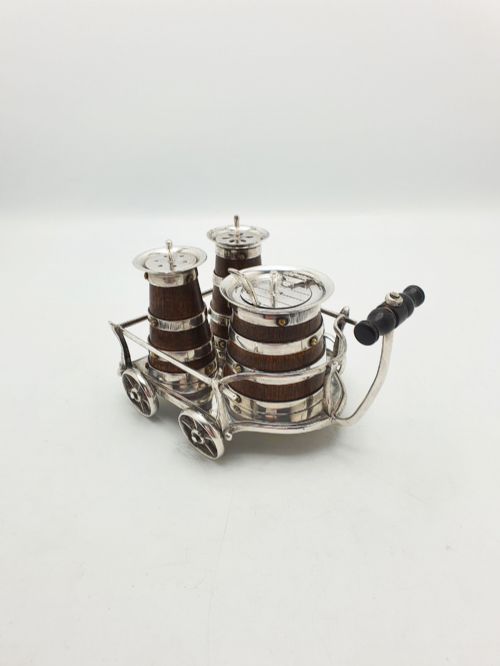
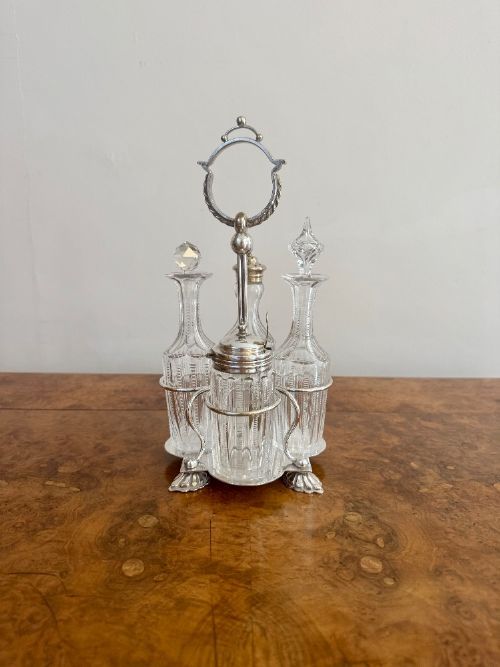
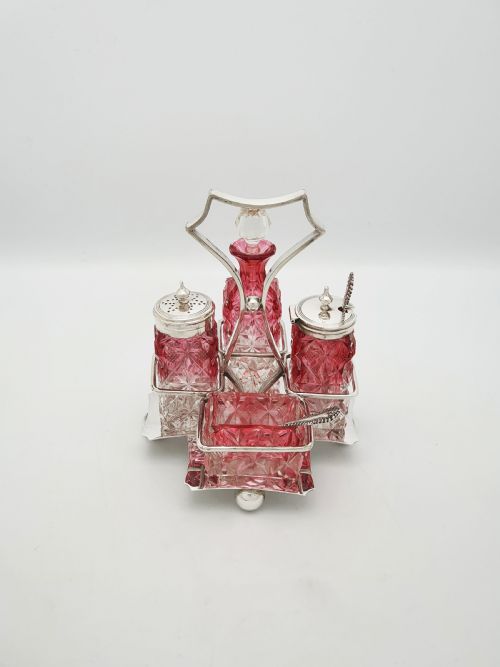
The form often includes multi-bottle cruet frames or standalone holders designed to sit upon the dining table. Many examples incorporate cut glass, cranberry glass, or oak elements alongside the silver plate, whilst novelty items take the shape of carriages, farmyard scenes, oak barrels, and musical instruments.
How they were made
Makers utilised silver plate over base metals to create durable yet lustrous dining wares that imitated solid silver at a lower cost. This plating technique was combined with sturdy metal frameworks to support individual condiment bottles.
Glass components such as cut glass and cranberry flashed glass were shaped and fitted directly into the metal frames. Wood elements like oak and walnut were also employed for bases and novelty holders, particularly in Victorian and Edwardian designs.
Some Victorian dining tables featured cruet sets shaped like entire farmyards or musical violins.
What varies in quality
The standard of craftsmanship depends largely on the complexity of the design and the integrity of the materials. Elaborate novelty forms and multi-bottle sets demonstrate higher artisanal skill than simple utilitarian holders.
The preservation of the silver plate layer and the clarity of any cut glass or cranberry glass components determine the overall refinement of the piece. Well-balanced proportions and secure mounting within frames distinguish superior examples.
Mappin Brothers
The Antique Silver Plated Mustard Glossary
- Cruet set
- A matched collection of bottles or jars for condiments held together in a frame. These stands typically held items like mustard, vinegar, oil, and pepper.
- Silver plate
- A thin layer of silver applied to a base metal such as copper or brass. This method provided the visual appeal of solid silver for dining wares.
- Cut glass
- Glass decorated by cutting facets or patterns into its surface using a wheel. This technique adds brilliance and texture to cruet bottles.
- Cranberry glass
- A rich red glass created by adding gold chloride to the molten glass batch. It appears frequently in Edwardian table wares.
- Novelty cruet
- A condiment set designed in a whimsical shape outside standard geometric forms. Examples include miniature carriages, farmyard animals, and musical instruments.
Antique Silver Plated Mustard: Frequently Asked Questions
What is an antique silver plated mustard set?
These items are dining accessories designed to hold condiments, often appearing as part of larger cruet or condiment sets from the nineteenth and early twentieth centuries.
They combine silver plate with glass or wood components to serve mustard and other table sauces during meals.
How do I date an antique cruet set?
Dating relies on stylistic clues, manufacturing materials, and overall design characteristics typical of periods like the Victorian, Edwardian, or Art Deco eras.
Specific forms such as novelty carriage frames or cranberry glass inserts often point towards distinct decades within the late nineteenth and early twentieth centuries.
Were these sets used daily?
Dining rooms of the Victorian and Edwardian periods utilised these condiment stands regularly during formal meals and family gatherings.
Their robust construction in silver plate and cut glass suited the practical demands of daily table service.
How should I clean silver plate mustard holders?
Maintenance requires gentle cleaning with appropriate silver care products to preserve the thin metal plating without causing abrasion.
Glass inserts and wooden bases benefit from separate, careful wiping to protect all materials involved in the piece.