


Antique Silver Plate Warmer
An antique silver plate warmer brings practical Victorian and Georgian engineering to the dining table, offering heated service for gravy, biscuits and spoons.
Antique Silver Plate Warmer
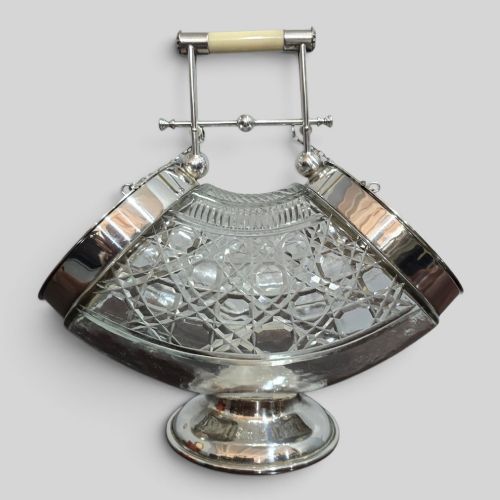
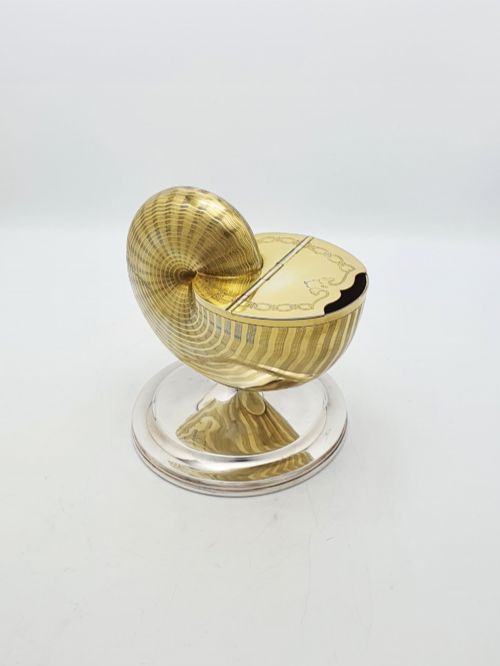
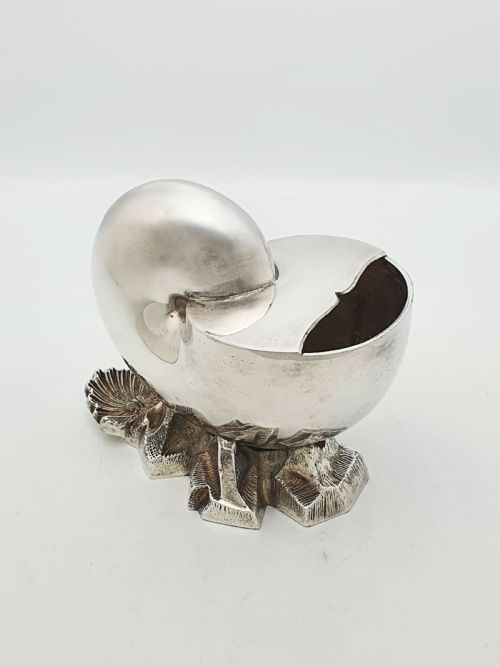
When you search for an antique silver plate warmer, you encounter specialised Victorian and Georgian vessels designed to keep food, sauce or tableware warm during long formal meals. The selection centres heavily on spoon warmers fashioned as nautilus shells, marine buoys, shoes and conch shells, alongside practical argyll gravy warmers, revolving breakfast dishes and folding biscuit boxes.
The objects span the eighteenth century through the Edwardian period, with Victorian examples dominating the current selection. These pieces served specific roles in grand dining rituals, utilising internal hot water compartments or burners to maintain the ideal temperature for silver cutlery and rich gravies before service.
How they were made
The manufacturing process relies on silver plate, electroplated nickel silver, and old Sheffield plate applied over a base metal or copper core. Craftsmen also incorporated wood for insulation and handles, while ceramic inserts appeared in certain food warmers.
Techniques ranged from early fusion plating of silver to silver on copper to later electroplating methods that allowed complex novelty shapes like marine buoys and shoes. Skilled metalsmiths formed hinged mechanisms for revolving breakfast dishes and folding biscuit boxes, integrating watertight chambers for heated water.
Victorian dining culture insisted that cold spoons were an affront, spawning ceramic shoes and marine buoys filled with hot water.
What varies in quality
Quality rests upon the crispness of the modelling in figural novelty pieces, such as nautilus shells, conch shells and marine buoys, where sharper casting preserves intricate surface details. The durability of the underlying silver plate or old Sheffield plate, along with the retention of original gilt interiors, dictates the preservation standard.
Sophistication of mechanical function also separates standard items from superior works, seen in the smooth rotation of breakfast dishes and the precise alignment of folding shell biscuit boxes. Maker attribution to notable workshops adds distinction to individual vessels.
Padley Parkin and Staniforth·Mappin and Webb·Dan Holy·Fenton Brothers·Elkington·The Alexander Clark·Thomas Latham and Ernest Morton·Hukin and Heath·William Hutton
The Antique Silver Plate Warmer Glossary
- Argyle
- A metal container with a central inner tube or jacket for hot water, designed to keep gravy warm without diluting it.
- Old Sheffield plate
- An early form of plate created by fusing a sheet of silver to a copper ingot before rolling.
- EPNS
- Electroplated nickel silver, a base metal alloy coated with silver through an electrical process introduced in the nineteenth century.
- Spoon warmer
- A Victorian table accessory designed to hold silver spoons in hot water so guests did not touch cold cutlery.
- Revolving breakfast dish
- A covered dish with a roll-action or rotating half-cylindrical lid mounted on a stand with a hot water reservoir.
Antique Silver Plate Warmer: Frequently Asked Questions
How did a spoon warmer work?
These vessels held hot water poured through a concealed aperture, warming the bowl of the container where silver spoons rested.
Guests lifted warm spoons from the water before serving themselves from side dishes.
What is an argyll gravy warmer?
An argyll is a specialised gravy container featuring a double wall or central cylinder designed to hold boiling water.
This system kept gravies hot at the table without exposing the liquid to direct flame or heat sources.
How do I distinguish old Sheffield plate?
Old Sheffield plate displays a sandwich structure where a thin layer of silver covers a copper base, sometimes revealing faint copper seams at the edges.
This technique predates nineteenth-century electroplating methods.
Were biscuit boxes used daily?
Victorian households utilised folding biscuit boxes during formal breakfasts and afternoon teas to keep baked goods fresh and warm.
Mechanism designs allowed the shell sides to open outward for easy selection.