



Antique Silver Plate Tureen
An antique silver plate tureen brings generous proportions and heavy metal warmth to a formal dining table, spanning sauceboats to soup vessels.
Antique Silver Plate Tureen
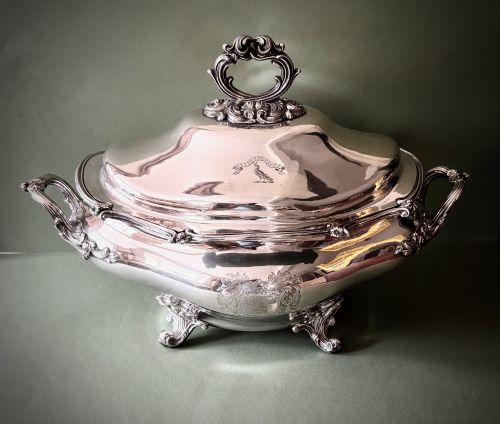
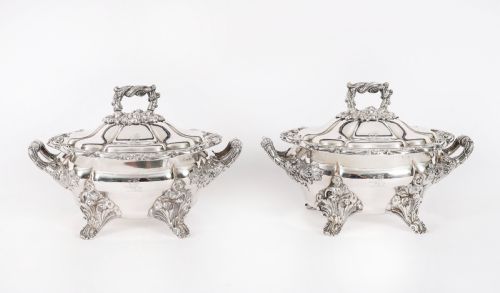
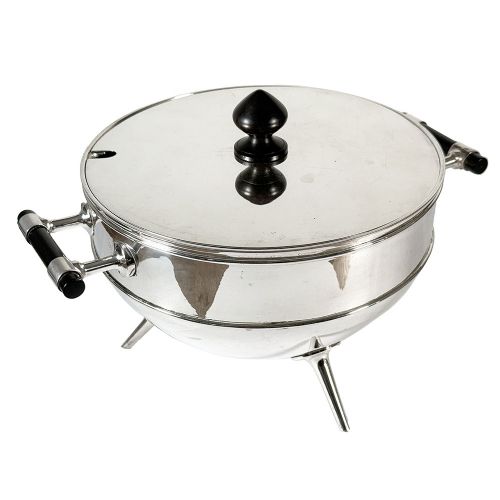
An antique silver plate tureen is a covered vessel designed for serving soups, sauces, or entrees at the dining table. These pieces range from compact sauce tureens to grand soup vessels and warming dishes.
The selections here most frequently include Edwardian silver plated entree dishes and earlier Old Sheffield Plate designs from the nineteenth century. Buyers encounter lidded oval and rectangular serving dishes alongside deep soup bowls.
Origins stretch from Georgian and Regency eras through the Victorian and Edwardian periods, including occasional continental pieces. Makers utilised silver plate over copper, nickel silver, and electroplated nickel silver to achieve the visual weight of solid silver.
How they were made
Early pieces utilise Old Sheffield Plate, a technique of fusing a thin sheet of sterling silver to a thicker copper base before shaping. This method often reveals a thin copper line along exposed edges.
Later Victorian and Edwardian production adopted electroplating, depositing silver onto a nickel silver or copper foundation via an electrical current. Makers then applied cast figural mounts, handles, and ebonised wood details by hand.
Dinner guests in the nineteenth century relied on ingenious double-walled warming tureens to keep mutton hot while dining slowly.
What varies in quality
Quality rests in the crispness of chased decoration and the weight of the metal base. Substantial gauge metal resists denting and holds heat more effectively during service.
The integrity of the plating layer defines longevity, where thick silver deposits prevent the underlying copper or nickel from showing through from heavy polishing.
Christopher Dresser for Hukin and Heath·Mappin and Webb·Hamilton and Inches·Daniel and Arter·Dan Holy·Walker and Hall·Elkington·Cresswick·Christofle Gallia·Tiffany and Co·William Hutton and Sons·Mappin Bros·James Dixon and Sons·William and George Sissons·Elkington and Mason
The Antique Silver Plate Tureen Glossary
- Old Sheffield Plate
- A composite material made by fusing silver and copper together before rolling into sheets. This method predates nineteenth century electroplating.
- Entree dish
- A shallow lidded vessel created for serving meat or vegetable courses at the table. These often feature removable handles to allow the base to double as an extra platter.
- EPNS
- Electroplated Nickel Silver. A durable base metal coated in a layer of silver through an electrical process.
- Warming dish
- A specialised tureen equipped with a compartment for hot water to keep food tempered. These pieces often include double-walled bodies.
- Sauce tureen
- A small lidded vessel intended for gravies and sauces, usually accompanied by an attached or matching undertray.
Antique Silver Plate Tureen: Frequently Asked Questions
Can I use these for serving food?
Most antique silver plate tureens remain food safe for dry or liquid contents. Ensure the interior plating is intact and free from exposed base metal before serving.
Avoid leaving acidic foods inside the metal for extended periods. Wash and dry the vessel promptly after each meal.
How do I date a piece?
Examine the manufacturing technique and maker marks stamped on the base. Old Sheffield Plate without electroplating stamps generally points to the Georgian and Regency periods.
Design styles also provide clues, such as heavy rococo revival motifs in Victorian examples versus clean lines in later twentieth-century items.
What is the difference between Old Sheffield Plate and EPNS?
Old Sheffield Plate involves physically fusing silver to copper sheets prior to forming the vessel. This older method often displays subtle copper edges.
EPNS relies on an electrical current to bond silver onto a nickel silver core. This later technique became standard industrial practice after the mid-nineteenth century.