


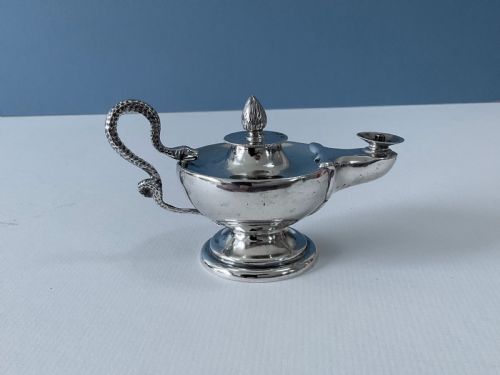


Antique Silver Oil Lamps
These antique silver oil lamps and table lighters bring distinct period weight and bright metal to a room, offering both functional history and decorative presence.

Antique Silver Oil Lamps
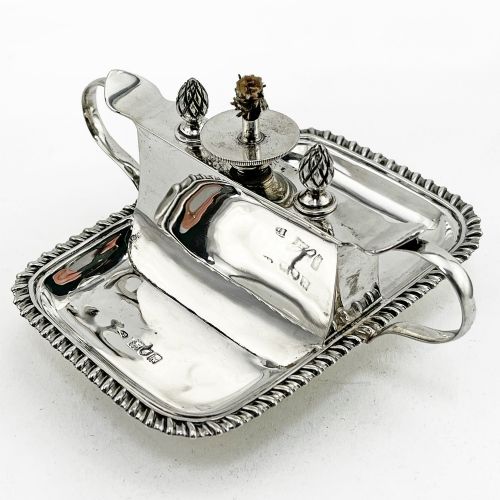
When searching for antique silver oil lamps, you encounter a varied selection spanning the Georgian, Victorian, and Edwardian eras, reaching into the 1920s and 1930s. The assortment ranges from tall column domestic lamps designed for illumination to miniature novelty table lighters fashioned in the specific shape of classical oil lamps and Aladdin vessels.
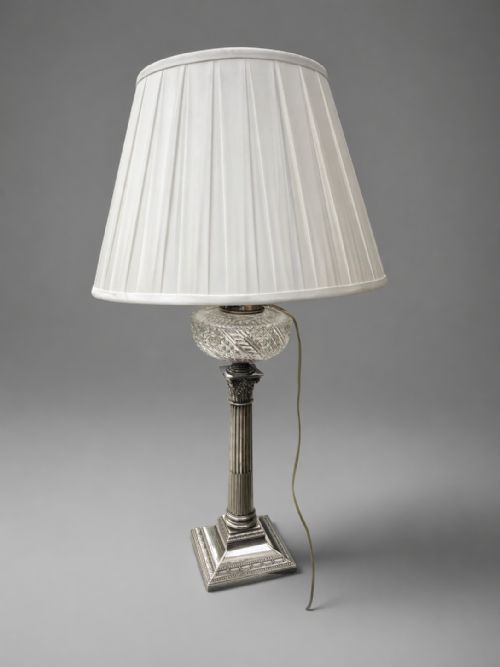
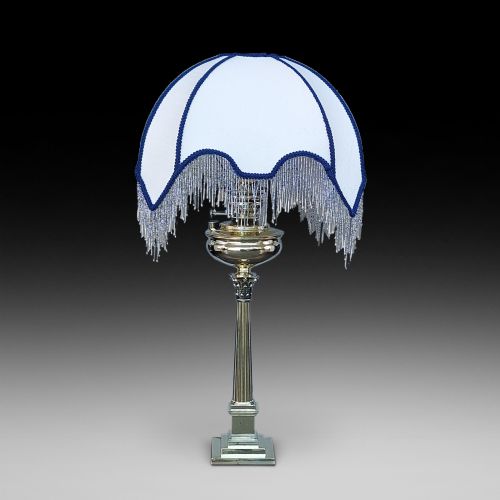
The items listed here divide broadly between lighting apparatus designed to burn oil or paraffin and smaller table lighters intended for cigars or smoking accessories. You will frequently find silver plated and sterling silver examples, often paired with glass reservoirs or mounted on classical architectural columns.
The origins reflect diverse British manufacturing traditions, taking in Victorian neoclassical designs alongside industrial railway items and novelty smoking pieces. This selection captures both the grand domestic lighting of the nineteenth century and the refined table accessories of the early twentieth century.
What varies in quality
Quality rests upon the crispness of casting detail in novelty forms and the structural integrity of columns, mounts, and collars. Heavier gauge silver plate and solid sterling silver demonstrate a more substantial weight and superior resistance to wear over time.
The refinement of decorative elements, such as Corinthian capitals on columns or chased enrichment on table lighters, separates standard utility items from finer workshop productions. Intact glass components, whether cut glass or satin glass reservoirs, also define the upper tier of the range.
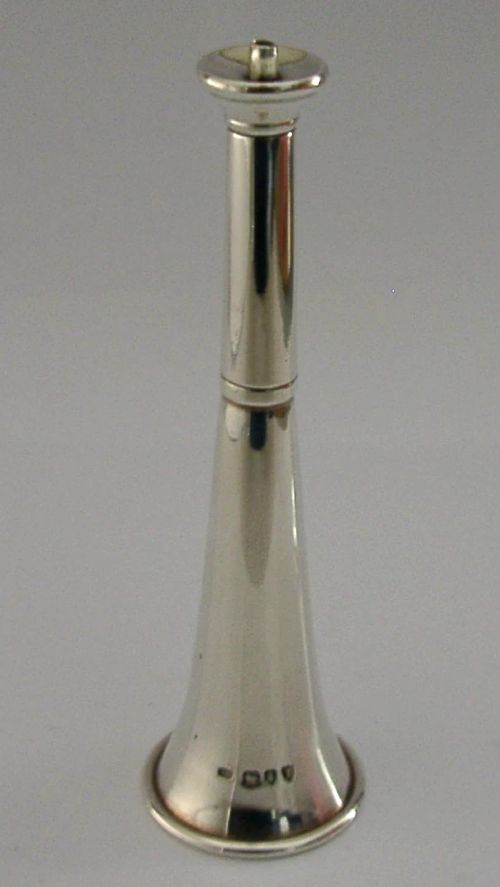
A fox hunting horn doubles as a heavy sterling silver table cigar lighter, ready to spark conversation before any match is struck.
BRAHAM·Goldsmiths and Silversmiths Company·Comyns·Elkington
The Antique Silver Oil Lamps Glossary
- Sterling Silver
- A standard of silver alloy containing 92.5 percent pure silver by mass, frequently marked with assay office stamps to denote its purity.
- Old Sheffield Plate
- An early method of fusing a thin sheet of sterling silver to a thicker copper base before rolling and shaping.
- Argyle
- A type of nineteenth-century vessel or gravy warmer featuring an internal heated compartment, occasionally found in early metalware forms.
- Corinthian Column
- An architectural column style featuring ornate acanthus leaves on the capital, frequently utilised in the design of Victorian table lamps.
- Peg Oil Lamp
- A small lamp featuring a font designed to sit directly inside a separate candlestick or base rather than standing on its own pedestal.
Antique Silver Oil Lamps: Frequently Asked Questions
How do I distinguish a table lighter from a full-sized oil lamp?
Table lighters are typically much smaller in scale, often cast in the shape of classical lamps or novelties like hunting horns for use in smoking rooms.
Full-sized oil lamps stand taller, incorporating substantial reservoirs and burners designed to hold fuel for domestic room illumination.
Can these antique oil lamps still be used for lighting today?
Most pieces survive as decorative antiques and require professional rewiring or safety conversion if intended for modern electrical use.
Original burners and glass components are generally preserved for display and historical value rather than active daily fuel burning.
What materials were commonly used alongside silver in these pieces?
Manufacturers frequently combined silver and silver plate with cut glass or satin glass for the oil reservoirs and fonts.
Brass, copper, and wooden bases also appear beneath silver plating, while railway pieces incorporate robust iron and brass hardware.
How do I identify a Victorian piece from an Edwardian one?
Victorian items often display heavier neoclassical ornamentation, ornate Corinthian columns, and rich detailing associated with nineteenth-century revival styles.
Edwardian and later pieces from the 1920s tend toward cleaner lines, trefoil shapes, and lighter novelty table lighter forms.