



Antique Silver Name Clips
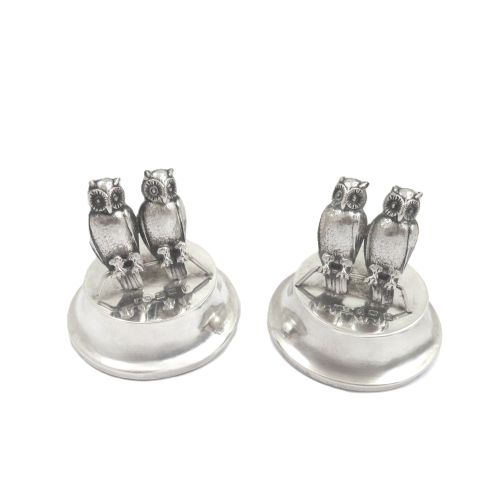
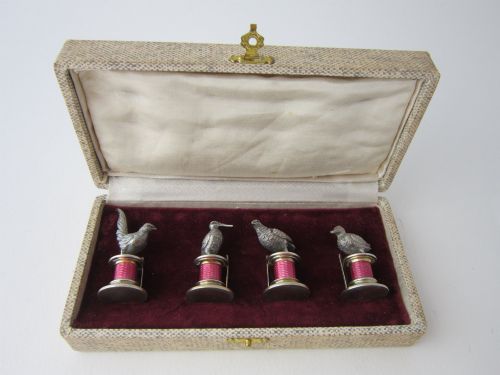
These antique silver name clips, designed to hold place cards and menus at formal dining tables, bring wonderful detail to any table setting.
Antique Silver Name Clips
When you search for antique silver name clips, you are looking at small tabletop accessories designed to hold paper menus and place cards upright during dining. These pieces appear in forms such as menu holders, place card holders, and broader tableware accessories across the Victorian, Edwardian, and mid-century periods.
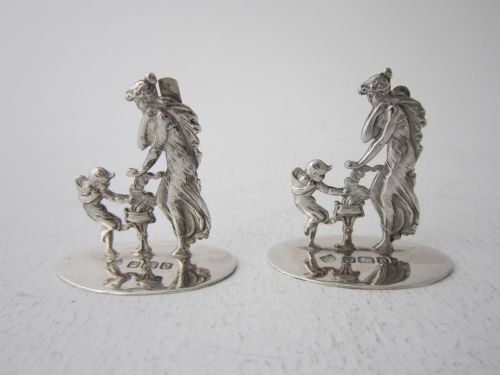
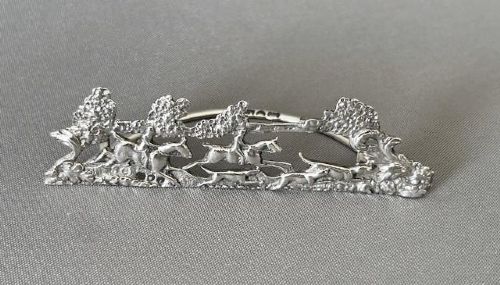
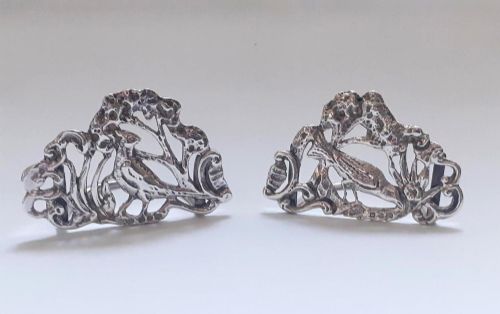
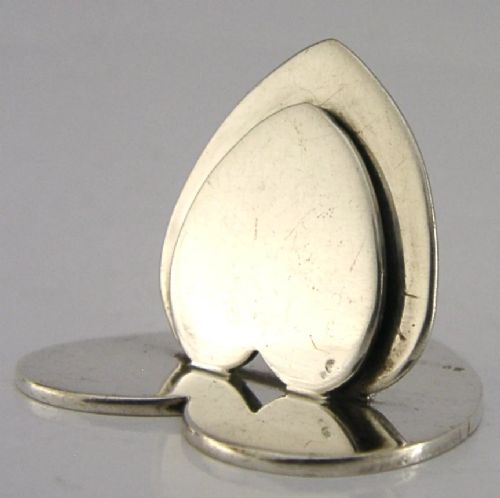
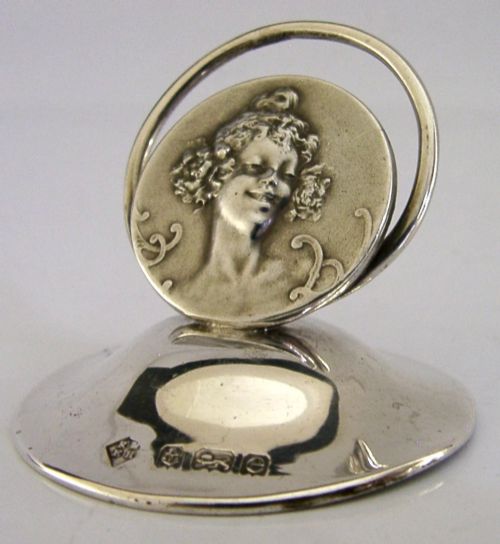
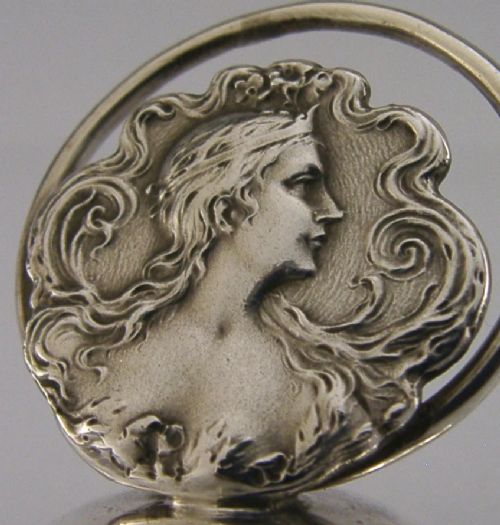
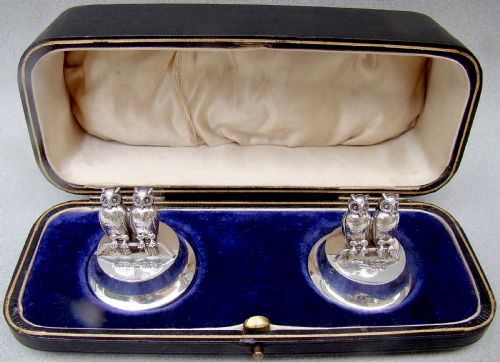
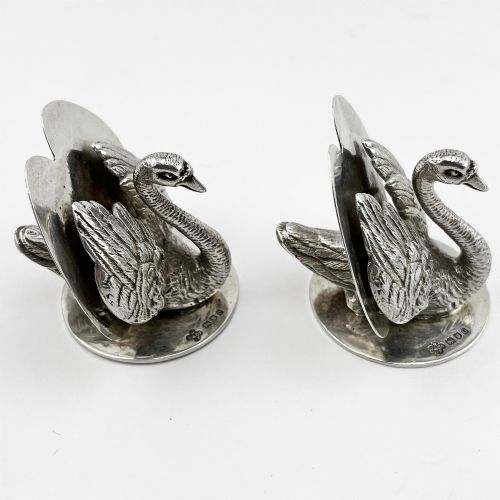
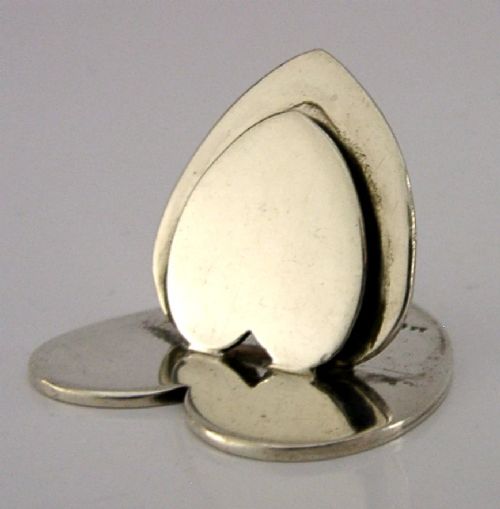
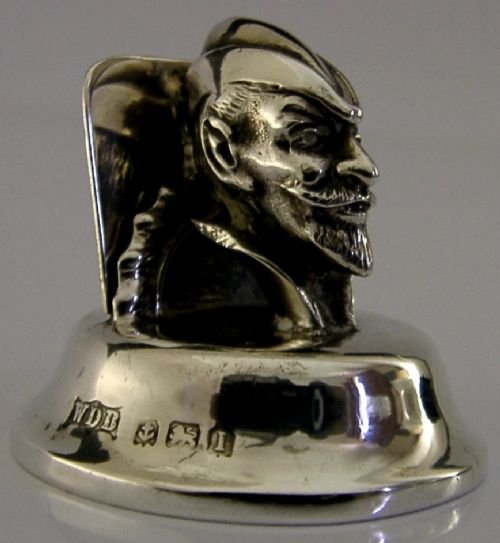
The pieces you meet most often on this page date from the Edwardian era and the early twentieth century, taking whimsical shapes including owls, swans, love hearts, and maidens in Art Nouveau styles. Makers also produced military themes, such as British Military and RAF motifs, alongside classical animal figures.
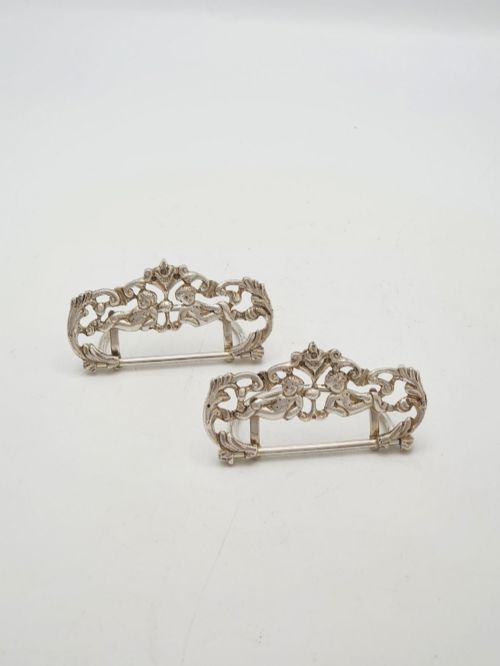
Originating largely from British workshops and towns like Birmingham, Chester, and London, these items served a practical purpose in high-society dining before evolving into collectable table silver. They span single markers, paired sets, and larger grouped collections made for substantial dinner parties.
Materials and construction
Most pieces listed are made from sterling silver, with occasional examples utilising silver plate, leather, velvet, silk, and vibrant guilloche enamel to highlight specific decorative motifs. Workshops shaped these metals through casting, stamping, and hand-chasing to achieve distinct three-dimensional forms like birds, hearts, and human figures.
Enamel sections require precise glass fusion onto prepared silver surfaces, creating durable coloured highlights on subjects like military insignia or decorative borders. Stands and weighted bases often incorporate internal elements or backing materials like silk and velvet to protect dining tables and ensure stability.
Antique Silver Name Clips Retail Price Guide 2026
Typical asking prices for silver name clips among the pieces listed under this phrase on Sellingantiques today, from the lower quarter to the upper quarter. They describe what is for sale here now, not the wider market.
Listings for antique silver name clips span the Victorian, Edwardian, and mid-century periods, incorporating sterling silver, enamel, velvet, and leather.
Judging the quality of tableware accessories
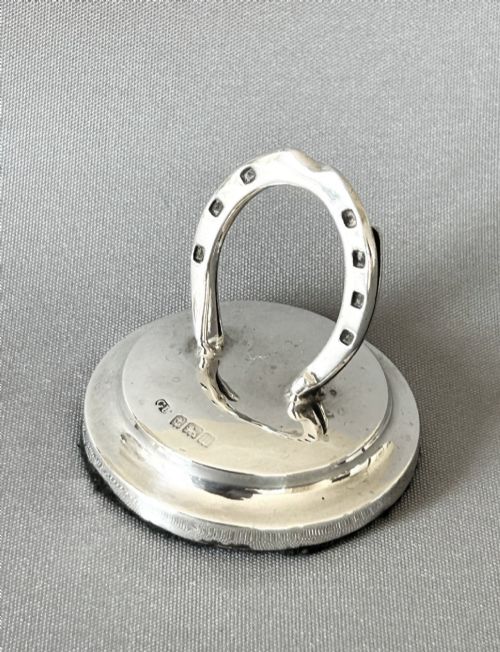
The distinction between ordinary and superior pieces rests on the crispness of the chasing, the individuality of the casting, and the preservation of intricate details like feathers, facial expressions, and enamel work. Maker marks that are deeply struck and fully legible indicate workshop pride and higher production standards.
Completeness alters the character of a piece, particularly when items were originally issued as matched pairs or boxed sets rather than isolated single markers. The weight of the silver and the stability of the clip mechanism demonstrate the original maker's commitment to durability alongside aesthetic charm.
Sampson Mordan·Levi and Salaman·A Wilcox·Asprey
The Antique Silver Name Clips Glossary
- Menu Holder
- A small upright stand designed to display the dinner menu on a dining table. These items usually feature a weighted base and a clip or slot at the top.
- Place Card Holder
- A miniature tabletop accessory used to indicate where guests should sit by gripping a small name card. They frequently match menu holders in design and period style.
- Guilloche Enamel
- A decorative technique where enamel is applied over a precisely machined engine-turned metal background. This creates translucent patterns that catch the light beneath the coloured glass surface.
- Sterling Silver
- An alloy consisting of silver and other metals, typically copper, standardise to a purity proportion of ninety-two point five percent by mass. British pieces generally bear the lion passant hallmark to confirm this standard.
Antique Silver Name Clips: Frequently Asked Questions
What are antique silver name clips used for?
These pieces functioned primarily at formal dinner parties to hold printed menus and guest name cards upright on the table. They allowed diners to see the courses ahead and find their designated seats easily.
Over time, dining customs shifted away from large multi-course formal banquets, turning these practical items into decorative collectables for cabinet display or modern table settings.
How do I identify Edwardian examples?
Edwardian pieces often display distinct artistic movements like Art Nouveau, featuring flowing lines, stylised maiden figures, and naturalistic animal subjects such as owls and swans. Maker marks and date letters stamped into the silver provide precise verification of the manufacturing year.
Looking at the weight, box presentation, and style of the engraving helps separate these early twentieth-century items from later mid-century productions.
Are these items sold as pairs or sets?
Listings include individual pieces, matched pairs, and larger sets numbering up to twenty-four items. Sets often retain their original fitted boxes lined with velvet or silk.
Collectors frequently seek out matching pairs or complete sets because they offer a uniform appearance for modern table displays.
How should I clean silver name clips?
Gentle cleaning with a soft microfibre cloth prevents damage to delicate details like enamel work or fine hand-chasing. Avoid harsh abrasive dips that can strip away original patination and age characteristics.
Store pieces away from direct sunlight and damp environments, especially those incorporating fabric backing materials like velvet or silk.