

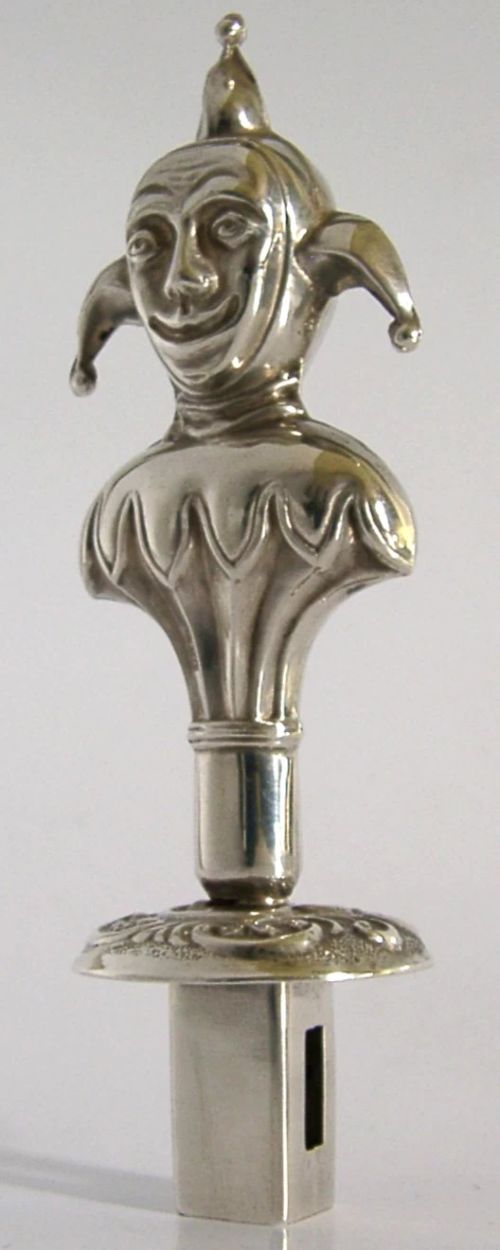


Antique Silver Letter Seal
These antique silver letter seal examples bring desk accessories into your study from Georgian, Victorian, Edwardian, and Middle Eastern makers.
Antique Silver Letter Seal
An antique silver letter seal is a desk accessory designed to impress a mark into hot sealing wax, securing correspondence before the era of gummed envelopes. You will most frequently encounter desk seals, wax seals, and sealing wax holders made from sterling silver and silver.
The pieces on this page span several distinct periods including Georgian, Victorian, Edwardian, 18th Century, 19th Century, 1910, and 1920. Forms range from simple ornate silver holders to novelties like a Cheshire Cat, a jester, a hatching chick, and a bougie box.
Some examples combine silver with sealing wax, glass, velvet, paperboard, steel, and coral. You might also find boxed desk sets containing multiple intaglio coloured-glass seals alongside the main handle.
How they were made
Silversmiths utilised sterling silver and standard silver to cast or shape the bodies of these desk accessories, frequently incorporating intricate chased or ornate details. Novelty figures and desk rulers required precise metalworking to integrate compartments for sealing wax or hinged elements.
Makers paired silver with contrasting materials like steel for the matrix face, coloured glass for intaglio seals, and organic elements such as coral. Fitted presentation pieces often lined their interiors with velvet and paperboard to secure the components.
Antique Silver Letter Seal Retail Price Guide 2026
Typical asking prices for silver letter seal among the pieces listed under this phrase on Sellingantiques today, from the lower quarter to the upper quarter. They describe what is for sale here now, not the wider market.
One Edwardian desk accessory cleverly disguises a wax seal and holder within a functional rolling desk ruler.
What varies in quality
Quality rests in the crispness of the cast silver detail and the clarity of the engraving on the seal matrix. Novelty figures display varying degrees of sculptural animation, from basic cast silhouettes to intricately articulated characters.
The inclusion of original fitted boxes, unused sealing wax, or multiple interchangeable intaglio glass inserts elevates the completeness of a desk set. Maker attribution also shapes the standing of a piece, particularly when bearing marks from established workshops.
Sampson Mordan·Robert Hennell
The Antique Silver Letter Seal Glossary
- Seal matrix
- The engraved face at the base of the seal that presses into the hot wax to leave a raised or depressed impression. This part carries the personal monogram, crest, or pictorial design.
- Intaglio
- A design carved into the surface of glass or stone so that the resulting impression in wax appears in relief. Georgian boxed sets frequently utilise coloured-glass seals cut in this manner.
- Bougie box
- A small container designed to hold a taper or wax candle used for melting sealing wax. These desk accessories often incorporate compartments for sealing materials.
- Sealing wax holder
- A hollow handle or companion piece designed to store sticks of sealing wax inside the desk accessory. Edwardian examples sometimes combine this function with a rolling desk ruler.
Antique Silver Letter Seal: Frequently Asked Questions
What is an antique silver letter seal?
An antique silver letter seal is a handheld desk accessory used to close correspondence securely with hot wax. The base carries an engraved design or monogram that leaves a distinct impression.
These pieces date across the Georgian, Victorian, and Edwardian eras, appearing in simple utilitarian forms as well as elaborate novelty shapes.
How do you use a wax seal?
You heat a stick of sealing wax until it melts onto the fold of your paper or envelope. Press the metal matrix of the seal firmly into the pool of warm wax and lift straight up once it cools.
Many antique desk sets include compartments or separate holders specifically designed to store the sticks of wax alongside the seal.
What are desk seals made from?
They are predominantly made from sterling silver and standard silver for the handles and mounts. Some incorporate steel faces, coloured-glass intaglios, or organic additions like coral.
Fitted presentation boxes often combine velvet linings and paperboard structures to hold the silver handle and its interchangeable components securely.
How do I date a silver seal?
You can date a silver seal by examining the style, the period characteristics, and any accompanying hallmarks stamped into the metal. Makers' marks and town marks provide precise years of production on assayed pieces.
Design motifs also offer clues, shifting from austere 18th-century Georgian forms to whimsical Edwardian novelties like animals and jesters.