


Antique Silver Cutlery Holder
These antique silver cutlery holder pieces keep your dining table orderly, bringing distinct Victorian, Georgian, and Art Deco character to daily meals.
Antique Silver Cutlery Holder
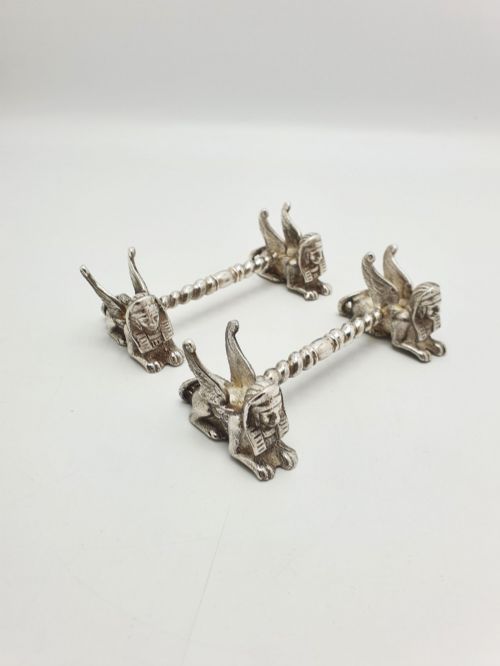
When you search for an antique silver cutlery holder, you encounter a selection of knife rests, spoon rests, cutlery trays, and fitted boxes designed to keep dining tables tidy. The items span various forms from the Victorian, Edwardian, and Georgian eras, alongside later Art Deco and Egyptian Revival designs.
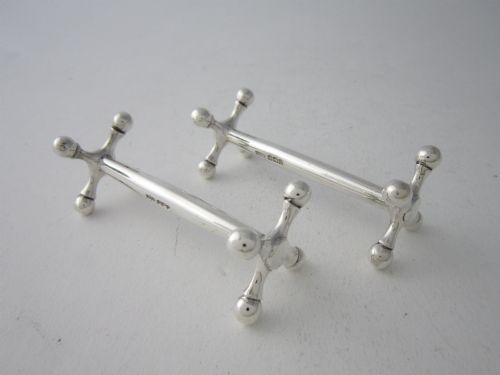
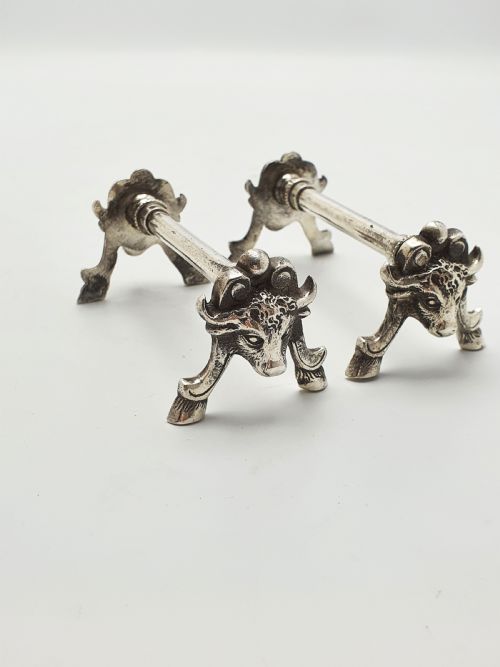
You are most likely to meet pairs of silver plated or sterling silver knife rests on this page, shaped as sphinxes, bull heads, rampant lions, or naturalistic twigs. These resting pieces support carving knives and table cutlery between courses to protect tablecloths from stains.
The assortment also encompasses walnut cutlery canteens and Old Sheffield plated trays alongside boxed napkin rings. Each tableware accessory serves a specific functional purpose for dining storage and presentation.
How they were made
Maker workshops utilised sterling silver, silver plate, nickel silver, and copper to form these items, often casting figurative designs like lions, sphinxes, and bull heads in solid metal. Silver plating techniques applied thin layers of precious metal over base metals to achieve a bright finish.
Wooden pieces such as walnut cutlery boxes feature fitted interior linings of velvet, silk, and leatherette to cradle individual utensils safely. Silversmiths worked in regional centres including Birmingham and Edinburgh, stamping pieces with hallmarks or maker marks.
Naturalistic styles involved shaping metal to imitate organic plant forms and branches with textured bark details. Heavier gauge metals provided durability for daily dining use.
Listings feature items spanning multiple eras, including Georgian, Victorian, Edwardian, and Art Deco periods.
What varies in quality
The distinction between standard items and superior examples lies in the weight of the metal and the crispness of the cast ornamentation. Heavy gauge silver plate and solid sterling silver demonstrate a substantial feel in the hand compared to lighter stamped alternatives.
Named maker attribution, such as work by Creswick, elevates the interest of a piece alongside clear town marks and date letters on silver items.
Creswick
The Antique Silver Cutlery Holder Glossary
- Knife rest
- A small support placed on the dining table to hold carving or table knives off the cloth between courses. These typically appear as pairs in metal or silver plate.
- Old Sheffield plate
- An early method of fusing a thin sheet of silver to a thicker copper base before shaping. This technique creates distinct edge lines where the underlying copper shows through.
- Sterling silver
- An alloy containing a high proportion of pure silver combined with other metals for strength. Items in this material carry official assay office hallmarks.
- Cutlery canteen
- A fitted wooden box or chest lined with fabric to organise and store a complete set of tableware. Walnut was a favoured timber for these protective containers.
- Spoon rest
- A specialised dish or support designed to hold a serving spoon next to a dish during a meal. These protect tabletops from drips.
Antique Silver Cutlery Holder: Frequently Asked Questions
What is an antique silver cutlery holder used for?
These pieces serve to keep used knives and spoons elevated above the tablecloth during a meal. They protect fine linens from grease and sauces while adding decorative detail to the dining table setting.
Items like fitted walnut boxes and trays provide dedicated storage for cutlery collections when not in use. Napkin rings similarly organise table settings for guests.
How do I date a silver knife rest?
Dating relies on identifying stamped town marks, maker initials, and date letters on solid silver pieces. Stylistic clues also help place items within specific periods such as the Georgian, Victorian, or Edwardian eras.
Design motifs like Egyptian Revival or Art Deco indicate the prevailing aesthetic tastes of the manufacturing period. Heavy cast animal figures often date back to the late nineteenth century.
What is the difference between silver plate and sterling silver?
Sterling silver consists of solid precious metal alloyed for durability, bearing official hallmarks that verify its silver content. These pieces maintain their material value throughout.
Silver plate involves a thin layer of silver bonded over a base metal such as copper or nickel silver. Over time, the underlying metal may show through at points of heavy friction.
How do I care for antique cutlery rests?
Cleaning requires a soft cloth and mild silver polish formulated to preserve delicate plating or solid metal surfaces. Avoid abrasive pads that can wear down thin silver layers.
Store silver items in dry environments to slow down natural tarnishing processes. Lined boxes should be kept away from direct sunlight to protect interior fabrics like silk and velvet.