


Antique Shield Fire Screen
These antique shield fire screens are decorative hearth furnishings that protect rooms from excessive heat, offering both practical utility and period character.
Antique Shield Fire Screen
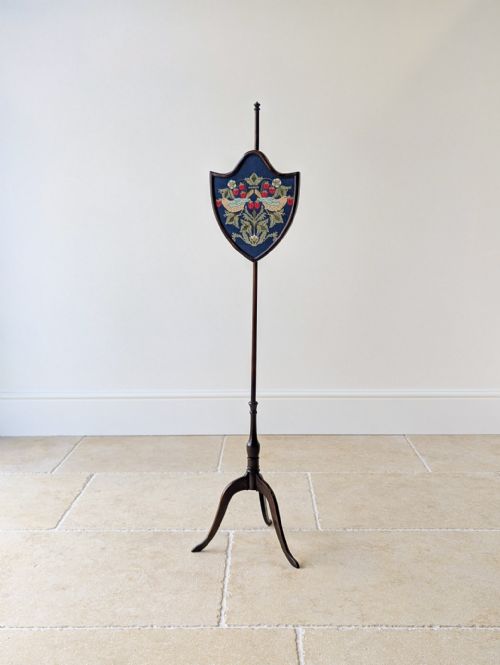
An antique shield fire screen is a functional piece designed to deflect warmth from an open grate, most commonly taking the form of pole screens or floor-standing shields. Examples span several significant periods including Georgian, Regency, and Victorian eras.
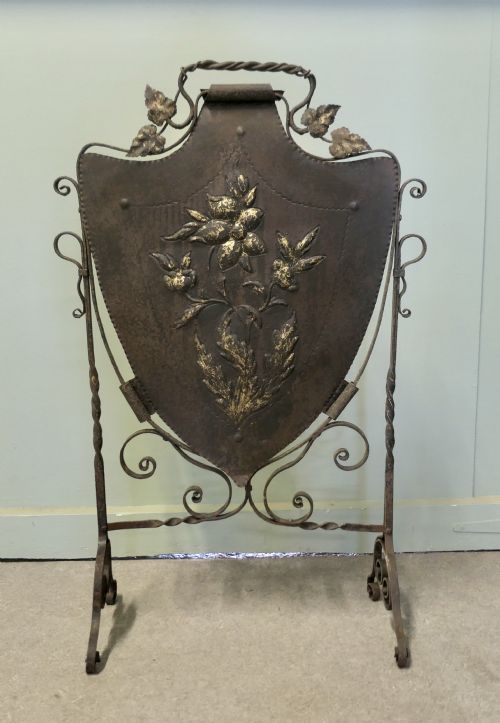
Makers utilised various decorative panels within the timber and metal frames, including needlework tapestry, silk, wool, glass, and embossed metal. These diverse materials reflect the changing interior tastes throughout the nineteenth century and earlier.
How they were made
Craftsmen built the supporting framework using dense hardwoods like mahogany and rosewood, often incorporating turned or carved columns and tripod bases for stability on uneven floors. Metal variations utilised brass and iron, sometimes employing embossing and chasing techniques to create detailed surface patterns.
The central shields frequently featured intricate textile work such as needlepoint tapestry, silk panels, and wool samplers stretched across wooden frames. Adjustable brass mechanisms allowed users to slide the screen vertically along a turned pole.
The listings span multiple eras, showing timber frames in mahogany, rosewood, and satinwood alongside brass and iron examples.
What varies in quality
Quality rests upon the execution of the timber carving and the stability of the support mechanism, particularly on tripod pole screens where joints endure repeated adjustment. Finely turned columns and secure brass thumbscrews indicate superior workshop standards.
The standard of the central panel heavily influences the overall execution, with finely worked needlepoint tapestries or intricate embossed brass displaying greater artisan investment than plain timber panels or later replacements.
The Antique Shield Fire Screen Glossary
- Pole screen
- A vertical stand supporting an adjustable shield designed to block radiant heat from a fireplace. These furnishings became popular during the Georgian and Regency periods.
- Needlepoint tapestry
- Stitched textile art worked on canvas, frequently mounted within the frames of nineteenth-century screens. This material allowed makers to display intricate floral or pictorial designs.
- Tripod base
- A three-legged support structure commonly found beneath pole screens to ensure stability. This construction prevents the tall vertical frame from tipping over on domestic flooring.
- Embossing
- A metalworking technique where patterns are raised from the reverse side using hammers and punches. This method appears on brass screens to create decorative coats of arms and ornamental motifs.
Antique Shield Fire Screen: Frequently Asked Questions
What is a shield fire screen?
A shield fire screen is a historic household furnishing designed to protect occupants from the intense heat of an open fireplace. They typically feature an adjustable panel mounted on a pole or supported by a base.
These pieces were placed strategically between the hearth and the seated inhabitants to shield faces from the glare and warmth of coal or wood fires.
How do you use a pole screen?
A pole screen is operated by sliding the central shield vertically along a turned wooden or metal shaft. This allows the user to adjust the height of the panel relative to the fire.
In period rooms, they were repositioned throughout the day as the heat of the fire fluctuated or as people moved around the seating area.
What materials are used?
These screens utilise a range of hard timbers such as mahogany, rosewood, and satinwood for the frames and stands. Metal elements in brass and iron also appear frequently.
The central shields often incorporate textiles including needlepoint tapestry, wool, silk, and glass reflectors designed to bounce light back into the room.
How do I date a screen?
Dating relies upon observing the prevailing style and construction methods of the period, from Georgian tripod designs to ornate Victorian brasswork. Regency examples often feature distinct tapered poles and circular bases.
Examining the fixings, timber selection, and the style of any needlework panel helps narrow down the decade of manufacture.