





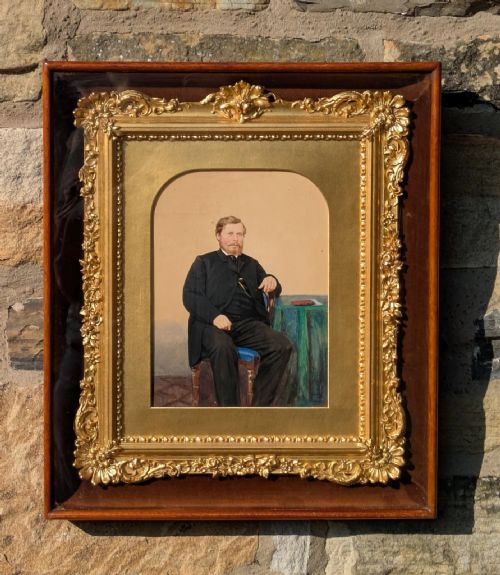


Antique Shadow Box Art
Antique shadow box art brings three-dimensional dioramas and framed relief displays into the room behind protective glass.
Antique Shadow Box Art
When you search for antique shadow box art, you encounter deep glazed frames enclosing everything from maritime dioramas to devotional figures. The pieces on this page span the eighteenth, nineteenth, and early twentieth centuries, capturing domestic and folk art traditions.
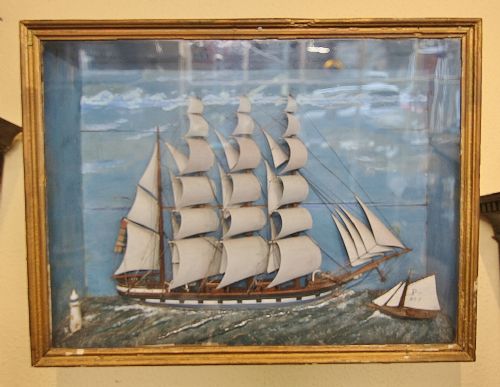
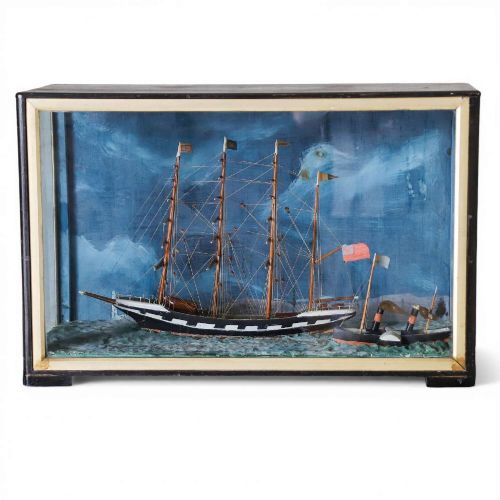
Maritime dioramas featuring sailing ships and clippers form a prominent part of the selection, often housed in painted wooden boxes with curved horizons. Alongside these marine subjects, you find framed textiles, shell work, and cork constructions.
Folk art interpretations dominate the available selection, ranging from scratch-built ship models to European townscapes in snow. These works reflect both amateur skill and professional craftsmanship across British, French, and American origins.
Materials and construction methods
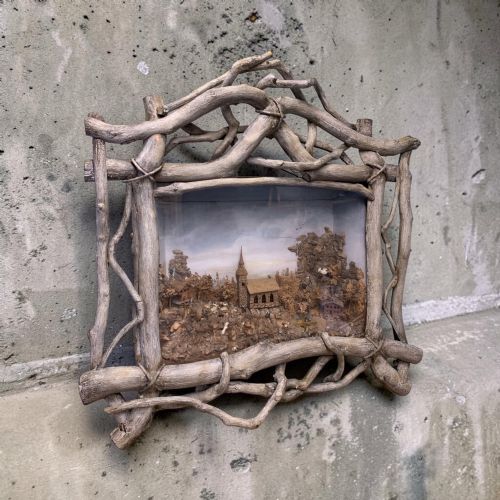
Makers utilised wood, glass, paint, and paper to build these deep-set displays, often incorporating canvas, silk, and velvet as backing materials. Frames frequently feature gilt finishes or twig ornamentation to complement the enclosed scene.
Maritime examples combine carved wood and painted canvas with intricate rigging, while straw work and cork constructions demonstrate specialised folk techniques. Nevers glass figures and mother of pearl elements appear within devotional and decorative shadow boxes.
Antique Shadow Box Art Retail Price Guide 2026
Typical asking prices for shadow box art among the pieces listed under this phrase on Sellingantiques today, from the lower quarter to the upper quarter. They describe what is for sale here now, not the wider market.
An early twentieth-century prisoner art diorama brings a tiny monkey saloon bar into the collection alongside grand sailing ships.
Distinctions in craftsmanship and preservation
Quality separates through the intricacy of the internal modelling and the condition of the protective glazing. Fine examples maintain tight joinery in the box frames and precise detail in painted backgrounds and model rigging.
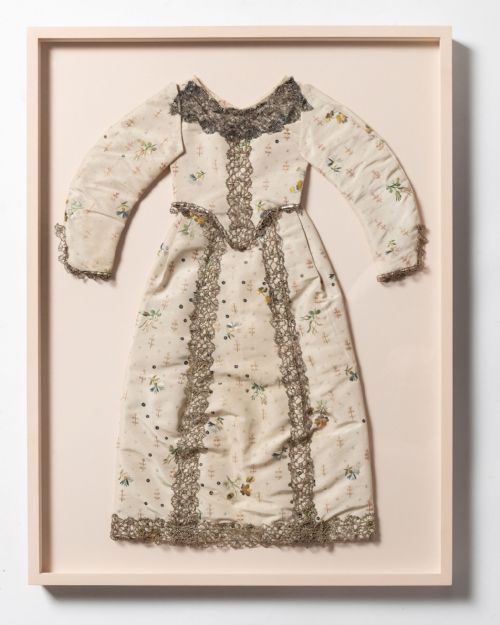
The integrity of fragile interior elements, such as shell work, straw marquetry, and delicate textiles, dictates the preservation standard. Superior pieces retain original components without intrusive restoration.
The Antique Shadow Box Art Glossary
- Shadow box
- A deep, glazed wooden frame designed to enclose and protect three-dimensional objects or dioramas. It creates a contained display space on a wall or tabletop.
- Diorama
- A three-dimensional scene depicting historical, maritime, or fictional subjects. These constructions use painted backgrounds combined with physical models in the foreground.
- Nevers glass
- Lampworked glass figures produced in France, commonly found in eighteenth-century devotional displays and shadow boxes. They are worked from coloured glass rods.
- Scratch-built
- A model constructed from raw materials rather than from a pre-made kit. In these listings, this term applies primarily to handmade ship models.
- Folk art
- Artistic work created within a cultural tradition by untrained or self-taught makers. These pieces emphasise utility and local materials over academic convention.
Antique Shadow Box Art: Frequently Asked Questions
What is antique shadow box art?
Antique shadow box art comprises three-dimensional framed displays, dioramas, and relief tableaux enclosed behind glass. These pieces span maritime models, devotional figures, and folk art constructions from the eighteenth to early twentieth centuries.
Craftsmen and sailors built these displays to preserve detailed scenes, utilising wood, glass, textiles, and painted backgrounds. The depth of the frame protects the delicate internal components from dust and damage.
How were maritime dioramas displayed?
Maritime dioramas were typically hung on walls or placed on mantels as decorative focal points in domestic interiors. The glazed box protected the fragile rigging and painted canvas backdrops from sea air and handling.
Many of these pieces were created by sailors during long voyages or by portside model makers. They served as commemorative records of specific vessels or general maritime life.
How do I date an antique shadow box?
Dating relies on examining the construction methods of the frame, the materials used for the internal models, and the style of the painted background. Nineteenth-century examples often feature deep wooden moulding and hand-painted canvas horizons.
Changes in textiles, framing techniques, and subject matter help narrow the period. Eighteenth-century versions frequently incorporate devotional elements and specialised glasswork.