




Antique Sewing Table Base
These antique sewing table base options offer sturdy foundations and distinct character, perfect for repurposing into unique occasional tables.
Antique Sewing Table Base
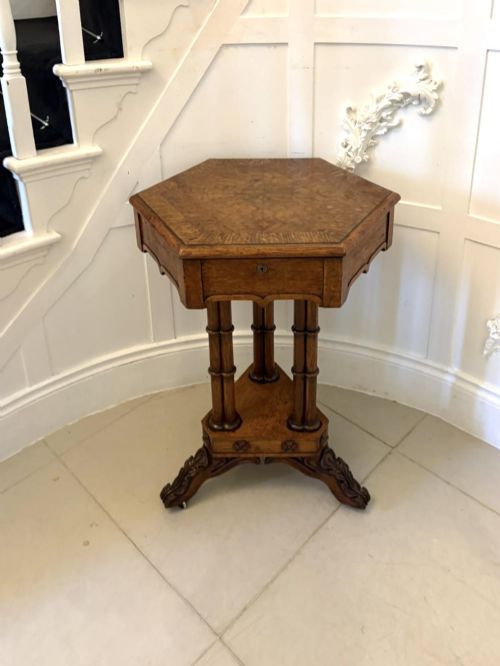
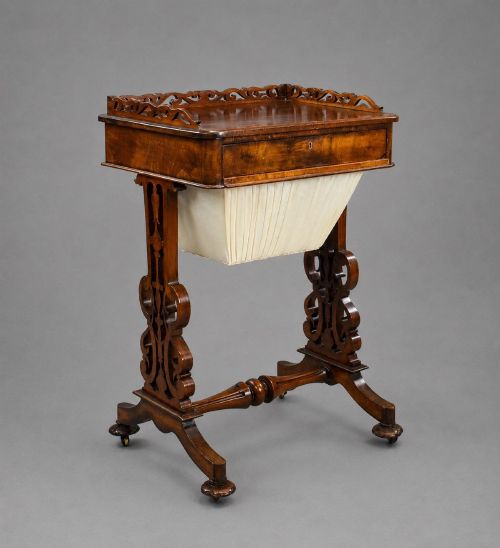
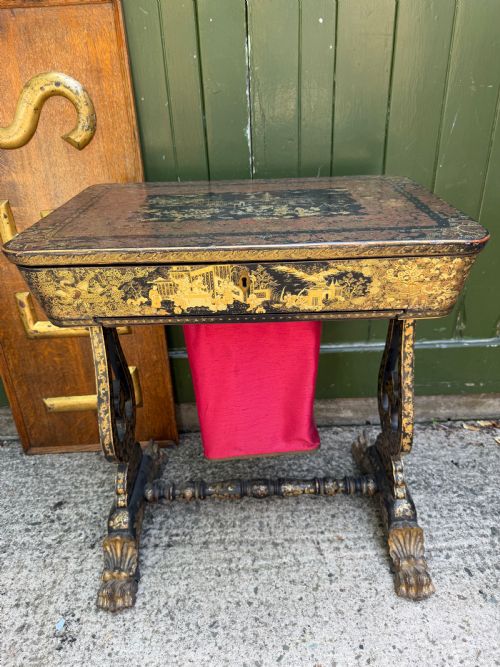
An antique sewing table base serves as the structural support for historic work tables, featuring various forms across multiple periods. Buyers seeking an antique sewing table base will encounter designs spanning the 19th Century, Victorian era, and Edwardian period.
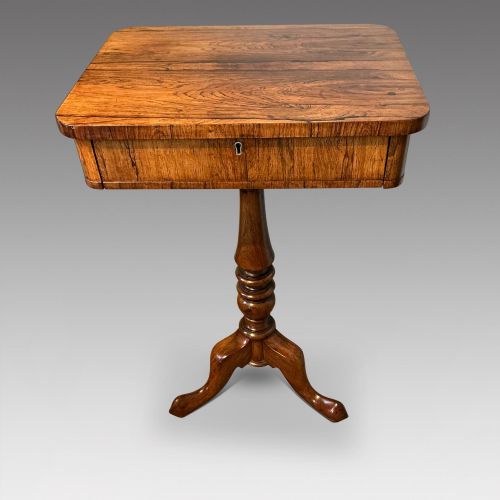
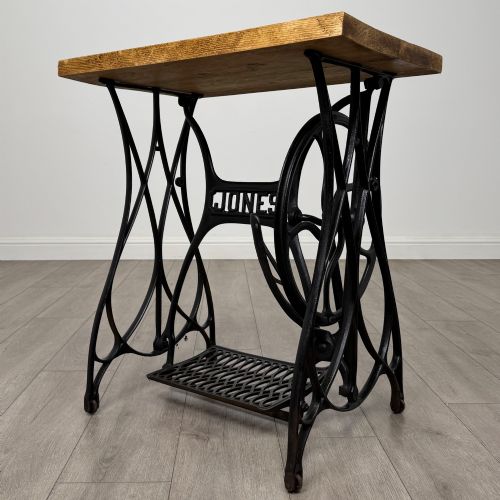
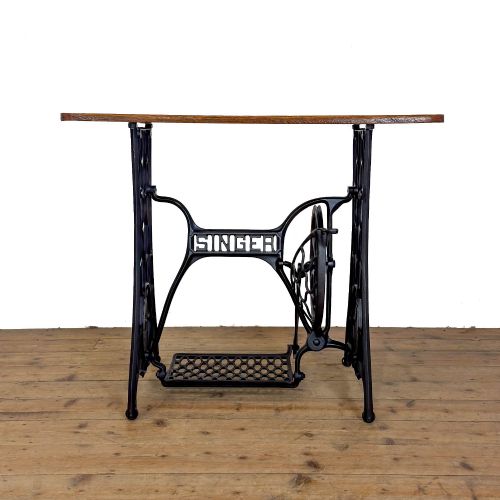
The selections on this page range from heavy industrial cast iron frames to elegant pedestal and tripod supports. Mahogany, rosewood, oak, and walnut form the predominant wooden structures alongside robust metal alternatives.
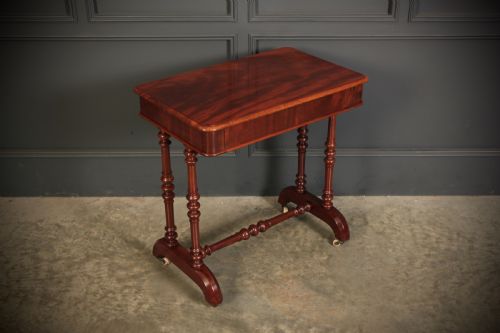
Formations include side tables, occasional tables, and specific work table chassis originating from diverse stylistic backgrounds like Regency, William IV, and Biedermeier. These foundations accommodate creative adaptation while retaining their original period integrity.
What varies in quality
The choice of timber grade and complexity of carving dictate the distinction between standard and superior examples. Finer pieces display carefully selected burr walnut or figured rosewood veneers matched with intricate pedestal turnings.
Structural integrity of the joints and the original casting quality of metal bases determine long-term durability. Solid brass hardware and substantial timber thickness separate premier workshops from utilitarian counterparts.
Listings feature 19th Century, Victorian, Edwardian, and Regency periods alongside materials such as mahogany, rosewood, oak, cast iron, and brass.
Heal & Son·Gillows of Lancaster·Singer
The Antique Sewing Table Base Glossary
- Pedestal table
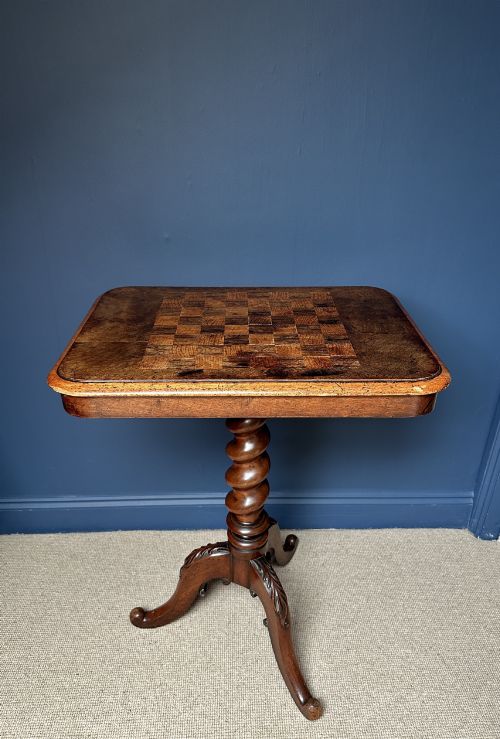
- A table supported by a central pillar rising from a base, often featuring carved feet or a platform. This form provides substantial stability for smaller top surfaces.
- Work table
- A specialised piece of furniture designed for needlework and domestic crafts, housing internal compartments and resting on a dedicated base. These items date predominantly from the nineteenth century.
- Tripod base
- A support structure comprising three legs radiating from a central column, common in nineteenth-century occasional and lamp tables. This configuration ensures balance on uneven historical flooring.
- Cradle base
- A curved framework allowing a table body to pivot or rock, occasionally utilised in specific Victorian sewing table designs. It offers distinct mechanical movement alongside support.
- Cast iron
- A strong, heavy alloy poured into moulds to create durable industrial frames, seen in later sewing machine table adaptations. This material provides exceptional weight and rigidity.
Antique Sewing Table Base: Frequently Asked Questions
What is an antique sewing table base?
An antique sewing table base is the foundational support structure originally built to hold a nineteenth-century work table or domestic sewing unit. These pieces encompass everything from heavy cast iron machine legs to timber pedestals.
Buyers acquire these bases to repurpose them with new tabletops or to preserve historic furniture frames. They reflect the diverse industrial and cabinet-making standards of the Victorian and Regency eras.
How do I identify the period of a base?
Dating relies on observing the prevailing timber choices, such as rosewood and mahogany in early nineteenth-century pieces, versus cast iron in Edwardian examples. Stylistic markers like Regency pedestals or William IV carvings provide clear chronological indicators.
Examining the construction methods, such as joint types and metal casting textures, further clarifies the age. Comparing these details against documented period styles establishes the manufacturing timeframe.
Can I use a sewing table base for a new table?
These bases lend themselves well to supporting custom stone, glass, or wooden tabletops. Their sturdy construction makes them practical for modern side table or occasional table configurations.
Ensuring the mounting surface aligns securely with the existing screw holes or support brackets is essential. This adaptation maintains the historical character of the frame while serving a contemporary function.
What materials were commonly used for these bases?
Cabinet makers predominantly utilised solid hardwoods including mahogany, oak, burr walnut, and rosewood. These timbers were selected for their strength and ability to take fine polished finishes.
Later Victorian and Edwardian examples frequently incorporate cast iron and brass elements, especially in machinery adaptations. Each material dictates the weight, colour, and overall aesthetic of the support structure.