



Antique Sevres Timepiece
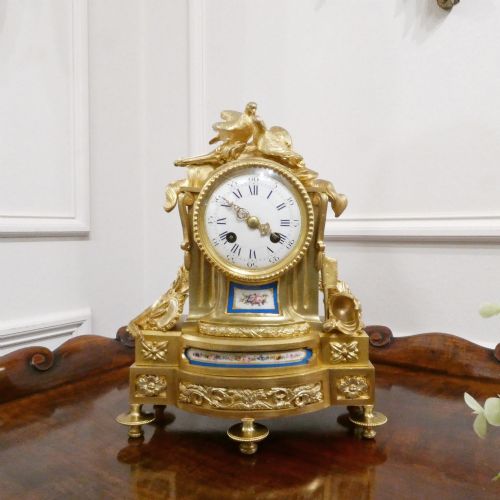
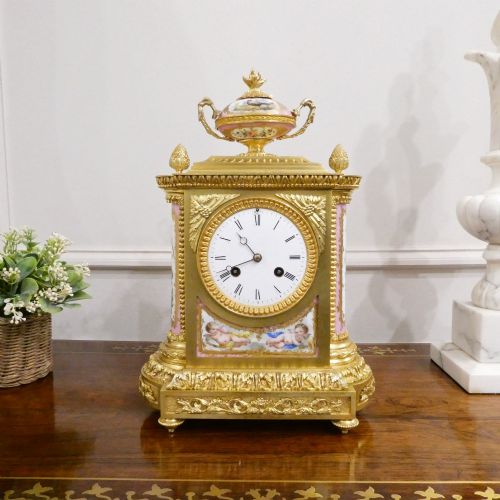
An antique sevres timepiece brings heavy gilt bronze and painted porcelain panels together on a mantelpiece.
Antique Sevres Timepiece
An antique sevres timepiece is a French clock housing hand-painted porcelain panels within a decorative metal framework. These objects emerge from the nineteenth century, often reflecting revival styles such as Louis XVI and Rococo.
The pieces listed on this page take the form of mantel clocks and boudoir clocks. They display influences from Victorian manufacturing alongside French design aesthetics spanning the middle and late decades of the nineteenth century.
Buyers encounter examples combining ormolu mounts with ceramic dial faces and painted scenes. The visible inventory ranges from plain porcelain housings to ornate gilt bronze structures produced by known makers.
How they were made
Maker workshops constructed these timepieces using cast gilt bronze and brass for the structural frames and ornamental mounts. Porous ceramic bodies were shaped to form the clock cases and dial faces, which then received hand-painted decoration.
Craftsmen applied surface finishes including mercury gilding and standard gilding over the bronze metalwork. Enamel details were worked onto dials and plates, while glass elements protected the moving mechanical parts.
Antique Sevres Timepiece Retail Price Guide 2026
Typical asking prices for sevres timepiece among the pieces listed under this phrase on Sellingantiques today, from the lower quarter to the upper quarter. They describe what is for sale here now, not the wider market.
Some boudoir clocks are small enough to pack in a portmanteau, letting nineteenth-century travellers keep track of Paris time while on the move.
What varies in quality
Quality rests upon the crispness of the bronze casting and the precision of the chased surface detail. Finer examples display deeply sculpted acanthus leaves and scrolls rather than soft, shallow metalwork.
The artistry on the porcelain panels dictates the standing of the piece. Hand-painted figural scenes or floral reserves executed with fine brushwork elevate an object above simpler monochrome or transfer-printed ceramics.
Jean-Baptiste Delettrez·Japy Freres·Henri Jacot
The Antique Sevres Timepiece Glossary
- Ormolu
- Gilded bronze produced by applying a mixture of gold and mercury to a cast brass or bronze object. This technique creates a rich yellow metallic lustre characteristic of nineteenth-century French decorative arts.
- Sevres
- Porcelain originating from the French national factory, known for soft-paste ceramic bodies and detailed hand-painted scenes. Pieces often feature cobalt blue grounds and gilt highlights.
- Mantel clock
- A domestic clock designed to sit upon the shelf or mantel above a fireplace. These heavy decorative objects often incorporate matching side ornaments or garnitures.
- Rococo Revival
- A nineteenth-century design movement mimicking the asymmetrical scrolls, shell motifs and naturalistic curves of the eighteenth-century French court style. This aesthetic dominates many clock cases from the period.
- Enamel
- A glassy substance fused to metal surfaces through firing to create smooth, durable coloured details. Clock dials frequently utilise white enamel with painted black numerals.
Antique Sevres Timepiece: Frequently Asked Questions
What is an antique sevres timepiece?
An antique sevres timepiece is a nineteenth-century French clock that incorporates painted porcelain plaques within a decorative metal frame. These objects were designed for domestic display on mantelpieces.
They combine the skills of ceramic artists and bronze founders. The resulting items reflect historical revival styles popular during the Victorian era.
How do I identify the period?
Dating relies on the stylistic cues of the metal mounts and the form of the porcelain case. Revival aesthetics such as Louis XVI or Rococo point to nineteenth-century manufacture.
Specific dates or eras mentioned in listings often reference the Victorian epoch or decades such as the eighteen-eighties. Maker signatures on movements also assist with chronological placement.
Where were they made?
These clocks originated in France during the nineteenth century. Workshops in Paris and surrounding regions produced the metal cases and clockwork movements.
The porcelain components often drew inspiration from the Sevres factory tradition. Assemblers brought the ceramic plaques and bronze frames together in French ateliers.
How should I clean the gilt bronze?
Gilt bronze requires gentle dusting with a soft dry cloth to remove surface particles. Moisture and chemical polishes can strip the historic gilding from the metal.
Preserving the original surface sheen depends on avoiding abrasive cleaning methods. Professional conservation is recommended for deep accumulated grime.
What materials are used?
The primary materials include gilt bronze, ormolu, and porcelain. Additional components feature glass, enamel, brass, and occasionally marble.
Craftsmen combined these elements to build sturdy housings for mechanical clock movements. The contrast between painted ceramics and bright metal defines the visual appeal.