




Antique Sevres Plaques
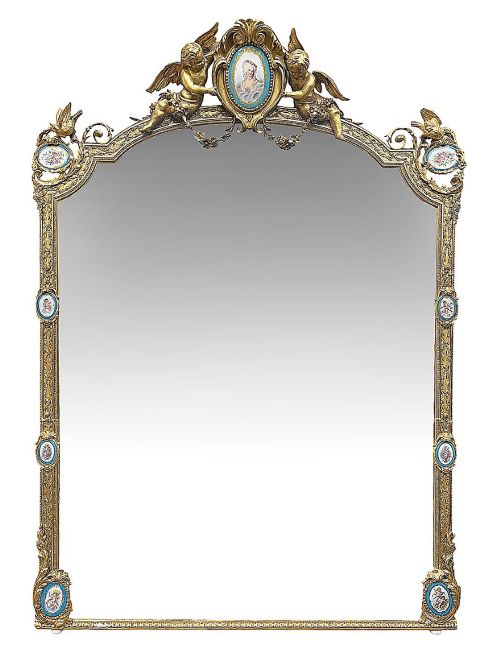
Antique sevres plaques bring hand-painted porcelain panels into nineteenth-century furniture, offering a colourful focal point for period rooms.
Antique Sevres Plaques
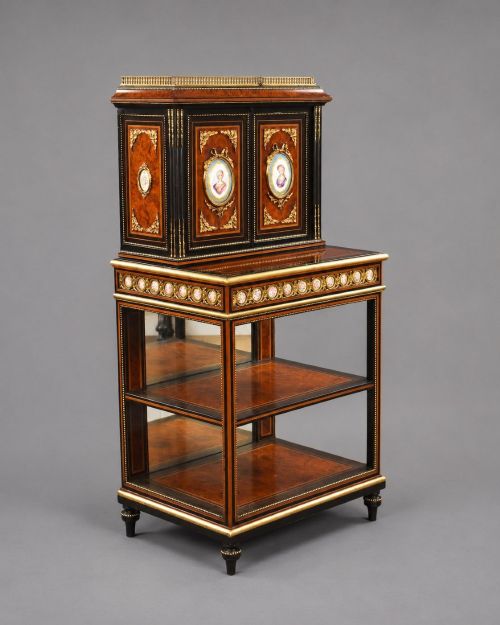
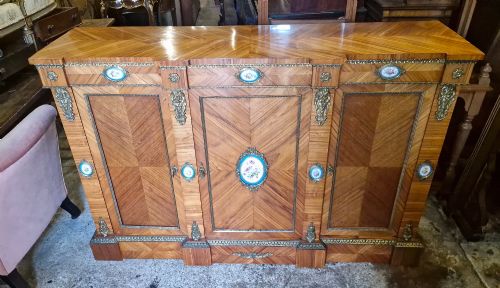
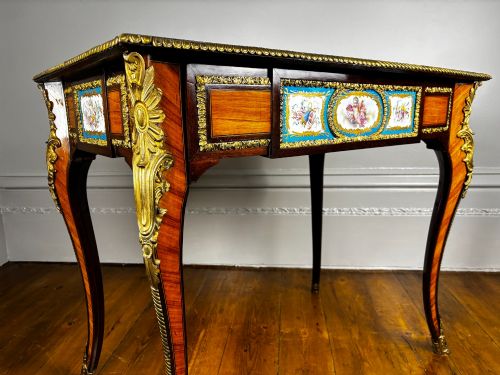
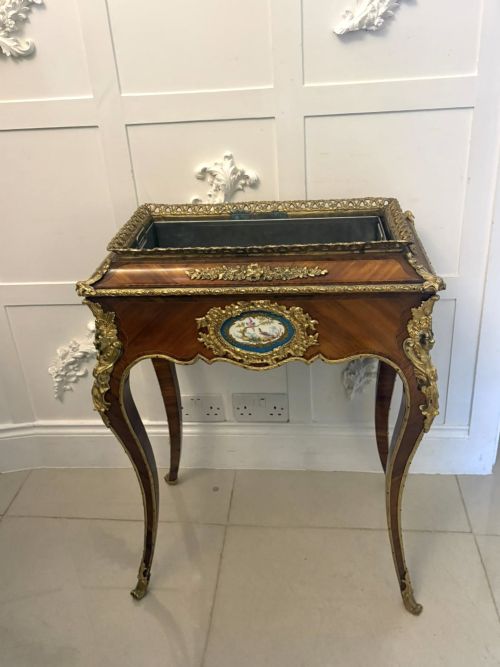
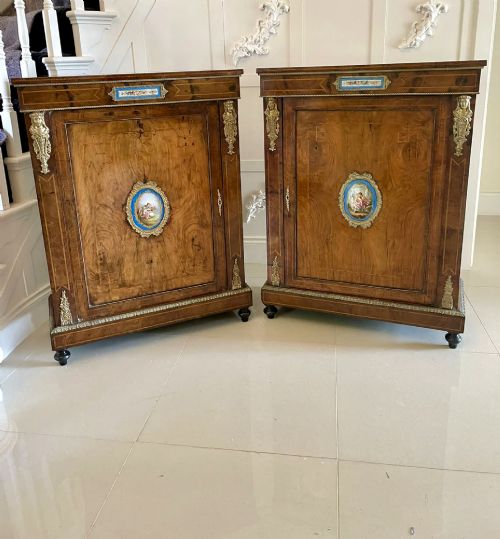
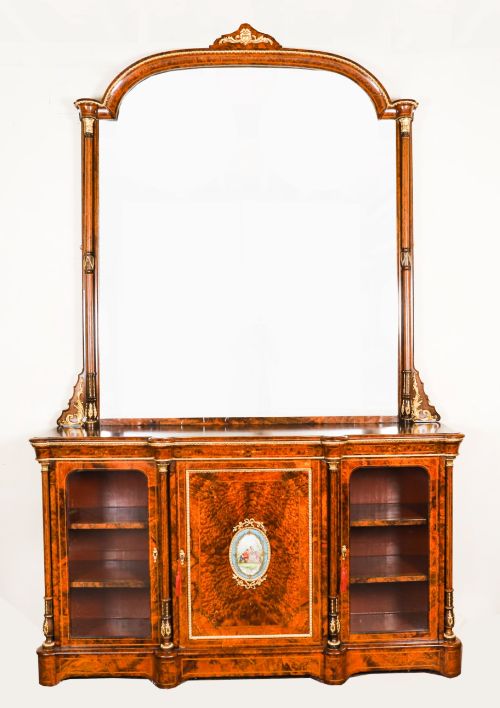
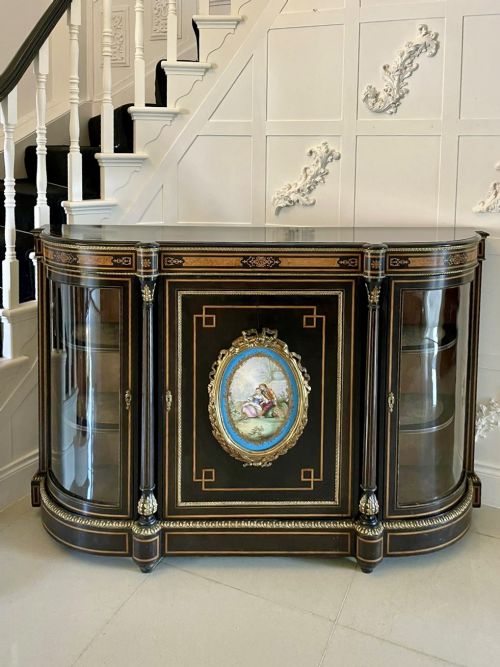
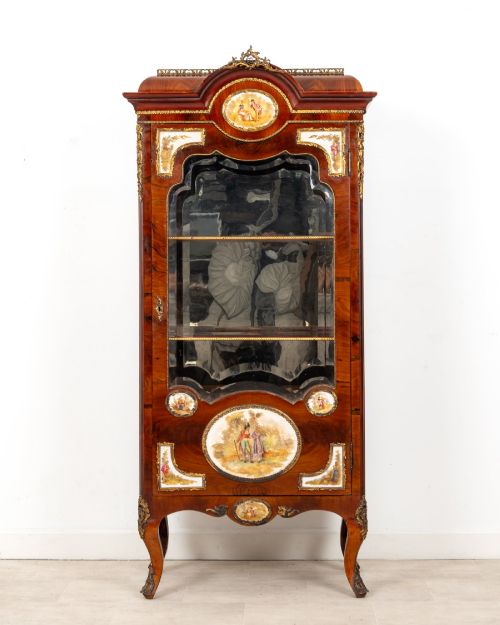
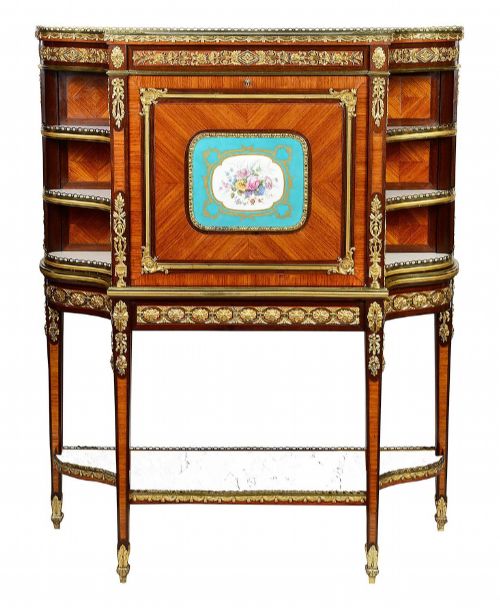
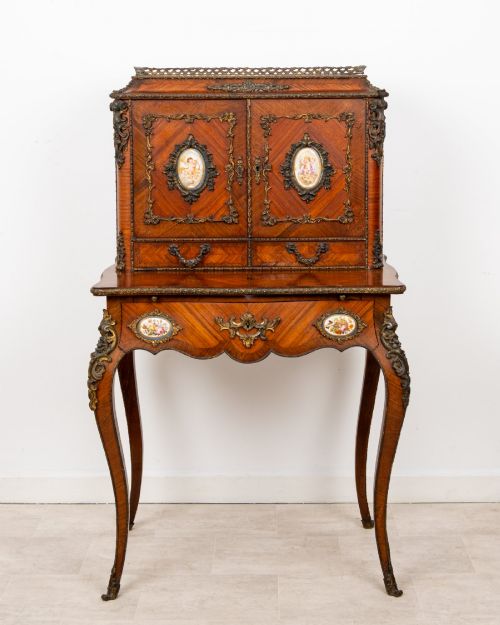
When searching for antique sevres plaques, buyers encounter painted porcelain inserts mounted directly into nineteenth-century furniture rather than standalone ceramic items. These pieces span pier cabinets, credenzas, writing desks, and jardiniere stands dating predominantly from the Victorian era and the latter half of the nineteenth century.
The most common form on this page is the French cabinet or bureau featuring central porcelain panels framed in gilt bronze. Makers integrated these glazed plaques into walnut, kingwood, ebonised wood, and satinwood carcasses, often matching them with ormolu mounts and marble tops in Louis XV and Louis XVI revival styles.
Materials and construction
The manufacturing process combined fine-paste porcelain with timber carcasses and cast metal mounts. Artisans painted the ceramic plaques by hand with polychrome enamels and gilding before firing them, subsequently setting them into prepared recesses within the wooden furniture.
Support elements relied on dense hardwoods such as burr walnut, kingwood, and rosewood, frequently enhanced with marquetry inlay. Gilt bronze or ormolu mounts secured the porcelain edges and provided structural enrichment to the corners and legs of desks and cabinets.
Antique Sevres Plaques Retail Price Guide 2026
Typical asking prices for sevres plaques among the pieces listed under this phrase on Sellingantiques today, from the lower quarter to the upper quarter. They describe what is for sale here now, not the wider market.
Listings feature porcelain plaques mounted on 19th Century walnut, kingwood, and ebonised wood furniture forms.
Assessing quality and execution
The distinction between tiers of work rests on the finesse of the hand-painting upon the porcelain and the crispness of the bronze casting. Superior examples display finely detailed figural or floral subjects with rich, well-fired glazes, whilst lesser pieces use simpler transfer-printed motifs or heavier, less refined metal mounts.
Integration of the plaque within the timber carcase also dictates standard; superior items feature flush, secure mountings where the wood has been meticulously rebated to receive the ceramic without gaps. The choice of underlying cabinet woods, from basic ebonised timber to figured kingwood and burr walnut, further separates standard production from exhibition pieces.
Blake London·Edwards and Roberts·Linke
The Antique Sevres Plaques Glossary
- Ormolu
- Gilded brass or bronze used for decorative mounts on nineteenth-century furniture. It provides a bright metallic contrast to dark woods and porcelain plaques.
- Pier cabinet
- A narrow display cabinet designed to stand against a wall pier between windows. These frequently feature porcelain plaques mounted in the central door.
- Credenza
- A sideboard or low cabinet with doors, often fitted with glass panels and porcelain plaques. Originating in Italy, the form became popular in Victorian drawing rooms.
- Bonheur du jour
- A small, light ladies writing desk with an enclosed superstructure above the writing surface. They frequently incorporate porcelain plaques on the drawer fronts or back gallery.
Antique Sevres Plaques: Frequently Asked Questions
What furniture features antique sevres plaques?
These painted porcelain inserts appear primarily on nineteenth-century French and Victorian display furniture. Cabinets, credenzas, writing desks, and jardiniere stands commonly incorporate them into the wooden framework.
They serve as decorative centerpieces, framed by wood veneers and metal mounts. The ceramics add colour and pictorial interest to functional storage and display items.
How do you date sevres plaque furniture?
Dating relies on the style of the timber carcass and the manufacturing techniques of the mounts. Most pieces date from the Victorian period through the late nineteenth century, reflecting revival tastes.
Construction details like dovetailing, veneer thickness, and bronze casting methods help establish the exact era of production. The surrounding furniture style usually matches the mid-to-late nineteenth-century revival movements.
Are sevres plaques hand painted?
Many period plaques feature hand-painted floral, pastoral, or avian scenes executed over a glazed white porcelain ground. Artisans used polychrome enamels and applied gold leaf details before secondary firing.
Closer inspection under magnification reveals brushwork variations that distinguish hand-applied decoration from later transfer-printed methods. The finest examples show considerable artistic skill in the miniature portraits or landscapes.
How do you care for porcelain mounted furniture?
Maintenance requires gentle dusting of the wooden surfaces and careful cleaning of the porcelain inserts. Excessive moisture should be avoided to protect both the timber glues and the metal mounts.
Keeping pieces away from direct sunlight preserves the enamel colours on the ceramic plaques. Regular polishing of the wood should avoid contact with the painted porcelain areas.